3 Questions for Paul Vacca About the Brand

Have you noticed? Slogans have disappeared. “Think Different,” “Just Do It,” “Come as You Are,” IKEA’s “Democratic Design,” Samsung’s “Imagine” — all taglines that no longer sign off their brands’ campaigns. Apple led the way as early as the 2000s. McDonald’s, Nike, IBM and Samsung followed. And brands born in the digital era such as Google, Amazon, Netflix, Spotify, Airbnb, Uber and TikTok simply never had one.
Paul Vacca, a strategic planner turned author and consultant, and an associate expert at the Jean-Jaurès Foundation, has just published a paper titled “An investigation into the disappearance of the advertising ‘claim’ and what it reveals about the new order of brands…”. Its title echoes Georges Perec: just as critic René Marill Albérès reviewed the novel La Disparition without noticing the absence of the letter “e,” we pass by bare logos every day without realizing that something is missing. That something is the claim — that compact phrase which, beneath the logo, once encapsulated a brand’s identity, promise and vision.
We met with him to understand what this disappearance says about our times — and what it concretely changes for those who design brands.
“Think Different,” “Just Do It,” “Come as You Are”… Great slogans have disappeared. What explains this extinction?
Times have changed. In the past, we bought space (the very term “media buying” says it all). We bought slices of attention. We created a print ad with a headline, a logo, a visual — and the claim would seal it all together. You knew when something was editorial and when it was advertising. When you turned off the TV, the ads stopped.
Today, everything is blending together. I once heard someone say, “I watched a YouTube video on Instagram.” That’s where we are. Information reaches us in fragments, everywhere, all the time. The claim belonged to a solid world — one of stable formats and clearly identified channels. That world is now immersed in a liquid environment, in the sense described by Zygmunt Bauman. Space is no longer closed. Attention is no longer captive. And a solid element has no place in a liquid environment: any useless organ eventually disappears.
But there’s also a deeper issue. Apple no longer wants to say “Think Different” because it has become a monopolistic power — it’s hard to claim “think differently” in that position. And above all, it no longer operates in a single market: Apple is at once a bank, a music distributor, a phone manufacturer, and an app publisher. Today, all brands operate across multiple markets. Where do you place Uber Eats? It’s food — but where does it belong? At the supermarket checkout, chewing gum is now competing with social media; people don’t buy it anymore because they’re on their smartphones. When the boundaries between markets blur, a single promise loses its grounding.
Look at banks. What is the claim of BNP Paribas? Of CIC? Even with millions invested, it no longer sticks. There isn’t even the same intention for it to be memorable. “Building in a changing world” — it all sounds more or less the same everywhere.
As brand creators, over the past decade we’ve observed a widespread adoption of brand platforms (mission, vision, values… and promise), as if this strategic tool had become largely democratized — even standardized. How do you interpret this paradox: on one hand, brands are increasingly formalizing their promise, and on the other, the “claim” that historically expressed it publicly is disappearing?
When I hear “democratization of a tool,” it usually means it has already lost its power. I’ve seen so many people say, “we already have a platform.” As soon as you have boxes to tick, the real problem is that you start filling in the boxes instead of pursuing the actual objective.
Aligning around the brand is not a prerequisite. Does Apple create brand platforms to check whether people agree with Apple? You end up with three words — “honesty, transparency, determination” — and everyone is satisfied. But it’s not transactional. Internal wording does not automatically translate into a brand expression that is perceptible to consumers. The platform fills an organizational gap by creating consensus, but it does not, on its own, build what the brand is in the minds of those who encounter it.
I’ve worked on more than a hundred brands. Not once have I used the “Kapferer prism.” It’s completely useless. It allows you to say, “yes, the brand has a physical facet, a personality facet,” and so on. Fine — but it has never helped us solve how a brand actually expresses itself in media.
Even if we all agree on a bank’s promise, that doesn’t get us very far — because that’s not how it will express itself. What will be expressed is the “habitable world.”
A “habitable world” is a compelling concept.
But concretely, how does a brand build such a world?
It’s far more interesting to talk about a world to inhabit than to align on a claim. What are the values of that world? How do you enter it? What are its references? What is the mode of interaction?
Today, a brand is like Marvel or Taylor Swift. It has multiple entry points with its own references — like Taylor Swift’s easter eggs. And there’s a relational mode of interaction: Taylor Swift embodies the “girl next door” with an intimate tone. Charli XCX doesn’t operate the same way. Brands are no different.
Concretely, I no longer propose a platform but an orchestration: how do I distribute different signals across the continuum of networks and media? There are four pillars:
• The hook: the attention trigger. It’s the sensory channel — the entry point. For Nike, it’s the swoosh. For SNCF, it’s the jingle. For Marcel Proust, it’s the madeleine. Over the past 20 years, the app icon — that tiny 16-pixel square — has pushed brands to miniaturize and amplify the impact of their signs. The logo no longer concludes; it hooks.
• The reference system: micro-stories. Storytelling is no longer a 30-second transformational narrative. It’s a system of shared references. On TikTok, you don’t even name things anymore — you have to “get the reference.” The reference creates the story, not the other way around. Burger King, with its recurring micro-narratives targeting McDonald’s, is a great example: it turned its challenger positioning into a narrative in itself.
• The grammar of interaction: the relational tone. McDonald’s speaks to families and grandparents. Burger King speaks to a slightly geeky, playful adult. Chanel is not Burger King. What matters is the quality of the dialogue — not LinkedIn-style prompts like “What’s your favorite book?”
• Rituals: repetition creates meaning. We’re no longer in a time where everything slips away — we’re in a time where everything repeats. For artists, the key is no longer to be listened to, but to be listened to again. It’s not 100 million people listening once — it’s 1 million listening 100 times. Brands must account for this. Like Maurice Ravel’s Boléro: it’s repetition itself that fills the work.
But beware: habitability is not a given. Marvel is currently missing the mark in its recent phases. It squandered a narrative treasure by trying to expand too broadly. They understood the idea of a habitable world — but ended up making it uninhabitable and unreadable. Conversely, Patagonia doesn’t need a claim. It is its own claim: total coherence between its products, its approach, and its internal culture. A habitable world also means that the company itself must be inhabitable by the brand.
On the subject
-
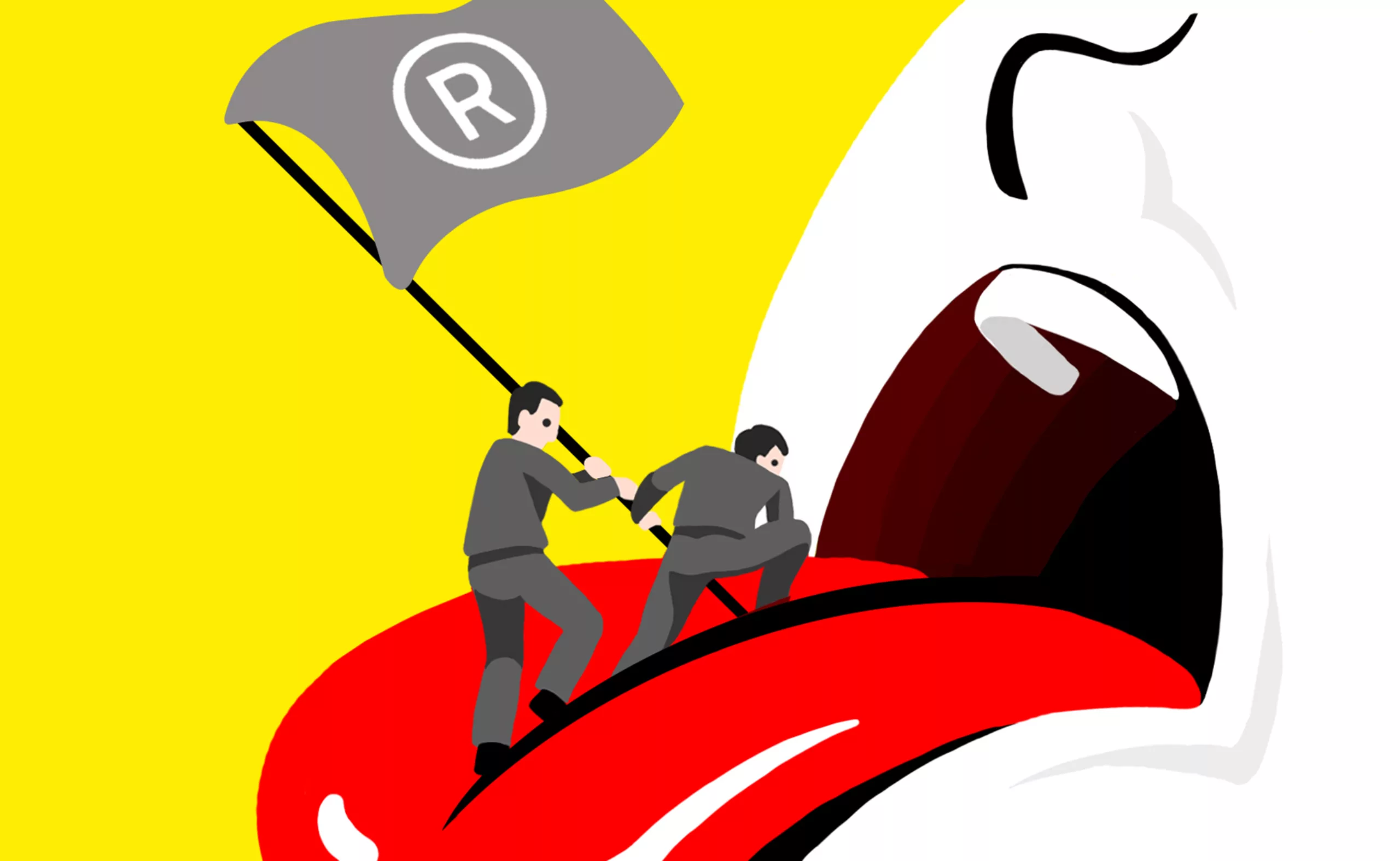
W®rds are dead, w®rds live!
The privatization of languageWhen brands privatize language, it’s death of words. Yet language must remain a common good, not susceptible to privatization.