3 questions to Joe La Pompe
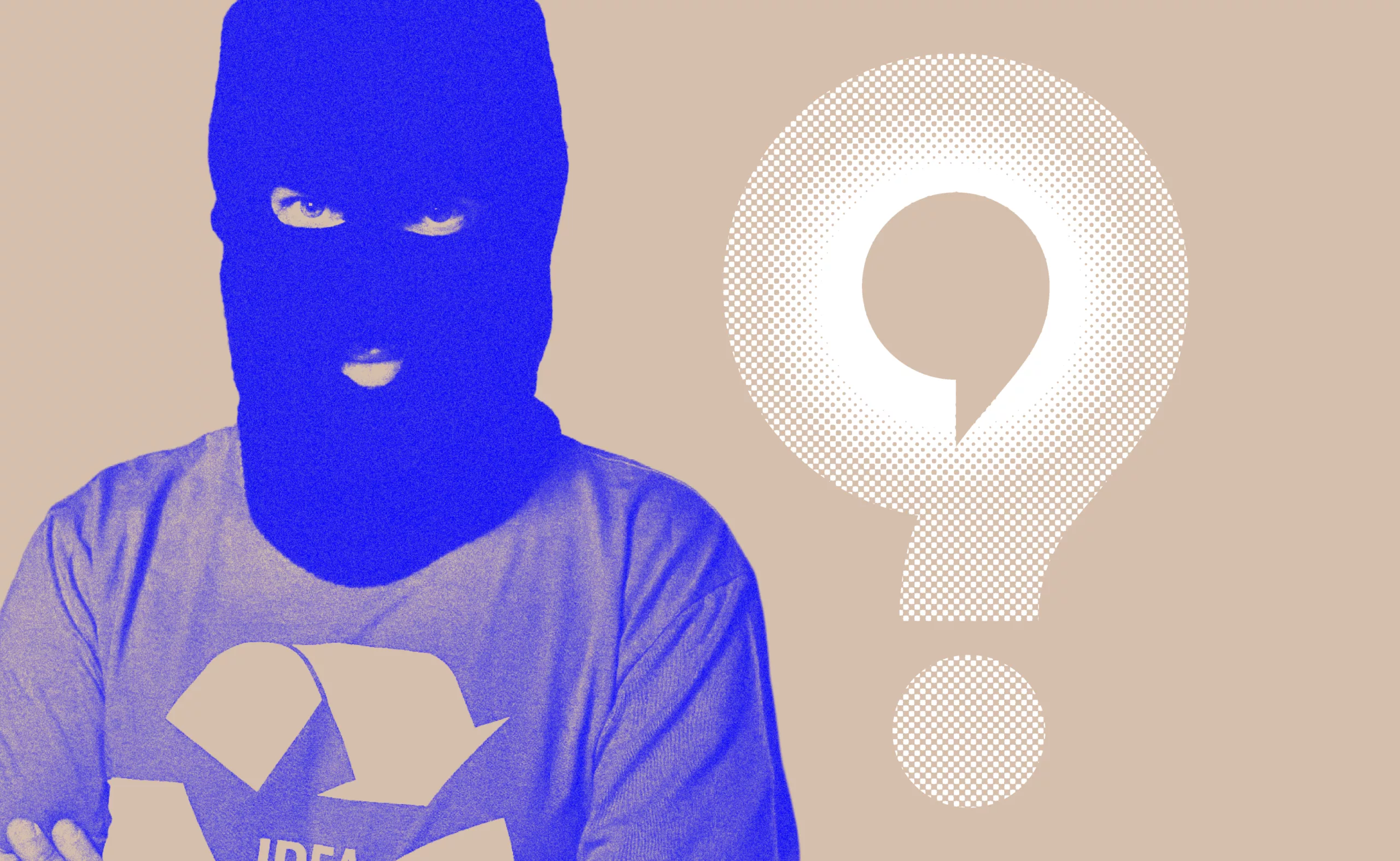
Joe la Pompe is an iconic character in the advertising world. Proud defender of creativity, Joe has been masked since 1999 to unveil telescopes, unspeakable recoveries, “twin” advertisements or simple pumping.
Any advertisement whose idea already exists, whether it is a copy, or because of a lack of culture of its author is destined to end its days on joelapompe.net. Joe addresses on his site all those who can no longer stand to always see the same ideas trusting the creative directories and awards year after year.
After 25 years of expertise in the field of coincidence, copying, inspiration, citation, what evolution do you perceive (if there is one?) In advertising communication?
In 25 years I have not seen an evolution, but a real revolution! A technological revolution since digital has taken up more and more space in our professional lives.
When I started, we did our advertising culture with books (the famous advertising “annuals” which, as their name suggests, only appear once a year). Rare and expensive books that were not always easy to obtain. And thanks to TV shows (like Culture Pub). All this has totally disappeared today.
I witnessed the meteoris development of the internet which has been a real game changer in our industry. Today almost everything happens online and I have noticed a real acceleration of time and production times. And now artificial intelligence is again totally disrupting our work habits and our ways of watching or searching for information.
Advertising when I returned to this profession (in the 1990s) and now has almost nothing to do with it.
As for my subject “plagiarism” it is curiously still present, but not necessarily for the same reasons. At the time it was easy to pump “neither seen nor known” an American or English campaign, because no one would have been able to know or find it. Today there is such a mass of advertising campaigns that already exist (probably several hundred thousand) and designed over the years that it has become almost impossible to know what has already been done or not, although the means of searching for information have progressed enormously.
As such, AI may be decisive. But for now it is rather a machine that trains on existing data and has an unfortunate tendency to recycle the past rather than invent.
On the occasion of the Political program of Nov. 9 Benoît Heilbrunn (marketing professor) said about the controversy surrounding Shein’s establishment at the BHV “Shein is the proof (like the other Asian brands Samsung, BYD), that we can communicate without storytelling…” Is this the end of the idea in advertising?
In about thirty years of career I have already heard several times the statement that advertising was over, it was dead, it belonged to the past. I don’t believe it. Other forms of communication have emerged and made a place for themselves, its central role has been seriously questioned, but it has always adapted. Some brands believe they can do without it and find other ways to communicate and that’s very good, I think there is no truth or a way of doing things.
I recently saw BYD ads on TV so I think they are still coming too… and Shein published an image campaign in magazines last year, even if it was mainly controversial.
Your view on the years to come? The shift of advertising to other media, other formats?
Advertising continues to reinvent itself, mutate, adapt to new media and new formats. She tends to interfere everywhere and sometimes be too invasive. The worst is when she advances disguised via influencers or sponsored content.
Classic formats are not dead, but have lost their predominant role. TV, which seems less and less watched, was still the scene of last year’s advertising event with the Intermarché spot. I also notice that old media such as posting can become a new youth thanks to the virality of social networks. I have seen a lot of classic posters spark debate and be very re-shared. What is certain is that the era of mass media as the only way to communicate brands has been over for a long time. We are going towards increasingly personalized and targeted messages. Which I regret a little.
I really like this constraint of having to address as many people as possible. I also regret this tendency to no longer dare anything transgressive or polemical so as not to attract bad buzz or clash on the networks. We see beautiful things, impressive or touching things, but we laugh less and less.
Freedom of expression has still been greatly reduced so as not to shock anyone. And I’m a little afraid of the prospects offered by A.I. An incredible creative tool to multiply graphic and narrative possibilities, but also job destroyer and facilitate intellectual lazess.
&Nbsp;
&Nbsp;
&Nbsp;
Interview by François Chevret
On the subject
-

Heliophore, the animated paper
If Louis Dufay’s name has fallen into oblivion, one of his inventions will be remembered: the heliophore, the kinetic paper that shone in the 60s.
-
Luxury is going to drive the final in the coffin!
No mercy for Juste un Clou, the luxury bracelet that makes our skin crawl. From the 70s to today, a look at the evolution of the world of luxury.
-
The hidden secret of CHANCE by CHANEL is Goude
Advertising sometimes offers us UFOs that seem to escape simple marketing specifications to project us towards an unexpected elsewhere. Here’s an analysis of the symbolic mystery of Chanel’s latest Chance perfume ad, directed by Jean-Paul Goude in 2016.