Jacques Massacrier’s “Savoir Revivre”

It is a cult classic, ahead of its time. For some, “Savoir Revivre” was a veritable ‘Bible’.
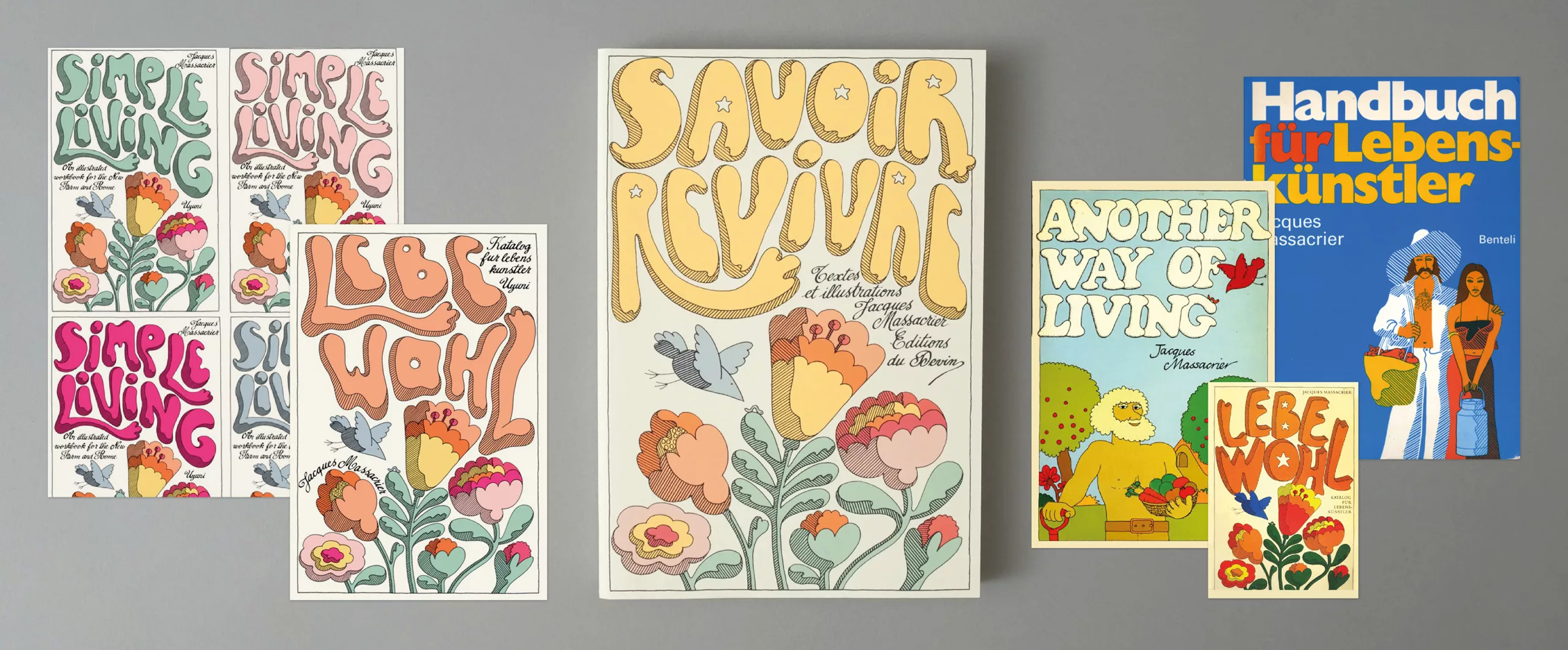
The first edition, published by Albin Michel, dates from 1973 and was a literary phenomenon, selling over 500,000 copies and being translated into twelve languages. It was a book that captivated an entire generation.
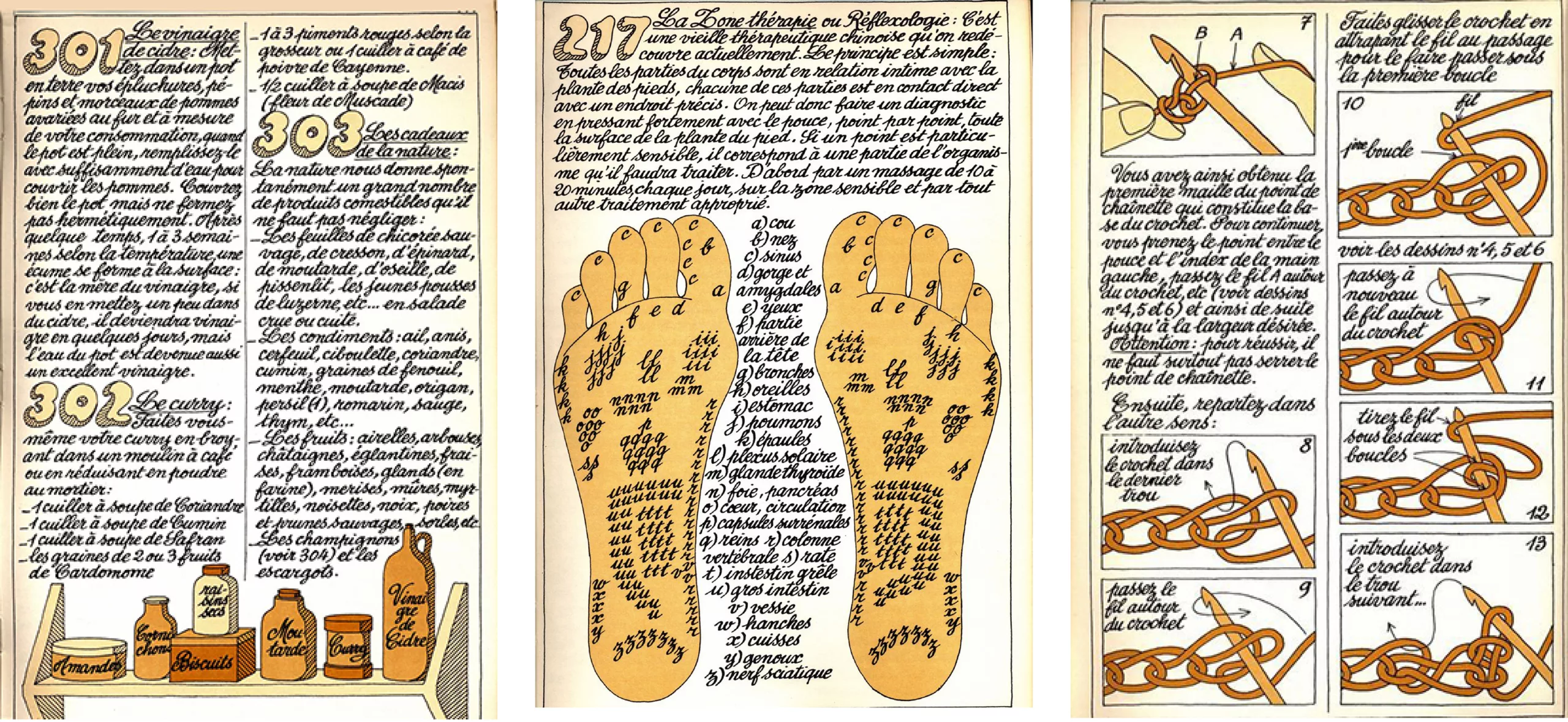
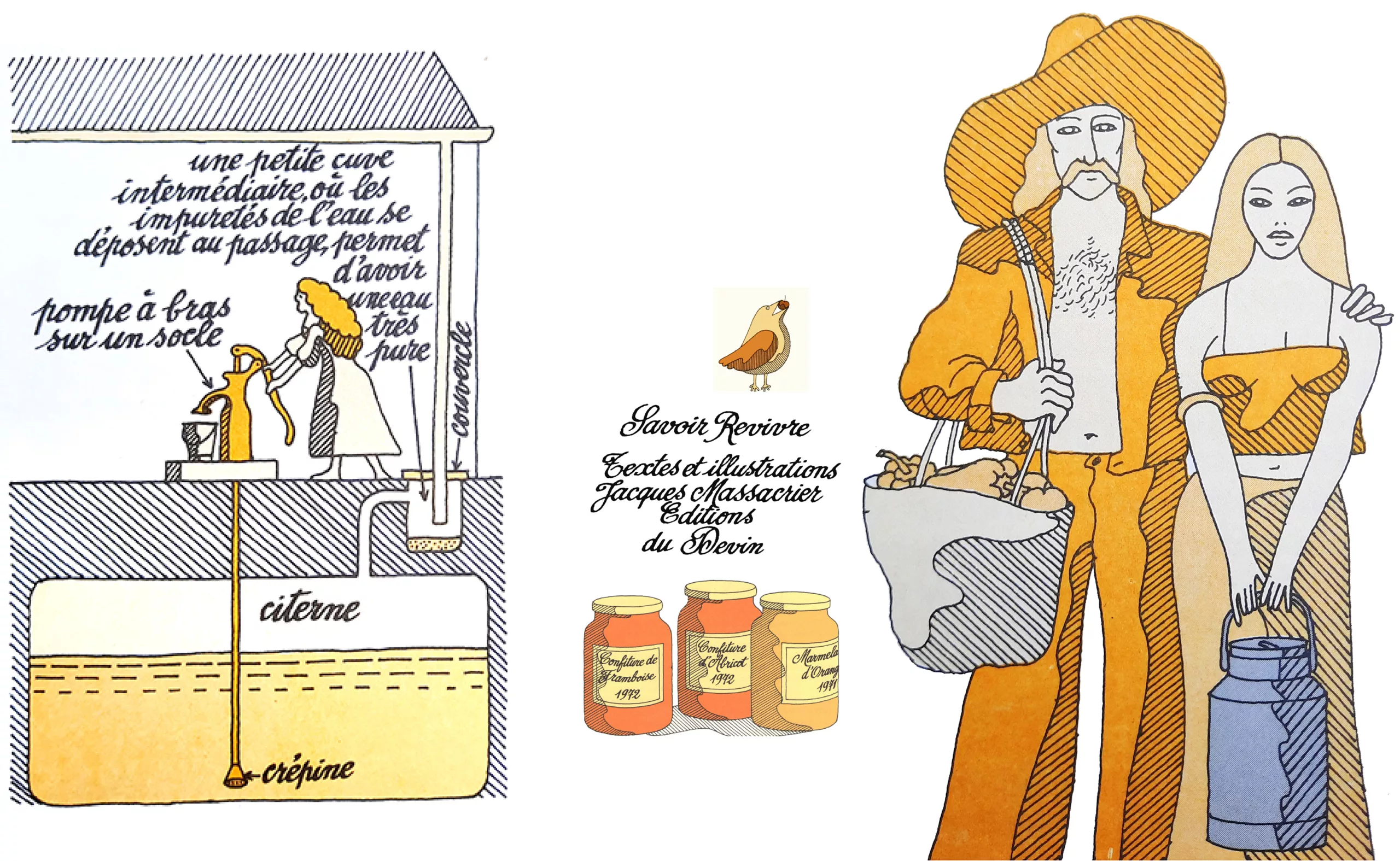
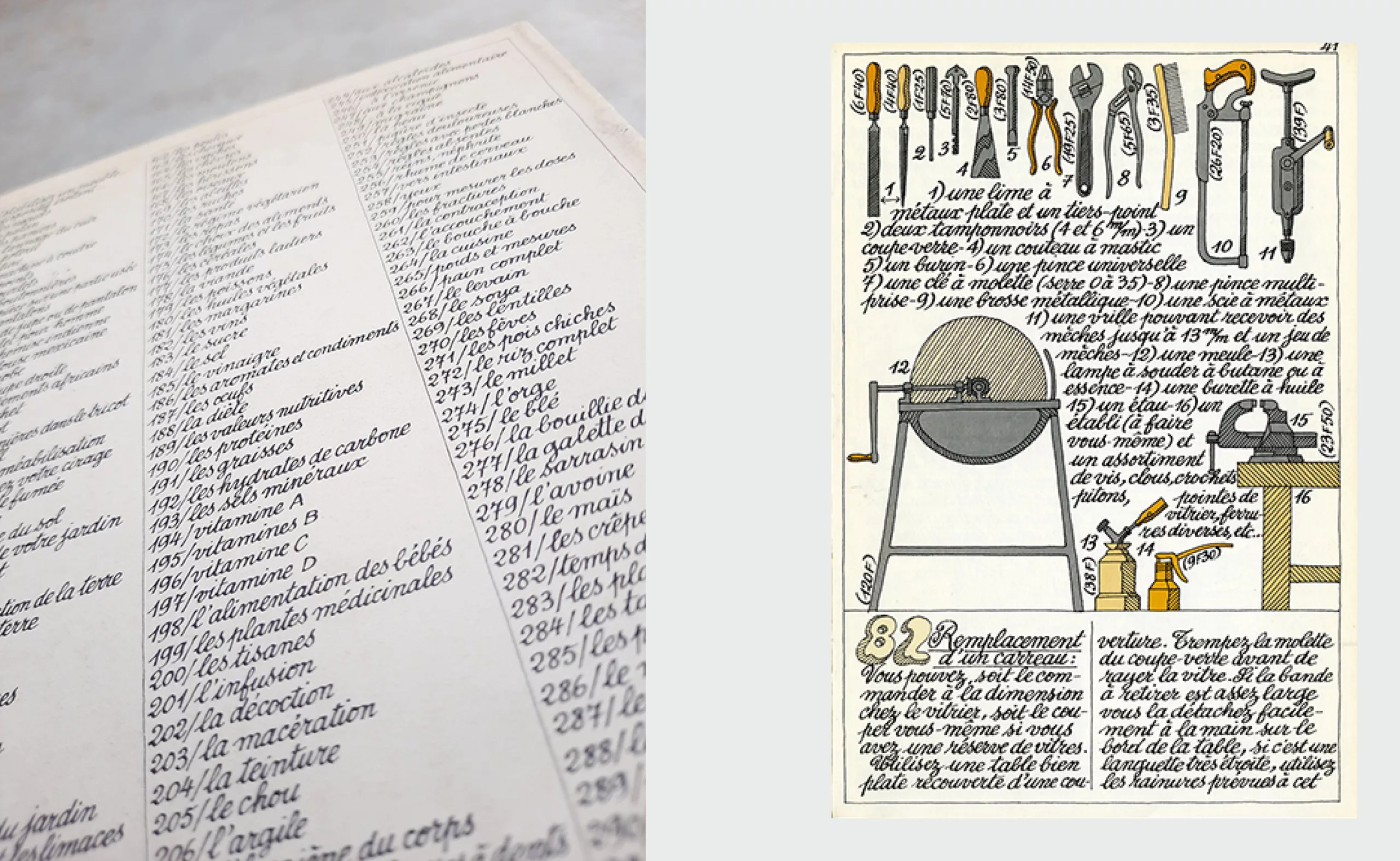
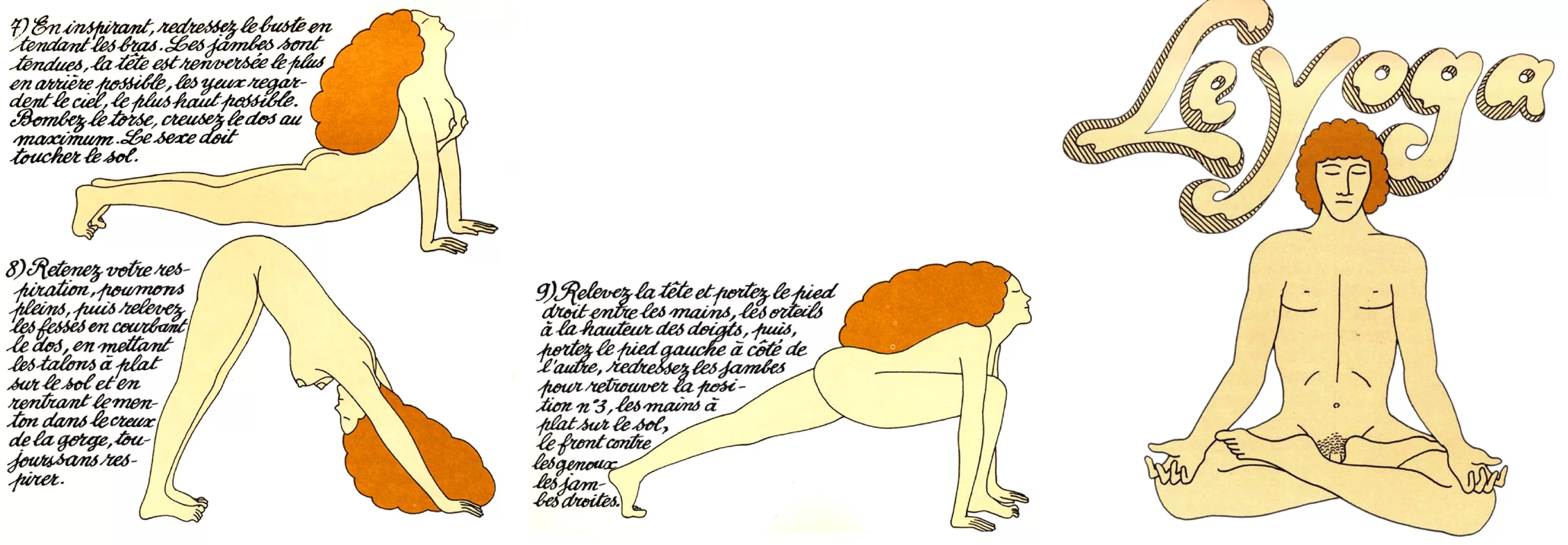
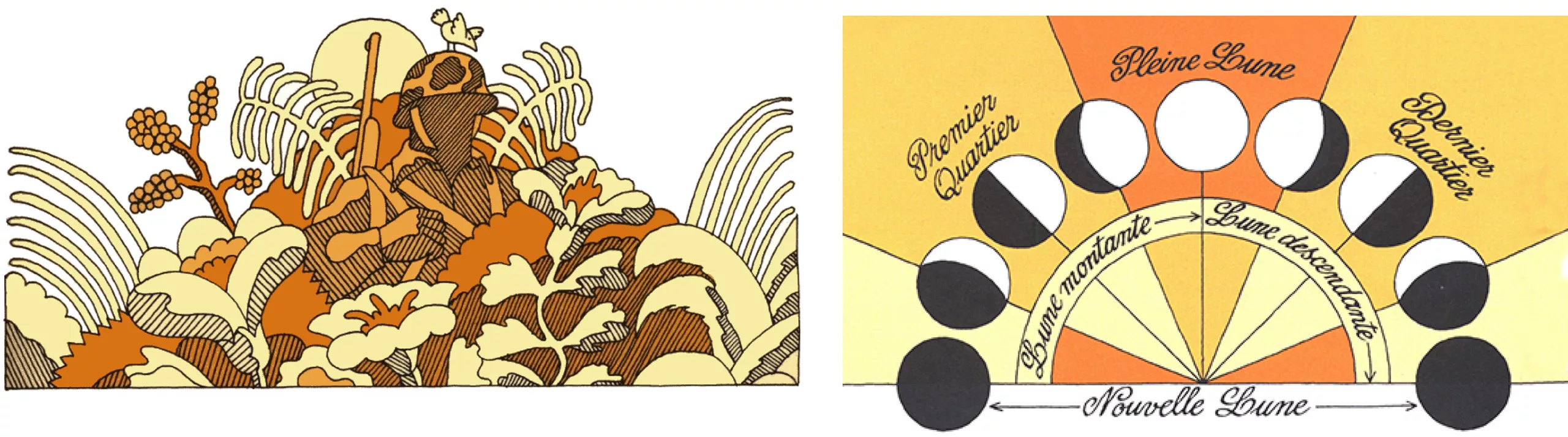
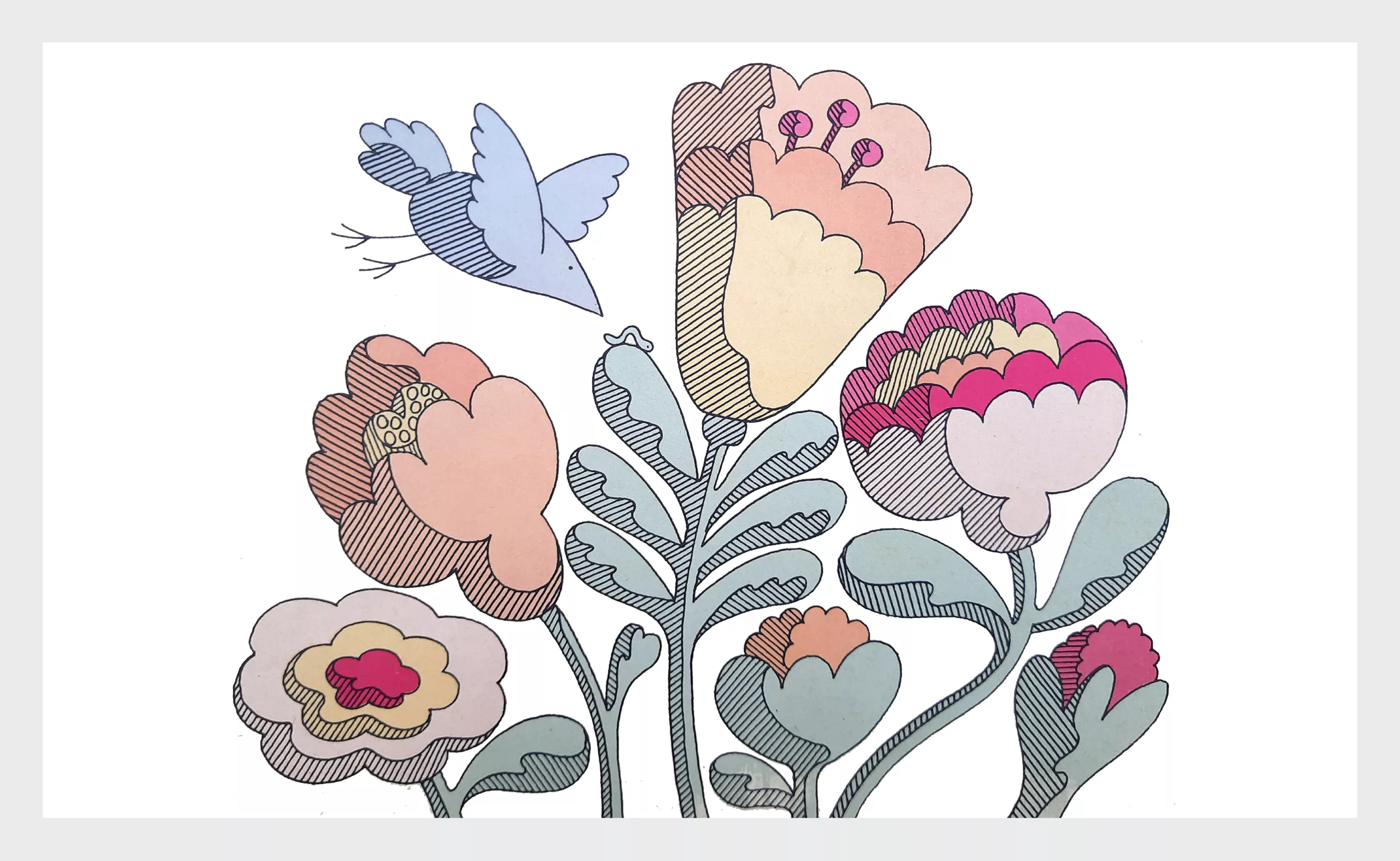
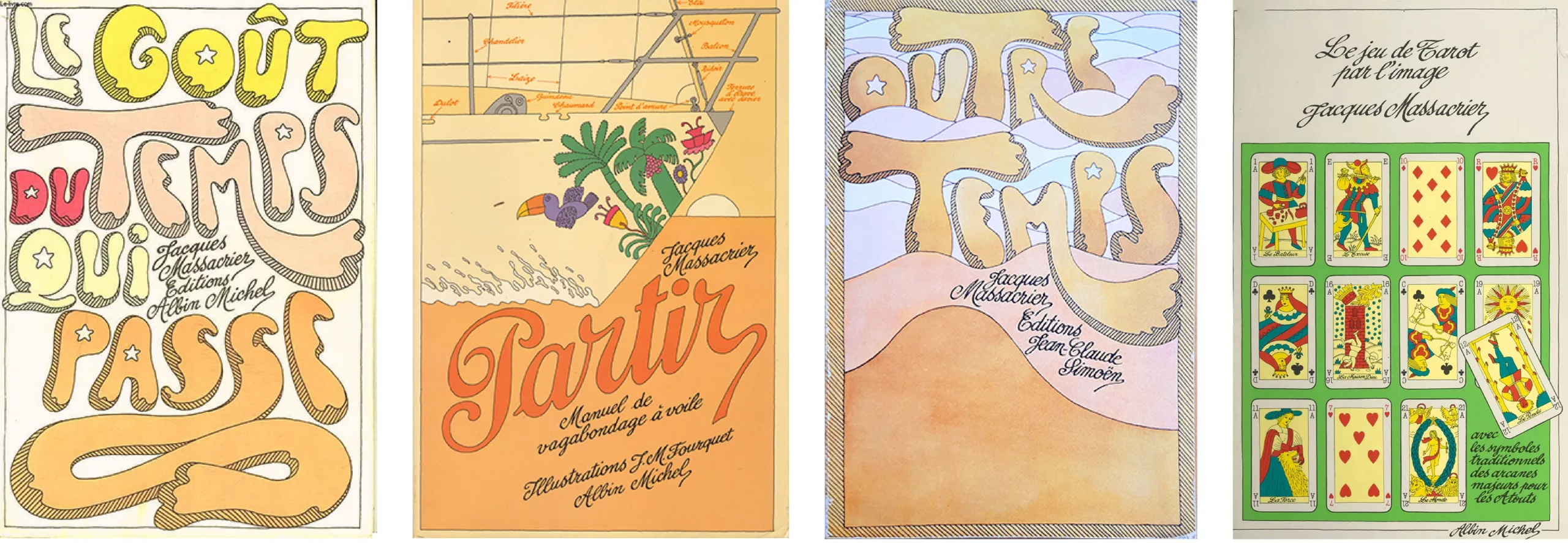
Visually, the book stands out from what was usually found in bookshops. It is handwritten and hand-drawn by Jacques Massacrier himself. On the cover, stars within the letters, mauve, pink and orange in the flowers, a blue bird and even an earthworm.
Jacques Massacrier’s story still resonates today with what many city dwellers experienced during lockdown and the Covid-related restrictions. Many have developed a greater awareness of the environment and self-sufficiency. Living further from the city, with a slower, simpler life. And changing their lives, leaving everything behind to live differently with their family.
It is 1967 and Jacques Massacrier is 37 years old. He works as a creative director at a major advertising agency, Publicis.
A hellish life. Up very early, in bed late, relying on sleeping pills to get to sleep. He earns a lot of money.
He has a huge flat, 162 m² on Rue Suger, a stone’s throw from Saint-Germain. A duplex with a terrace, designer furniture, a modern kitchen – basically everything a senior executive eager to live life to the full could wish for.
Then he experiences something akin to burnout, even though the term didn’t exist at the time.
The summer of ’68 arrives. Jacques Massacrier and his wife Gréta spend their holidays in Ibiza and are charmed by the place.
“It’s so lovely here, we should live here all year round!”
Back in Paris, work takes over again. He sets up his own advertising agency. Yet the idea of leaving takes hold, even though their two sons, Loïc and Joël, are far from enthusiastic.
Then, one day in April 1970, everything happened in quick succession: Massacrier put the flat up for sale, then the agency, then the car. The following month, in May, they flew to Ibiza, with just one suitcase each. Their money was entrusted to Jacques’s mother, who would send them 300 francs (at the time) every month.
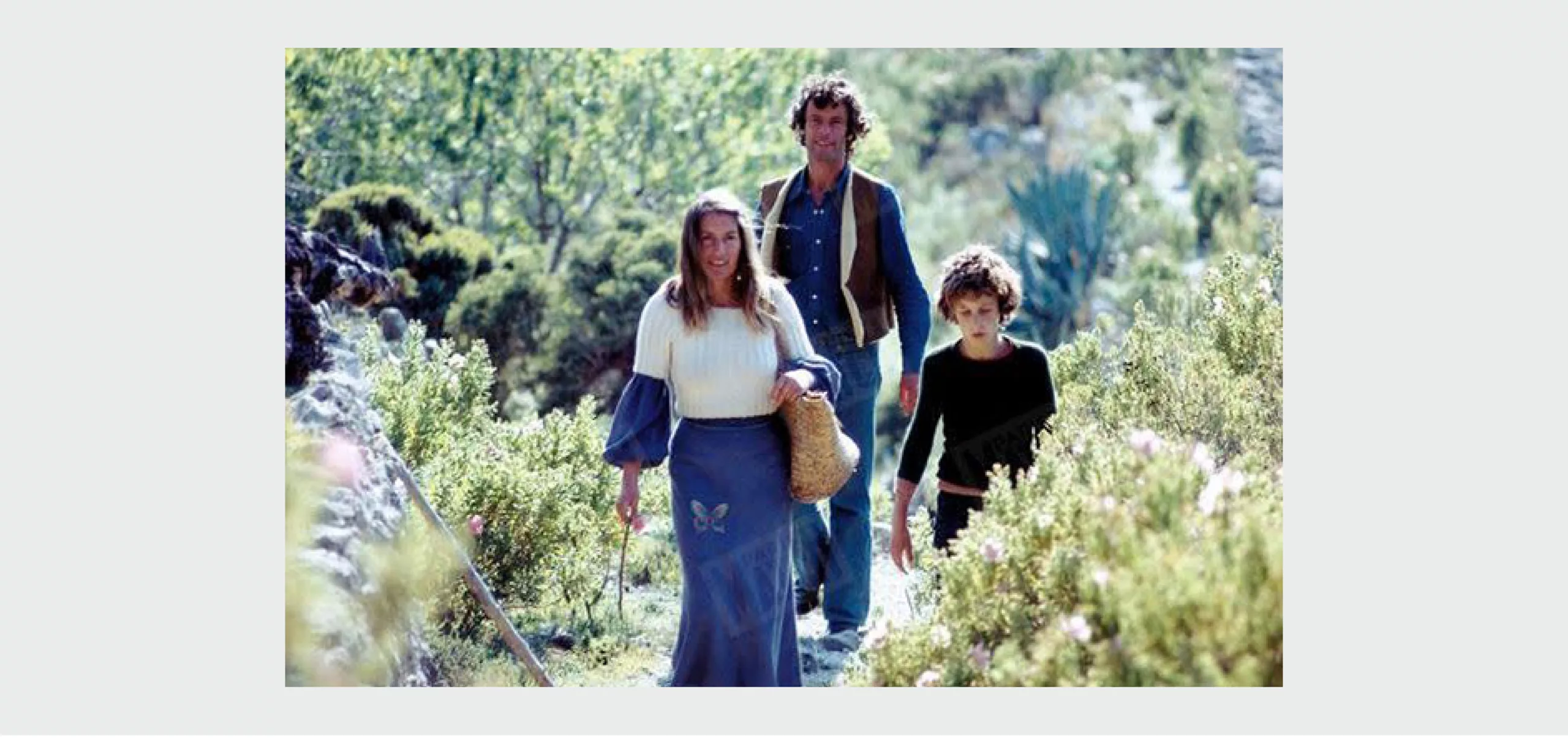
Upon arriving on the island, they settled a few kilometres from a small village, in an old farmhouse they rented – “Can’n Tauet” – which had no running water or electricity. They cleared the garden to create a vegetable patch. It was thanks to the gardening books sent by post by his mother that Jacques Massacrier was able to tend the land.
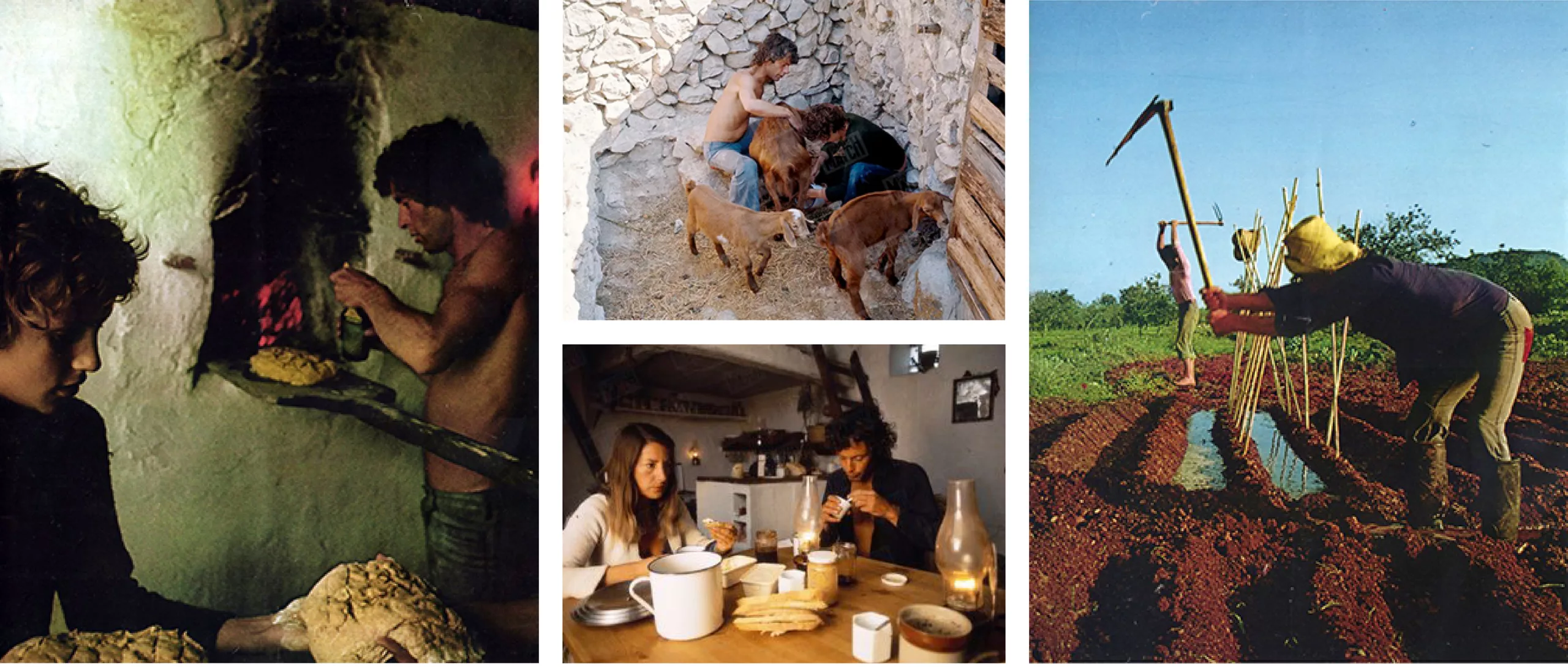
They restored the henhouse and the bread oven. They built furniture for the interior, and his wife made clothes. Within a few weeks, the farm was once again habitable, but the hardest thing for the family was to break their Parisian habits. To accept the peace and quiet and come to terms with a natural world that was alien to them.
Life is organised around two simple principles:
The first is to grow as much produce as possible to keep costs down.
The second is to have a fixed schedule for every family member, so that nothing is left to chance.
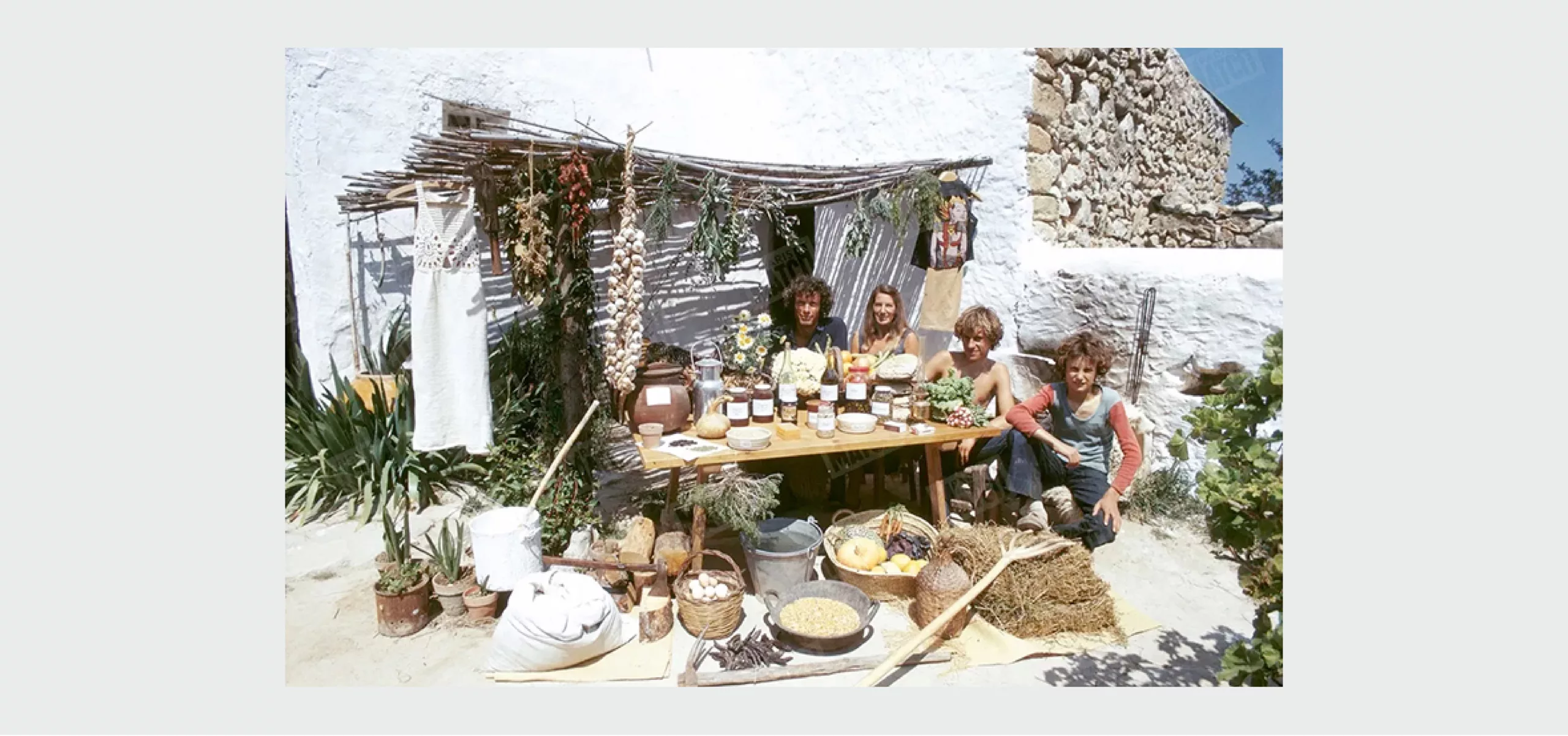
After a year, everything begins to fall into place. They farm a 1,000m² plot for fruit and vegetables and keep two goats for dairy products. They live almost entirely self-sufficiently. When it comes to healthcare, they are very knowledgeable about the benefits of medicinal plants and are rarely ill.
Their daily routine is regular: they get up at half past six in the summer and seven in the winter. They go to bed at nine.
Alongside this new life, Jacques Massacrier is working on a book project: a guide to relearning how to live self-sufficiently in the wild. It will be called “Savoir Revivre”.
No doubt he feels the need to put into writing all the techniques he has developed over the past few months. But perhaps he also wants to recount this unique adventure.
From felling a tree to sewing a dress or making shoe polish… blending proto-ecological life lessons with practical tips, this guide will showcase an alternative way of living that feels particularly inspiring today.
Jacques Massacrier has not forgotten his first profession, and the book he is writing is very much in tune with the times. Trained at the prestigious Thanet Art School in England and later at the École des Arts Appliqués in Paris, he works with consistency and care on the soft colours of the illustrations and the handwritten, rounded, childlike script.
Form follows function; the craftsmanship of the book reflects the craftsmanship of life.
The hand that traces a letter is the same as the one that builds a wall or sows a seed.
Massacrier’s drawings are accessible. A stone house, a vegetable garden not yet called ‘permaculture’, a bread oven: everything seems within reach. Each page carries an underlying message: ‘You can do it too.’
All this resonates particularly strongly today, at a time when our screens bombard us with perfect images.
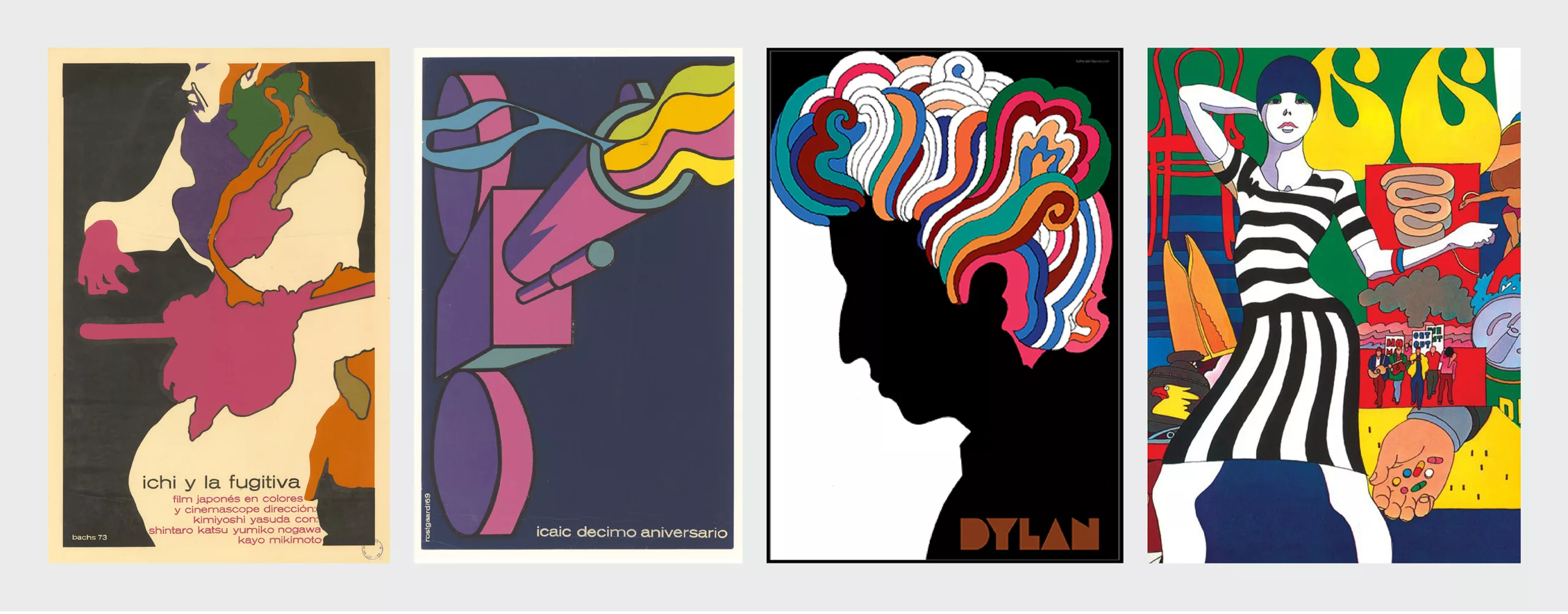
In the late 1960s, the leading artistic director and illustrator in Parisian agencies was Milton Glaser. He was known worldwide, among other things, for his 1967 album cover for Bob Dylan’s “Bob Dylan’s Greatest Hits”.
It featured that psychedelic touch so popular with young people at the time: blocks of bright colours, decorative swirls and simplified lines.
For many, it also marked the discovery of the golden age of Cuban posters, both political and cultural.
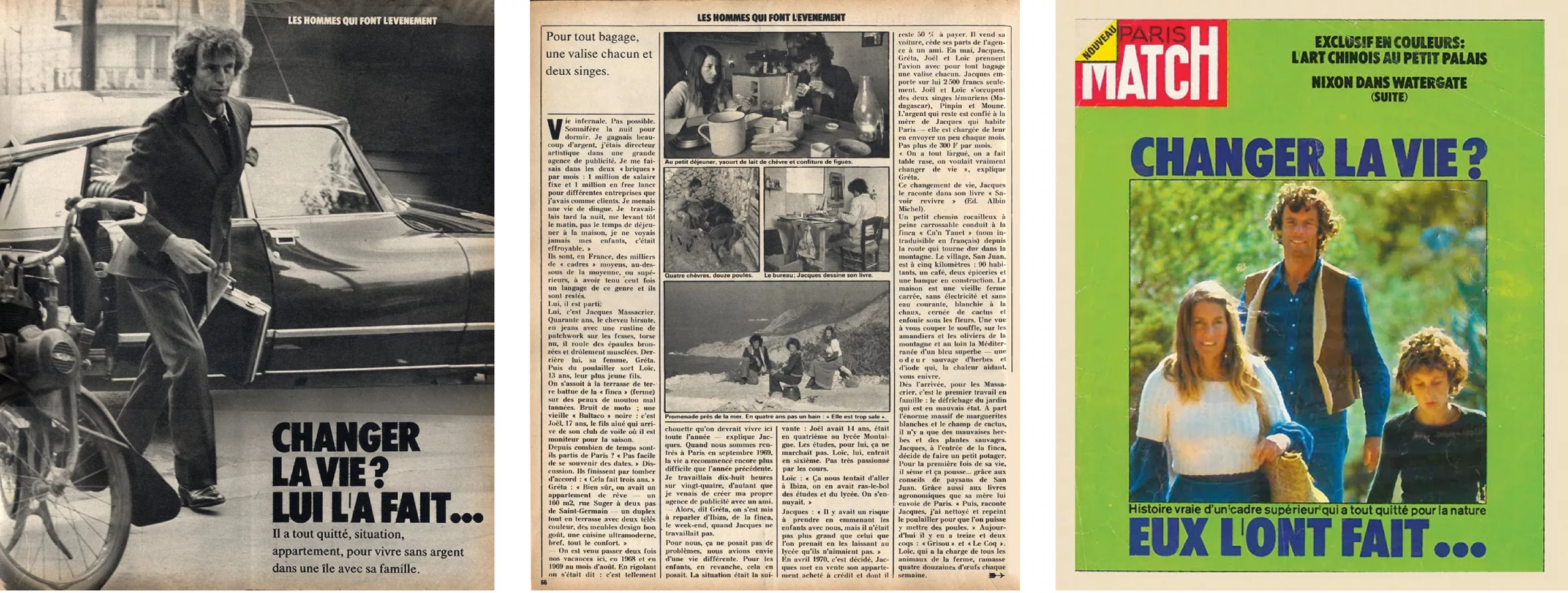
In May 1973, Paris Match ran the headline “Changing lives? They’ve done it…”. And there, on the front page of the weekly magazine, we see Jacques Massacrier and his family.
When he left Paris and a stressful lifestyle behind, Jacques Massacrier had doubtless never imagined that, three years later, he would find himself on the cover of Paris Match. (One might reasonably ask oneself this question… for it is no coincidence that Paris Match came to meet Massacrier in Ibiza, nor was the feature published without his consent!!!).
This issue accompanied the release of “Savoir Revivre”. Success was immediate. The royalties enabled him to leave his first farm and buy a larger one in the same region.
And then came other books, which enjoyed more modest success: “Le Goût du temps qui passe” (1975), “Outre-temps” (1978), “Partir: manuel de vagabondage à voile” (1981), … and even a book on “The Tarot Game through Images” (1983).
In the introduction to “Savoir Revivre”, Jacques Massacrier wrote a text in the form of a manifesto. And one that resonates perfectly with the environmental issues of recent years.
“— What is the point of sounding the alarm about consumer society and the resulting pollution if we continue to prop up the industries that poison us and deplete our planet’s natural resources? Let us not use up what little oxygen we have left to shout about our distress. Instead, let us relearn how to live without the products of these industries and, through contact with nature, rediscover the foundations of a true hierarchy of values. Admittedly, we will find it difficult to do without manufactured goods entirely; we have accumulated too many bad habits over generations. But let us imagine industrial production limited to essentials. It is not easy to determine what these are, since we have precisely lost the notion of what is essential! But let us put our knowledge on hold and reflect on how we use it. Let us reconsider the fundamental elements of our existence.”
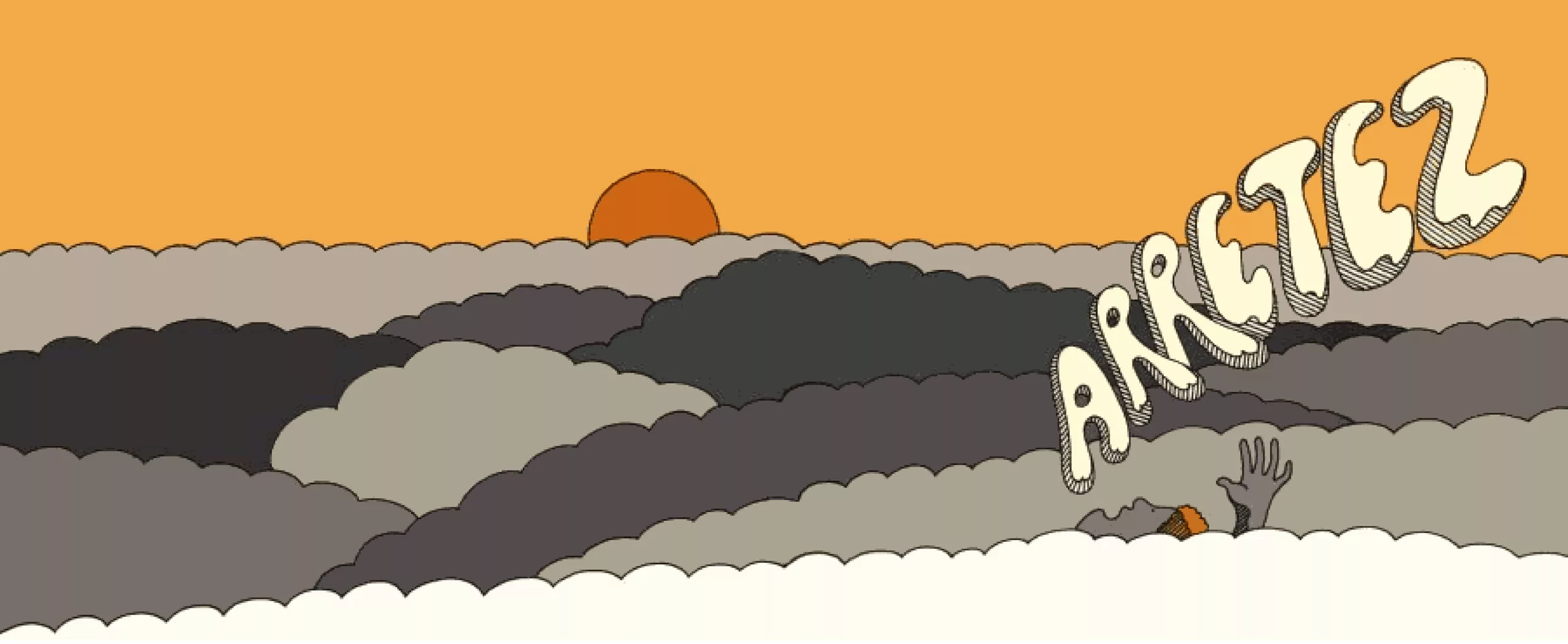
On 1 September 2020, Jacques Massacrier passed away in Ibiza. Despite the island’s boisterous and overwhelming tourist crowds, he had stayed there and become a “long-time resident”.
A website features the complete text of “Savoir Revivre”.
The book was reissued in 2020 by Éditions du Devin as a facsimile edition.
The original 1973 version can still be found on second-hand sales sites at an affordable price.
On the subject
-
Maison Nicolas, a new logo for a new strategy
Maison Nicolas has unveiled a new logo and identity, unfortunately without drawing on its rich graphic heritage.
-

In India, the political logos are of a very original banality
How to make millions of voters, 50% of whom are illiterate, vote? India offers visual political logos that are out of the ordinary.
-
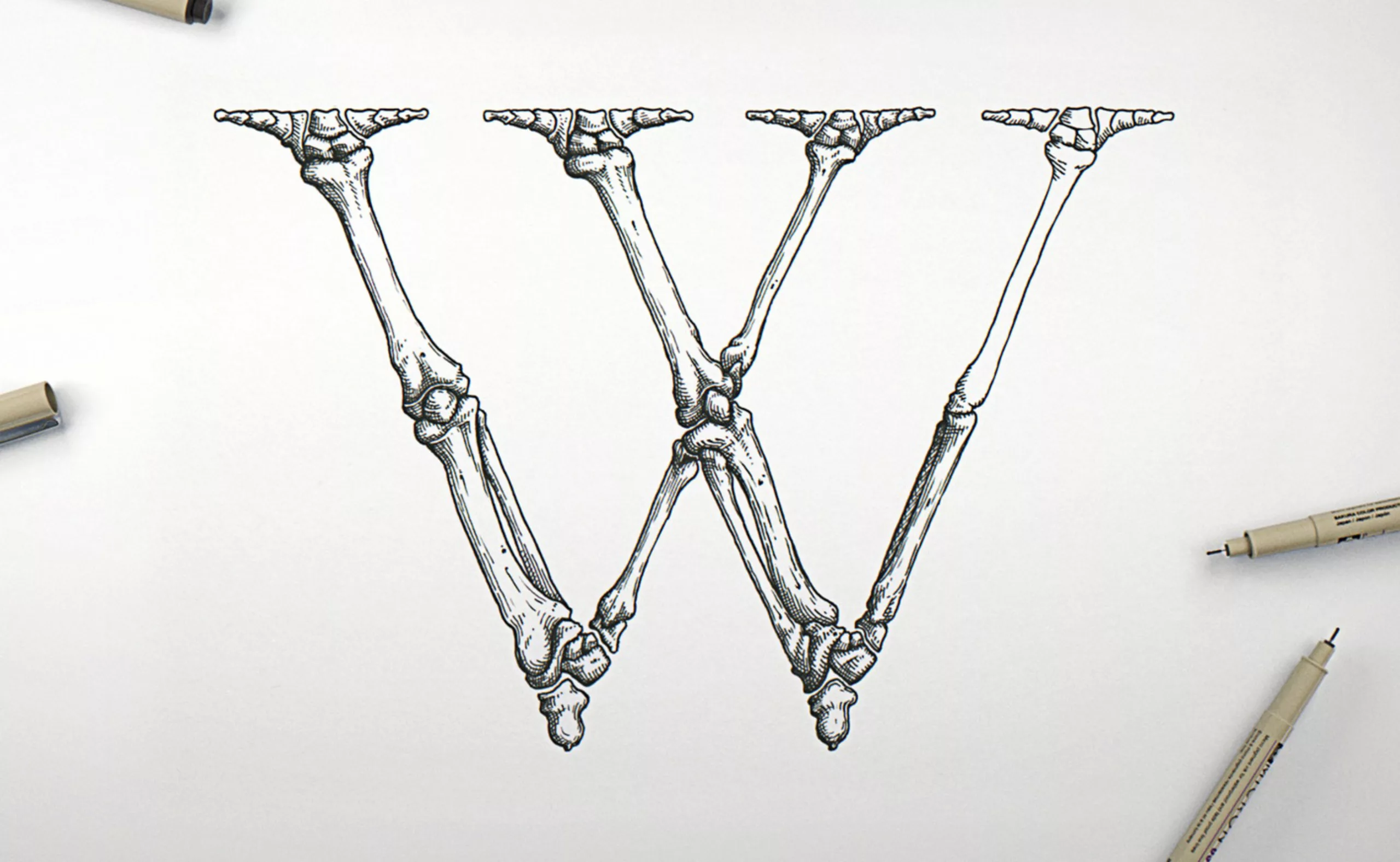
Garamond Corpvs a corp alphabet
Passionate about typography and anatomy, Swedish artist Björn Johansson has dissected Garamond typefaces to create a bony alphabet. From Tory to Vitruvius, letters take shape.