Luxury brand magazines are putting up a fight
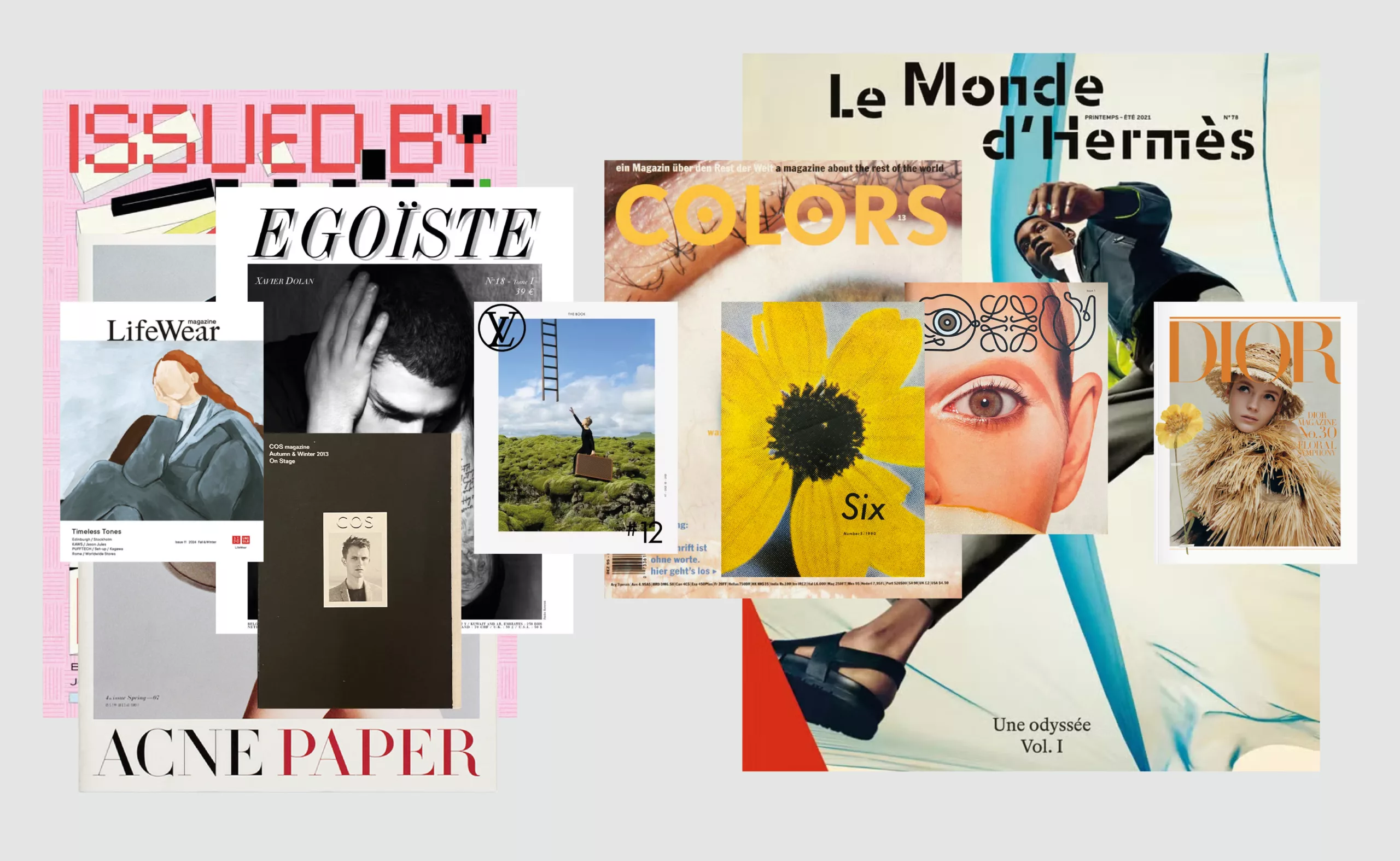
The world of fashion is all about catwalks, models, Fashion Week and the exuberance of TikTok, Instagram and Snapchat posts, yes, of course. However, even though print seems to be a medium from another century and fashion publications are experiencing financial difficulties, luxury brands are still seeking the uniqueness that a magazine bearing their name offers them.
Whether it’s Chanel, Vuitton, Hermès, Dior, Loewe, Cos or UNIQLO, all brands take particular care with these publications, which are sold at newsstands, distributed in stores or available online.
An overview of a high-end sector that seeks to stand out and resist the acceleration of time.
We remember Colette (without a capital letter!!!), the concept store on Rue Saint-Honoré in Paris’s 1st arrondissement, which opened in 1997. It was the end of the 20th century, and for 20 years it was a place of excitement and curiosity. It quickly became an essential destination where you could find everything, but above all a very select range of items that you couldn’t find anywhere else. A benchmark in fashion, design, books and high-tech gadgets, it became a compass for all things trendy.
One day in February, we came across a brand magazine, another world, that of Hermès. And we traced the origins of what today escapes the frenzy of social media.
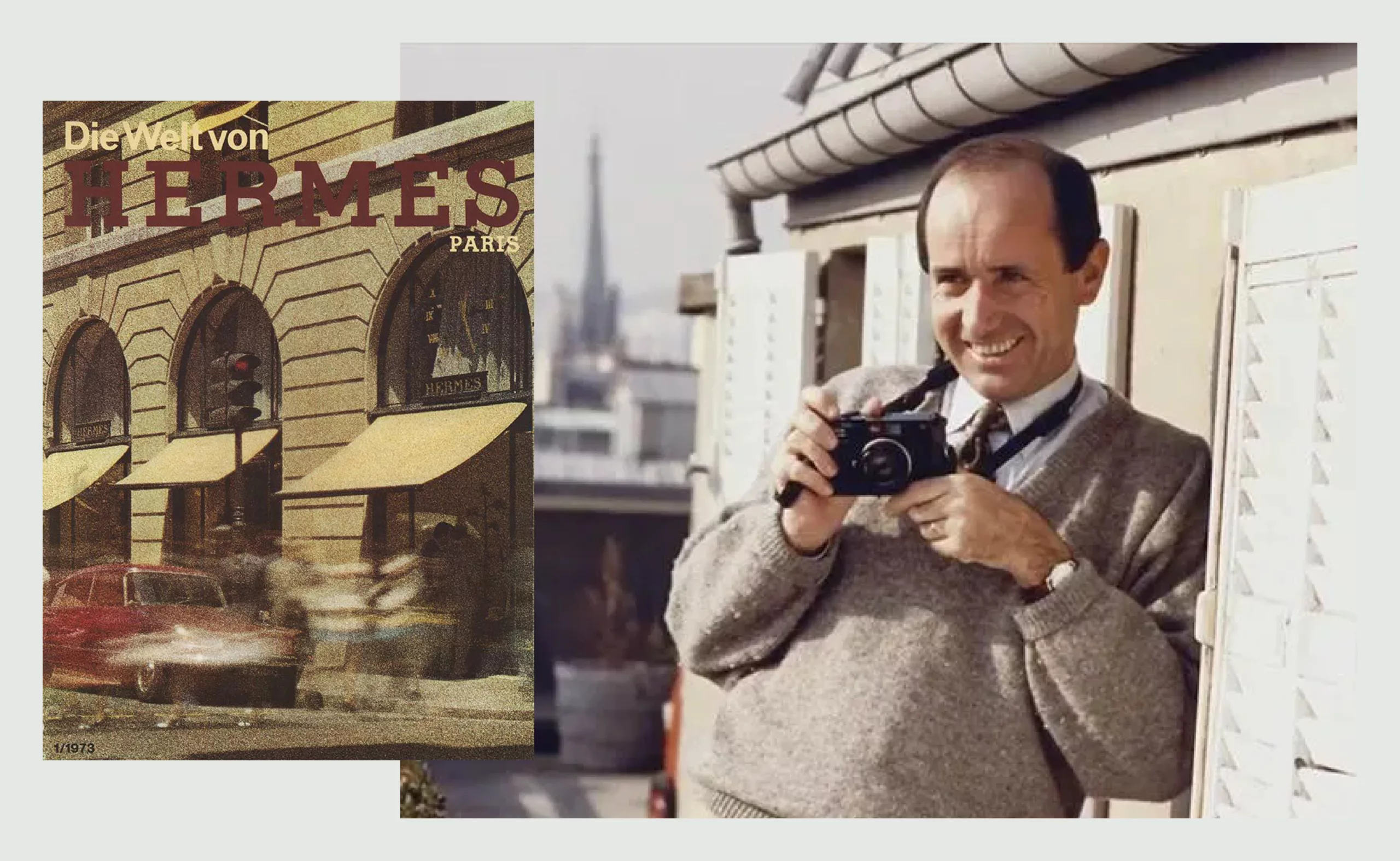
It all began in 1973 at Hermès, when Jean-Louis Dumas, CEO of the famous brand located at 24 Faubourg Saint-Honoré in Paris, launched Le Monde d’Hermès. Having adopted the Meiji saying ‘Shake up tradition to nourish it’, he was the first to imagine a branded magazine as a communication tool, thereby affirming Hermès’ creative vision.
A visionary with a curiosity for everything and all cultures, he diversified and propelled the French brand onto the international stage.
The first German version was published under the name ‘Die Welt von Hermès’ and two years later the French magazine, ‘Le Monde d’Hermès’, was launched.
The success was immediate and has continued for more than 50 years.
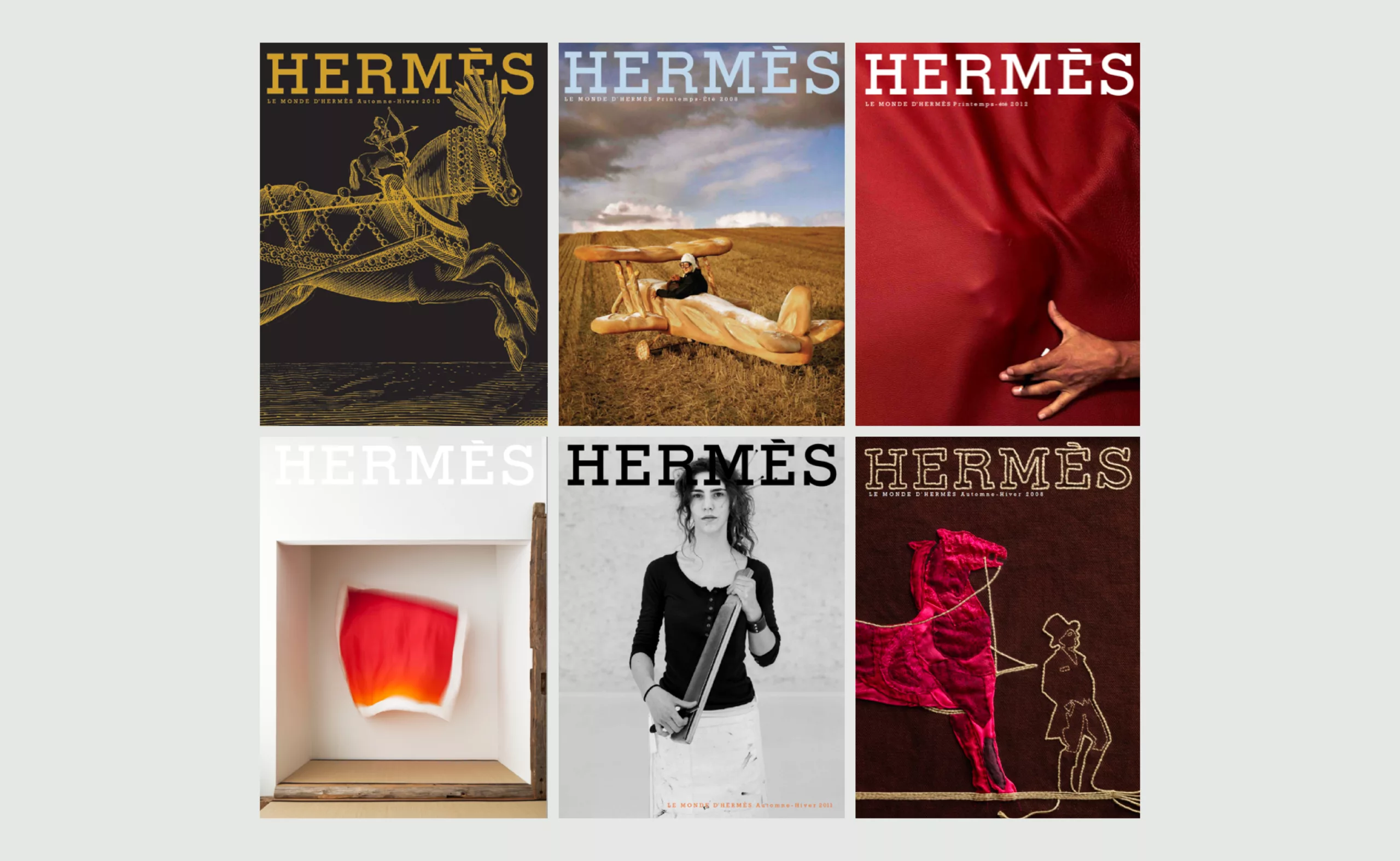
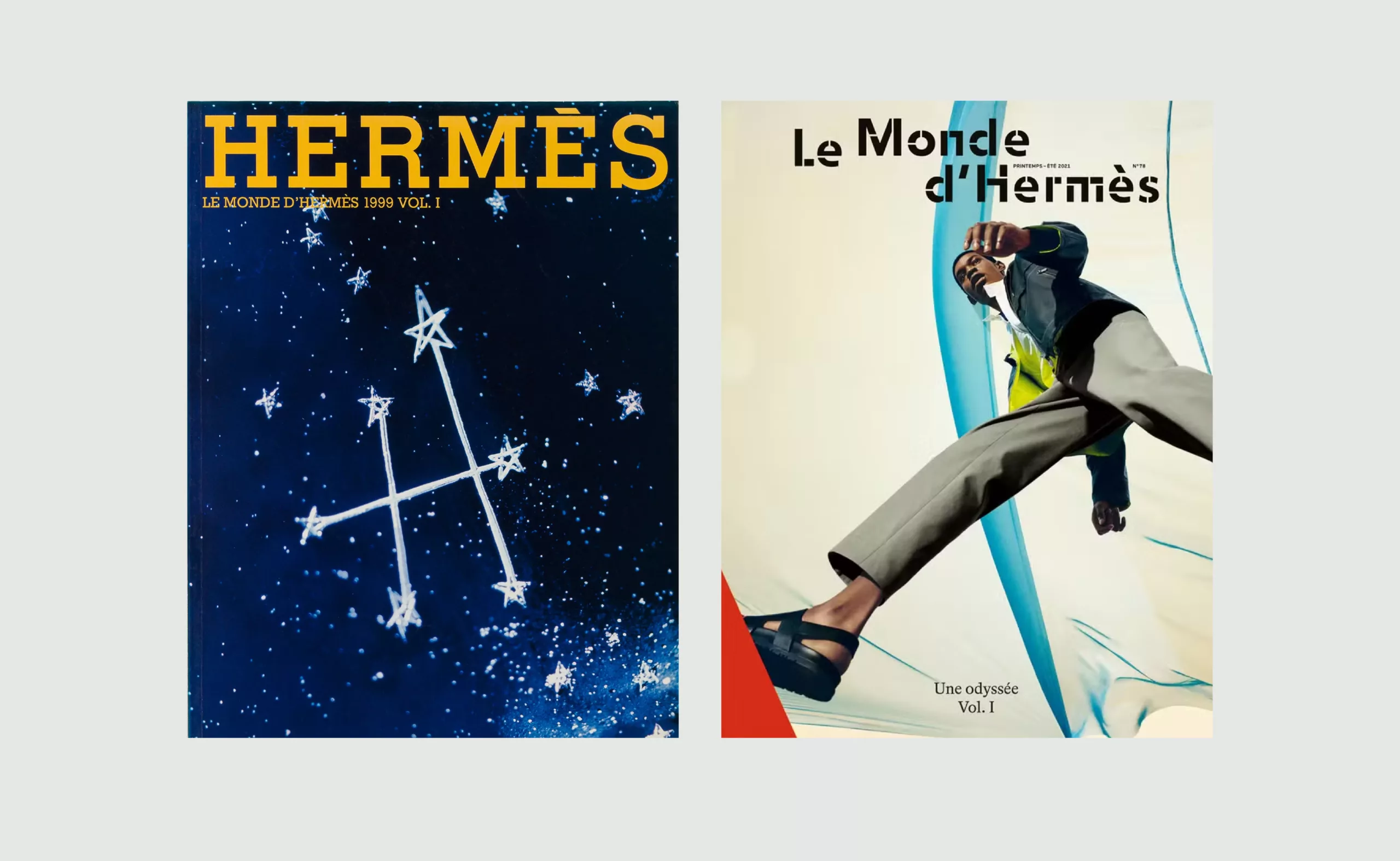
Twice a year, the magazine focuses on a particular theme, which has generally served as the guiding thread for the couture and accessories collections. (‘Le Geste innovant’ in 2020, ‘Une Odyssée’ in 2021, ‘Vive la Légèreté’ in 2022, ‘L’étonnement’ in 2023, ‘L’esprit du Faubourg’ in 2024).
For 2025, the theme is none other than ‘Design in all its forms’.
Le Monde d’Hermès remains the undisputed benchmark for brand magazines. It is published in 600,000 copies in 11 languages.
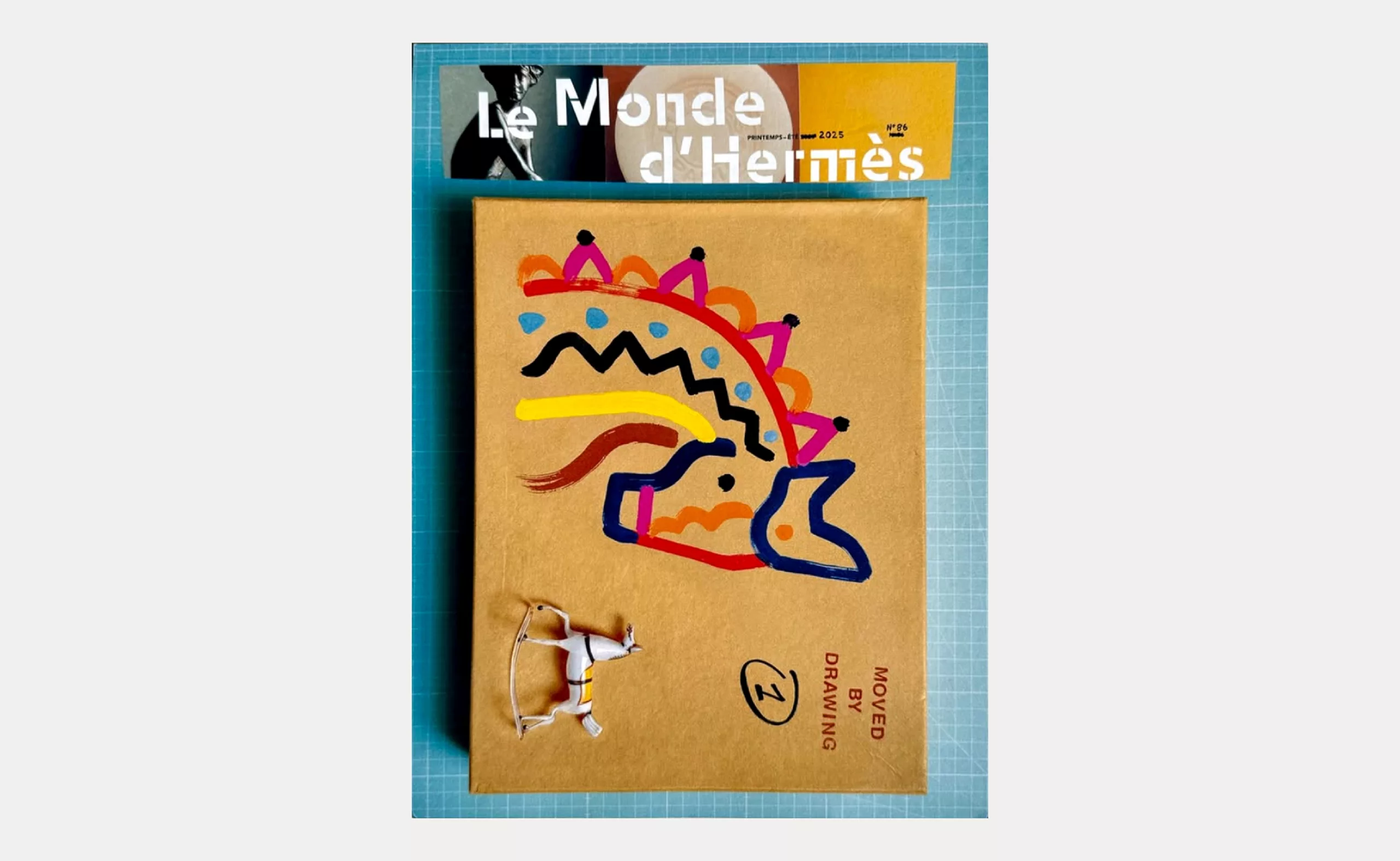
Since the 1990s, the cross-disciplinary nature of the luxury world has encompassed a wide range of fields. Contemporary art, design, graphic design, music, but also philosophy and literature are all disciplines that have enriched the ‘World of Hermès’.
Its reputation has been built by seeking out the best contributors, including historians, specialists, artists, writers, filmmakers, architects and celebrities. Far from standard catalogues that only showcase fashion products, the magazine has become the ideal medium for storytelling, which can then develop issue after issue, in tune with the seasons.
The brand prides itself on having a point of view, a perspective on the world today.
Recently, Le Monde d’Hermès has diversified, and now offers a podcast and an Instagram account alongside the print edition.
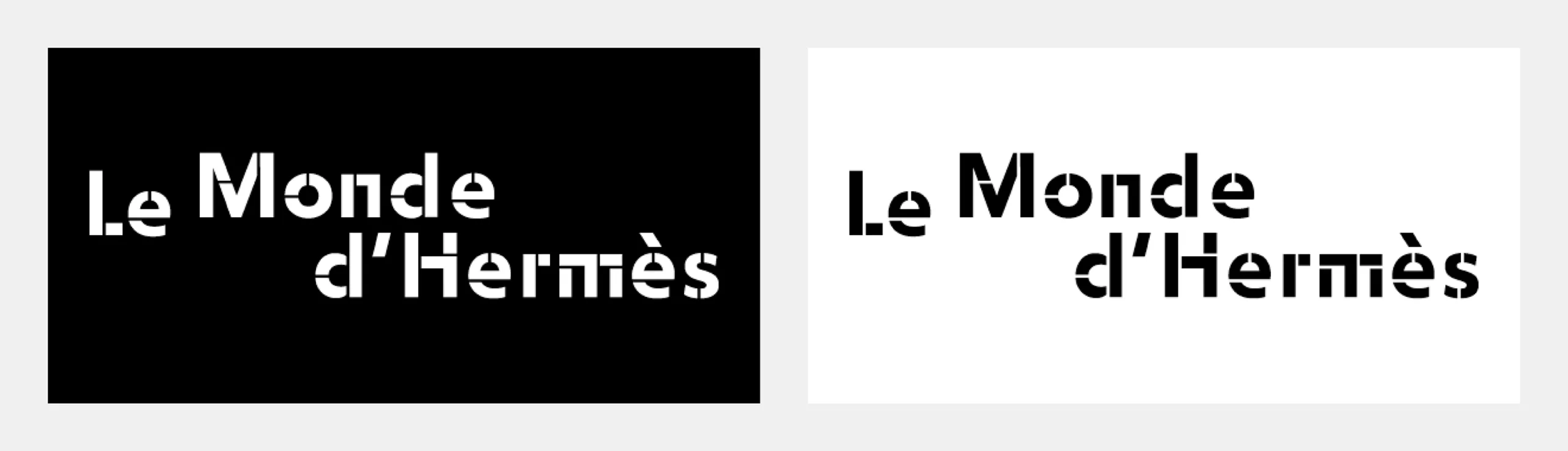
In 2019, Hermès entrusted the redesign of the magazine’s visual identity to graphic designer Philippe Apeloig.
An essential reference, Le Monde d’Hermès has also become a heritage collector’s item that is preserved, sold and exchanged. The first 13 issues, which have become very rare, now fetch the same prices as certain historical photo books.
A whole host of small details enable connoisseurs to evaluate the collector’s ‘vintage’. From 1993 onwards, for example, Hermès decided to publish its catalogue twice a year. The words ‘Vol. I’ and “Vol” that appeared on the spine of the magazine were replaced in 2000 by ‘Spring-Summer’ or ‘Autumn-Winter’.
Two issues are particularly sought after: the Autumn-Winter 2010 issue, with a gold Pegasus cover on a black background, in tribute to Emile Hermès, who had just died that year.
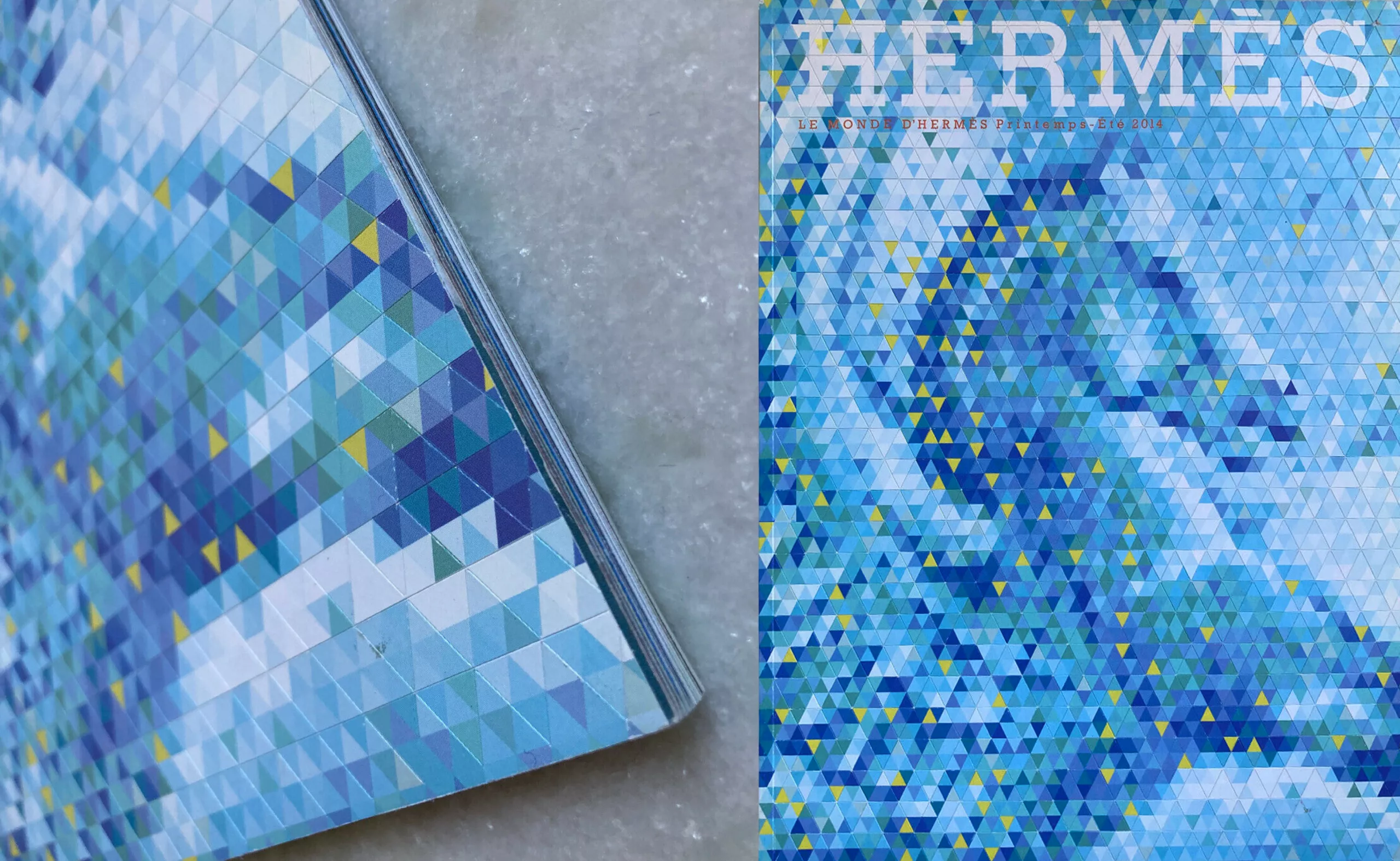
Another noteworthy issue is the Spring/Summer 2014 edition, number 64, whose cover consists of small triangles forming a mosaic, with each triangle able to be folded.
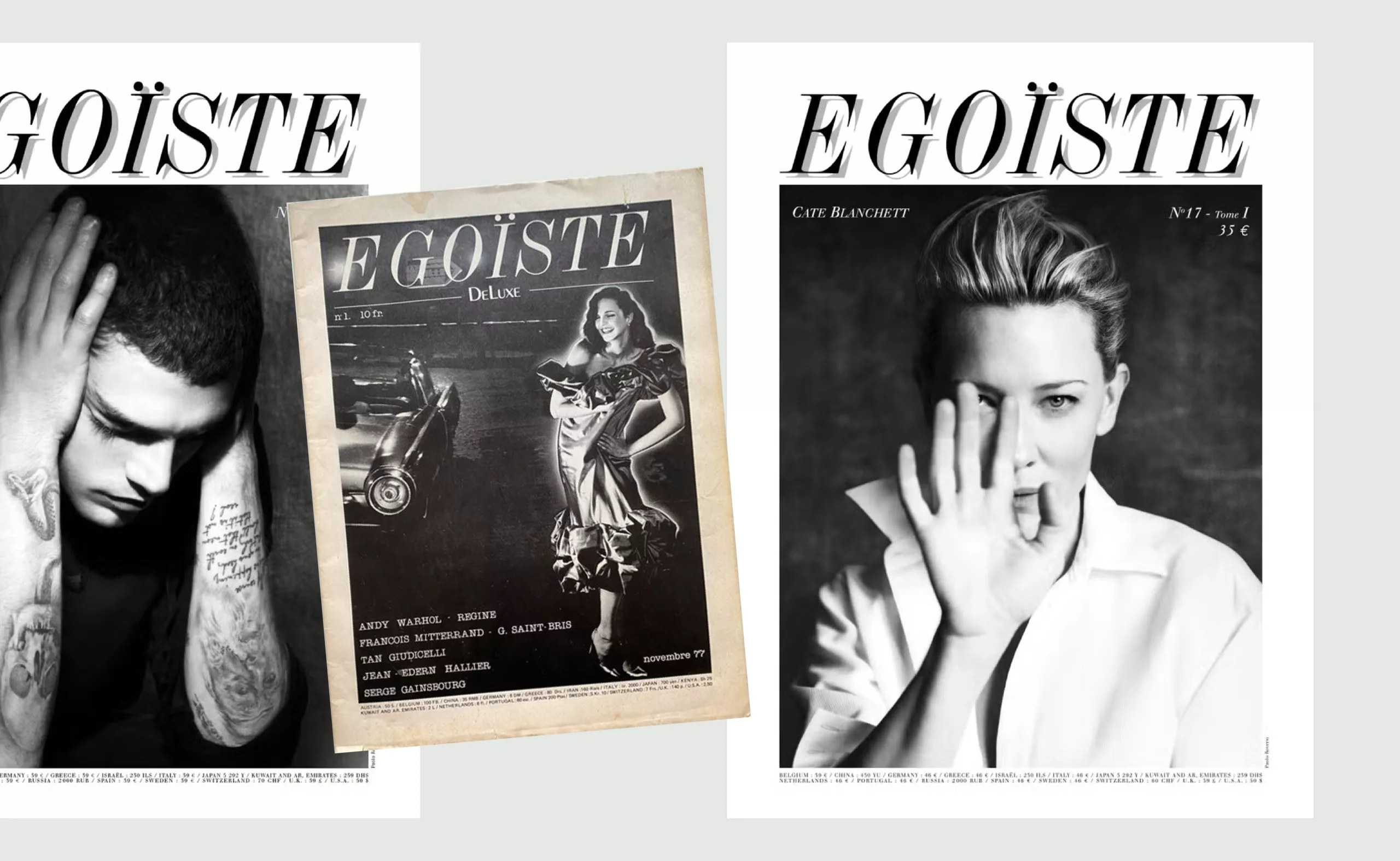
In 1977, a magazine caused quite a stir.
Égoïste was an irregularly published French magazine devoted to photography, founded in 1977 by Gérard-Julien Salvy (director) and Nicole Wisniak (editor-in-chief).
The format was large, immense, unstapled, with text in Garamond font, heavy paper weight and remarkable print quality with deep blacks, which some would describe as ‘dramatic blacks’.
This is not a fashion magazine, it is something else.
It is a state of mind, a carte blanche given to great photographers such as Helmut Newton, Guy Bourdin, Richard Avedon, Paolo Roversi and Ellen von Unwerth.
Photographs have always played a prominent role in Égoïste, with long portfolios exploring a single subject.
It features texts by great writers such as Françoise Sagan, Patrick Besson, M. G. Le Clézio, Yannick Haenel, Marguerite Duras, Cioran, Jean-Edern Hallier, William Styron, Jean d’Ormesson, Michel Tournier, Bernard-Henri Lévy and François Nourissier.
Advertisements for the world of luxury are exclusive.
In just a few years, Egoïste will become a sought-after magazine, collected and adored by many lovers of luxury and chic.
With a timeless feel and uncertain publication schedule. No one knows when the next issue will come out. ‘For me, time doesn’t exist,’ says Nicole Wisniak. I don’t have a realistic relationship with it. I don’t like living in the present, it’s too stressful.”
So, of course, ‘Égoïste’ is not a brand magazine, there are many brands inside, although over the years ‘Égoïste’ has become a brand in its own right.
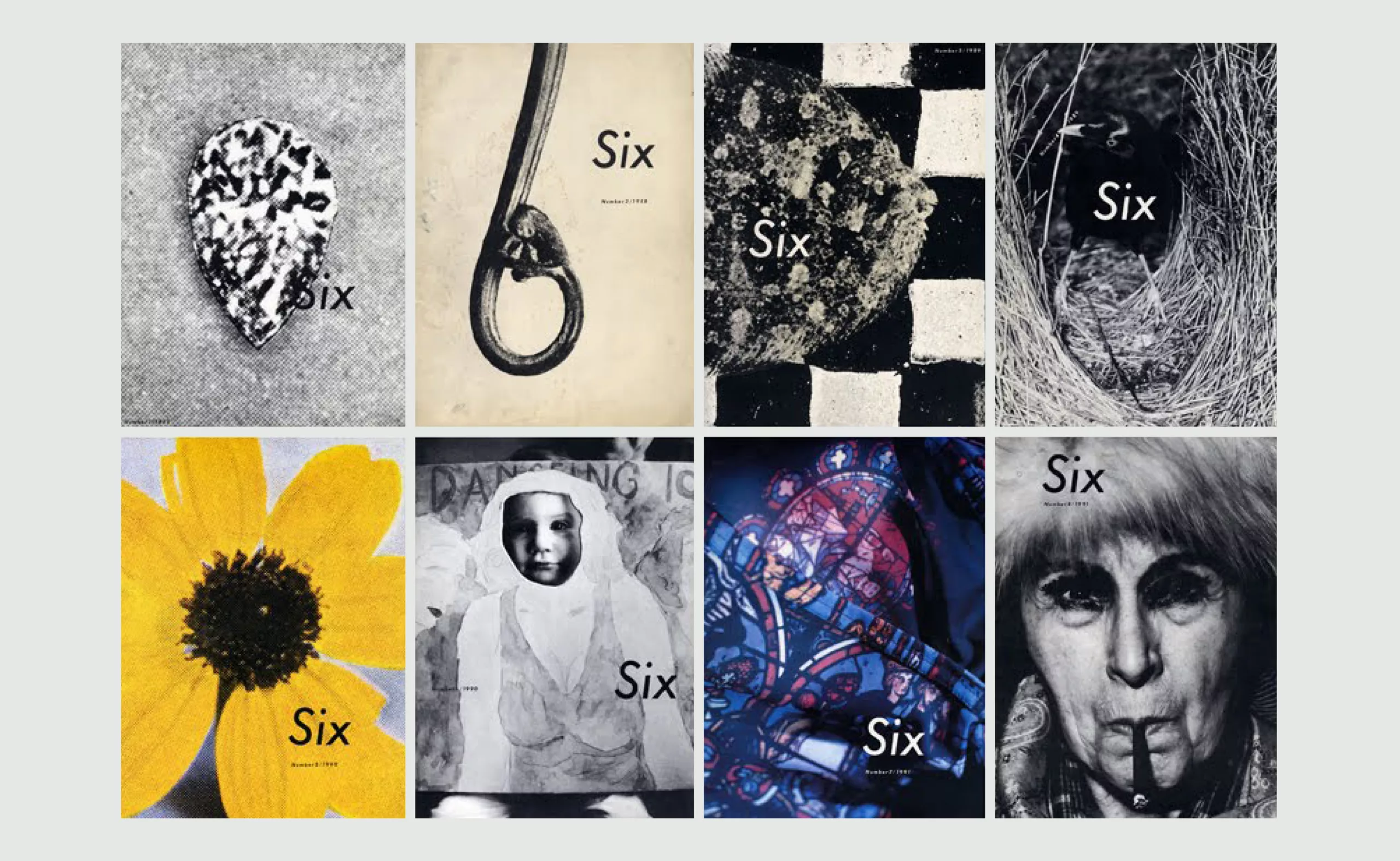
In 1988, Rei Kawakubo, designer and founder of Comme des Garçons, launched ‘SIX’ (or ‘SIX Sense’) in reference to the sixth sense. A large-format (A3) biannual publication, with unstapled pages and intense black printing, it was published to accompany the arrival of new collections in stores.
With a print run of 26,000 copies, ‘SIX’ was distributed to journalists and fashion editors and given to customers.
The layout and approach of the magazine were resolutely avant-garde. Tsuguya Inou, the artistic director, explained the spirit of the magazine.
‘The first issue contained a text that explained a little better what we were trying to do, but we removed it. The images alone allowed people to understand what it was all about!’
For Rei Kawakubo, ‘the image is a silent language, and “Six” is a visual commentary, a space for carte blanche’.
One need only compare the layouts of ‘SIX’ from the same period with the graphic deconstructions of David Carson or Neville Brody to appreciate the neo-conservative nature of the design.
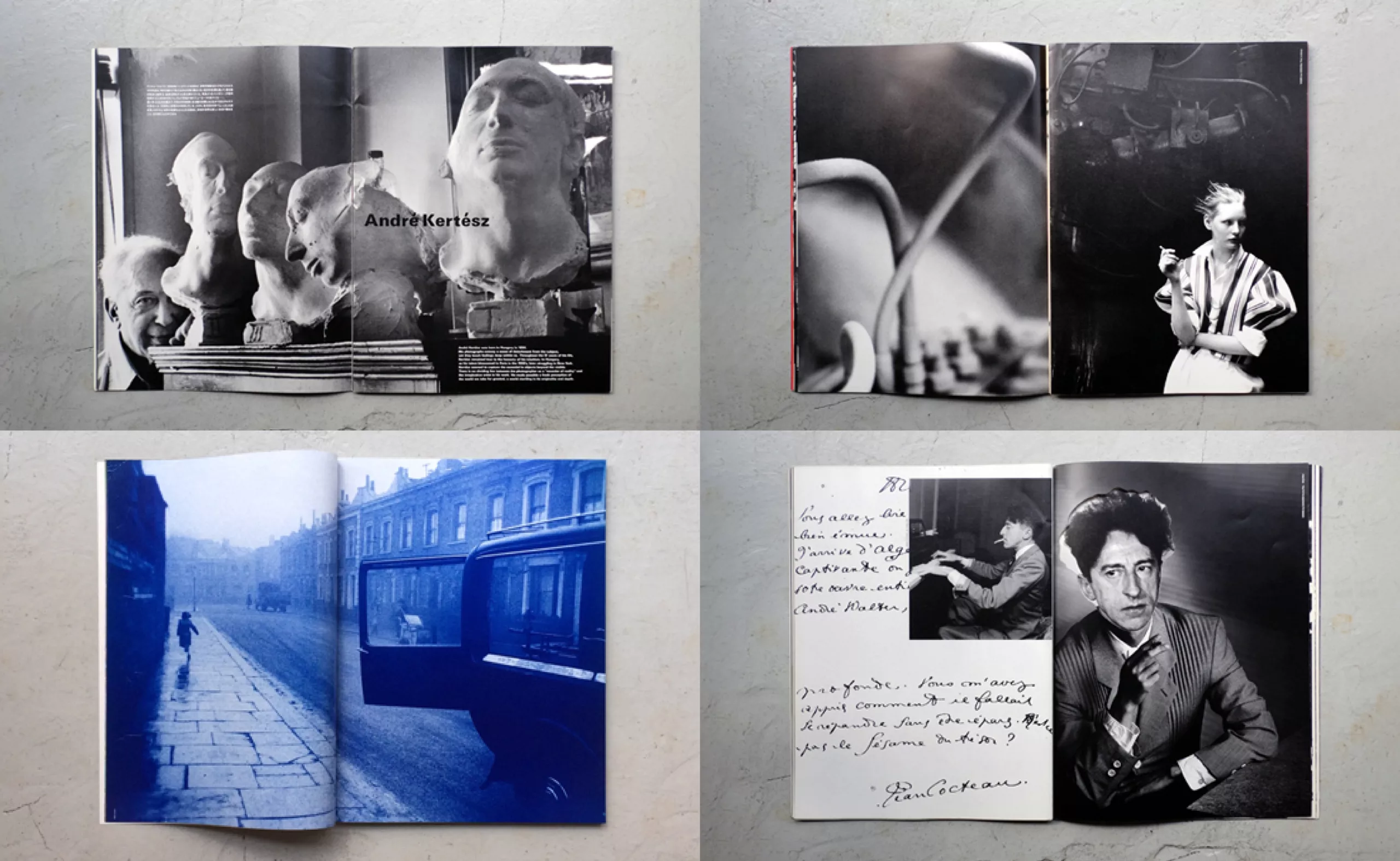
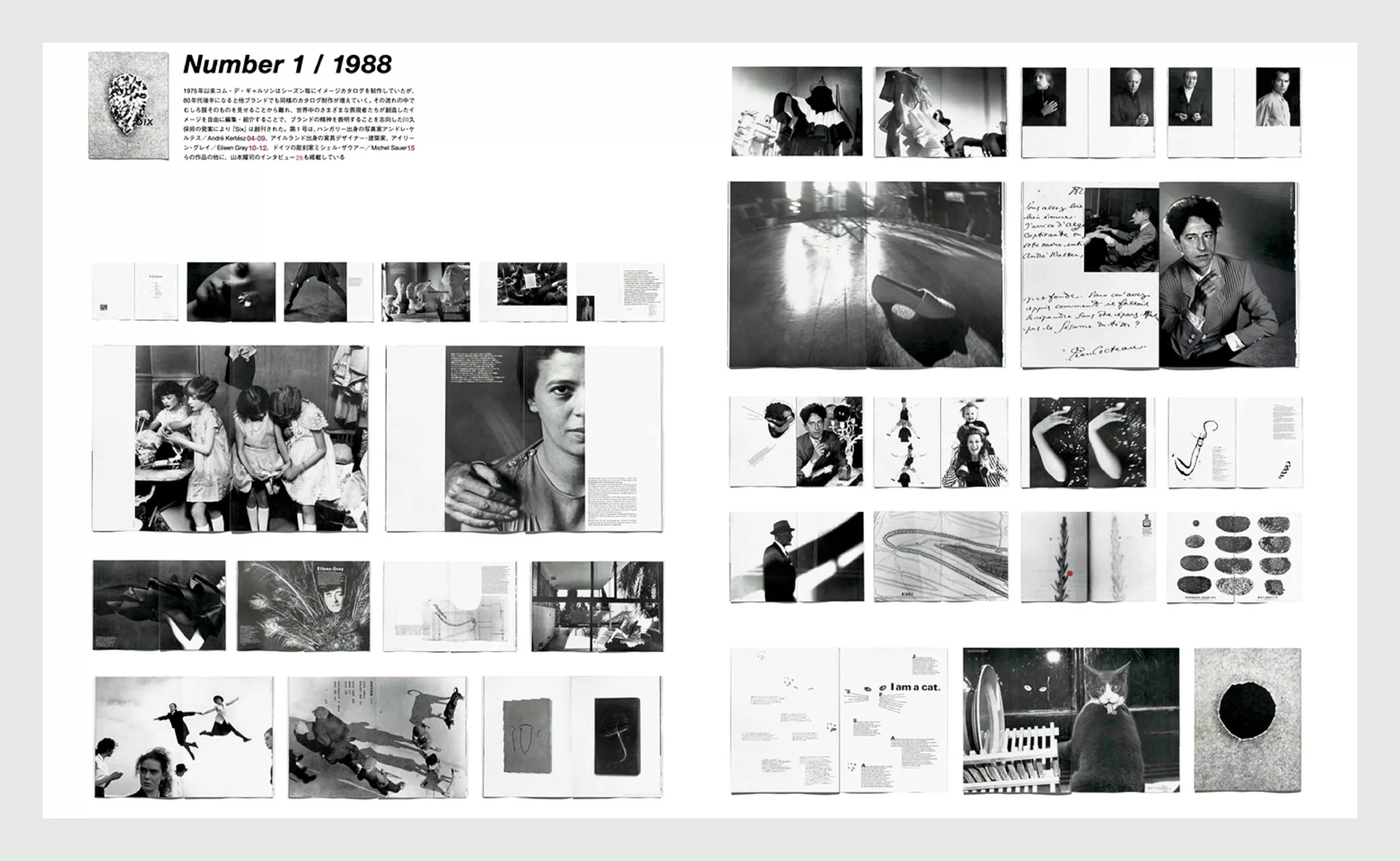
Comme des Garçons clothing hardly ever appeared in ‘SIX’, as the aim was to implement an innovative branding strategy. The various issues consist almost exclusively of images that are often far removed from fashion itself, but which construct the aesthetic universe unique to Comme des Garçons.
From André Kertész’s photos of elephants to Blossfeldt’s flowers, Gilbert and George’s assemblages, Robert Frank’s iconic photos of Americans, Joseph Koudelka’s photos, and architectural visuals. Pastels by Italian painter Enzo Cucchi, reframed by Tsuguya Inou.
In issue 3, we discover Azzedine Alaïa, not as a fashion designer… but as a cook in Tunisia, with photographs by Richard Dumas.
‘This is our world, we think it’s beautiful, join us if you share our vision,’ summarised Tsuguya Inou.
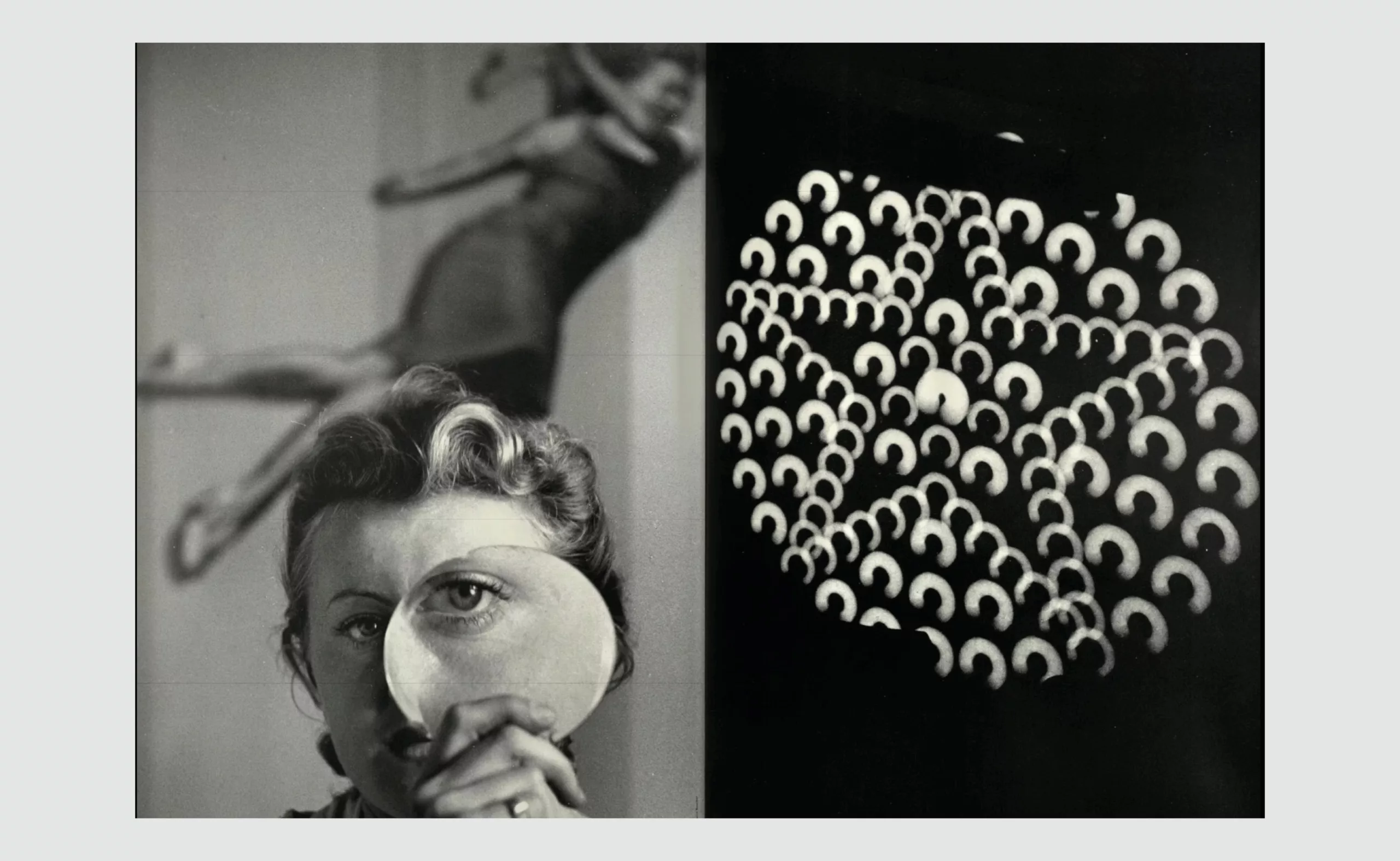
In the spirit of experimentation, ‘SIX’ called upon a wide range of creative minds who were rarely involved in the fashion world, and this is precisely what gave it a breath of fresh air.
‘SIX’ not only consolidated Comme des Garçons as an entity in its own right, it also changed the perception of fashion to this day.
And as for the ever-fickle market for rarities, the eight issues of ‘SIX’ magazine, distributed between 1988 and 1991, now sell for around €5,000.
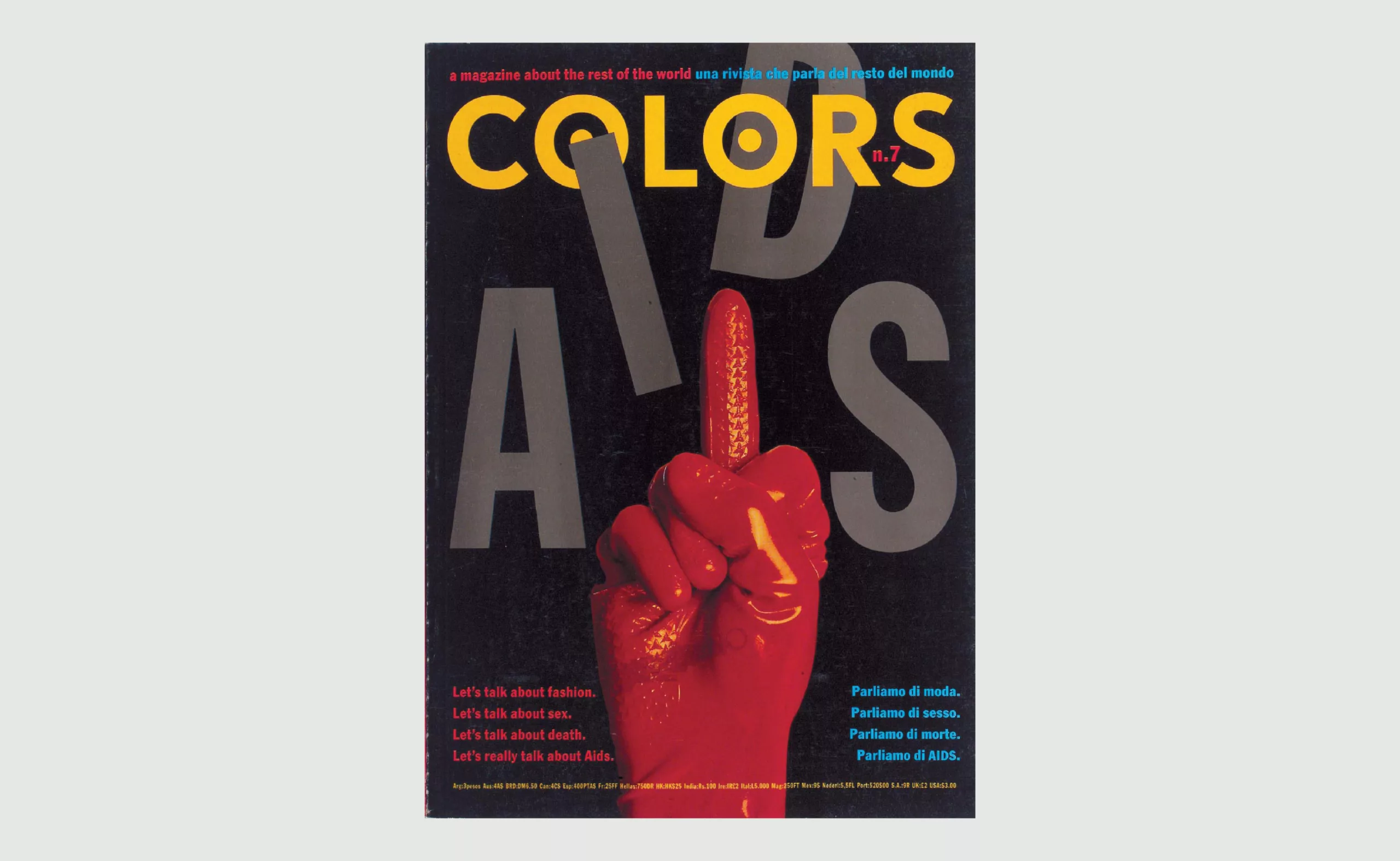
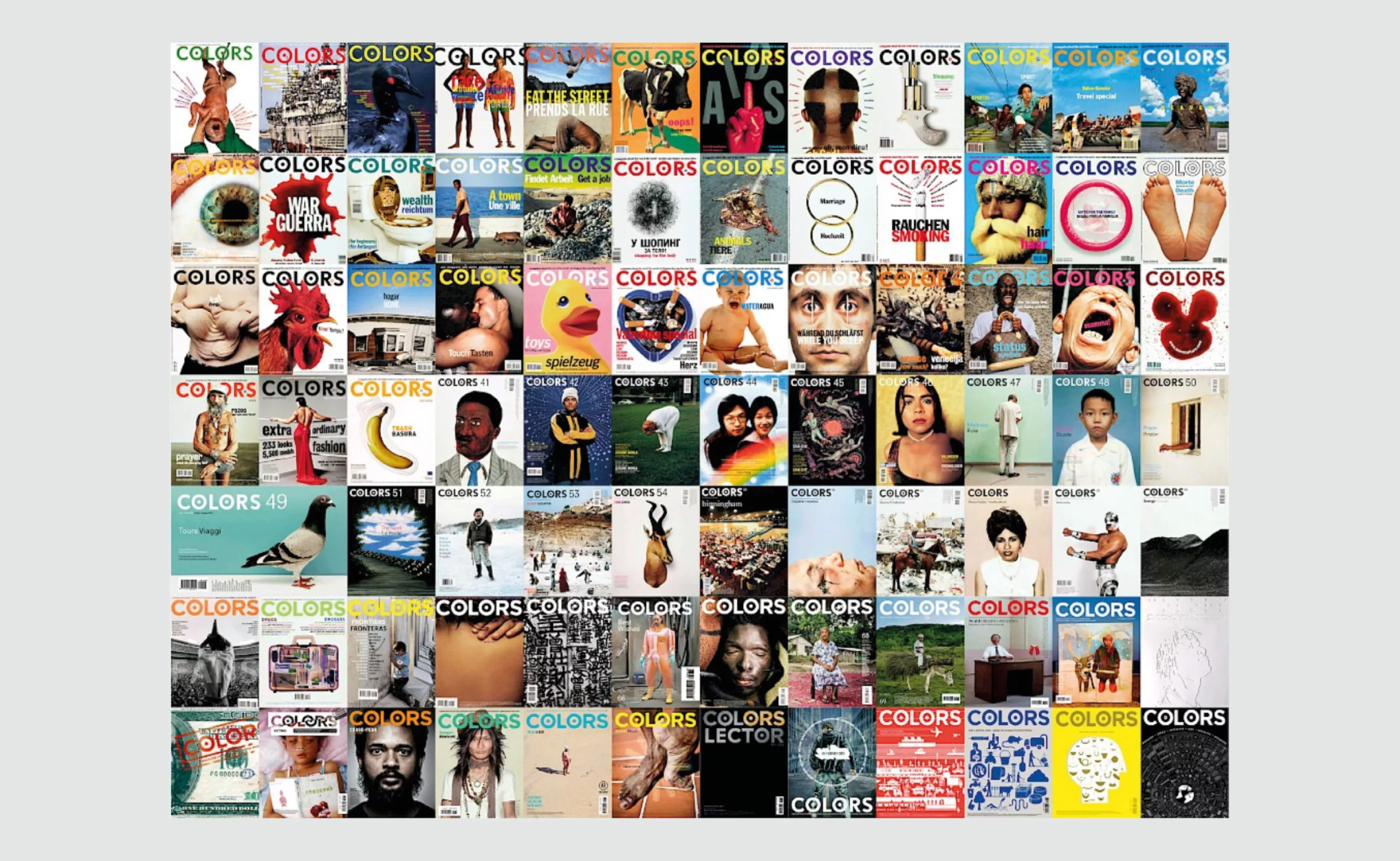
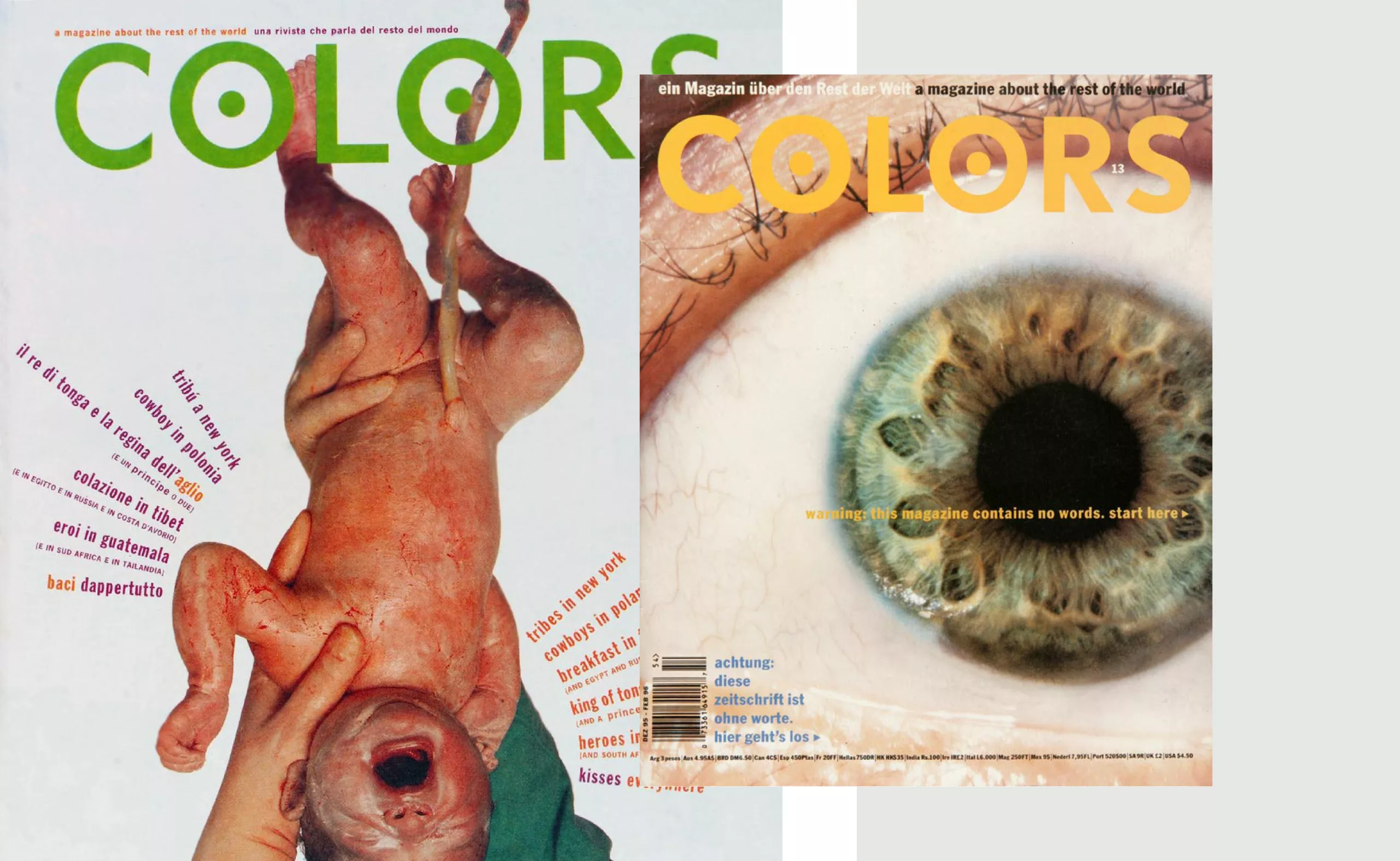
Another historical reference, more mainstream, and one that marked an entire generation, was Colors, Benetton’s quarterly magazine sold at newsstands from 1991 to 2014.
Of the 90 issues, there was little fashion but many themes reflecting real social issues, such as immigration, religion, sport, sexuality, animals, drugs, and more.
This social magazine, created by photographer Oliviero Toscani and graphic designer Tibor Kalman, was developed at Fabrica, the creative laboratory set up by Toscani for Benetton.
The magazine has received awards from around the world, including first prize in the Art and Entertainment categories of the 2010 World Press Photo and the Silver Award at the 90th Art Directors Club Awards.
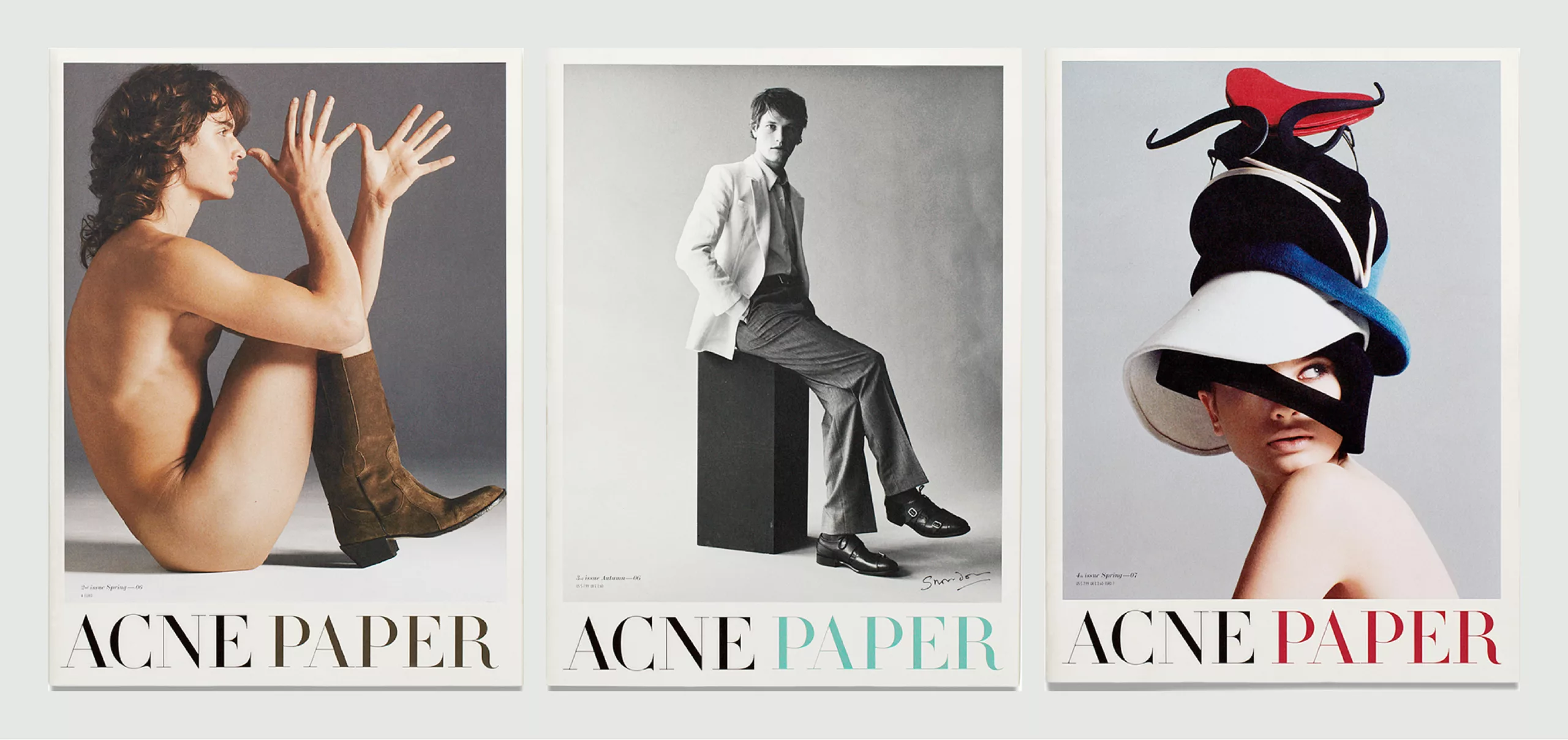
Launched in the early 2000s, Acne publishes a biannual magazine, Acne Paper, distributed in newsstands and bookshops, which hardly mentions Acne at all.
Like Le Monde d’Hermès and SIX, Acne Paper explores society through an interdisciplinary editorial approach in which the past informs the present. This angle is found in many brand magazines.
The guiding principle is a timeless theme that covers everything from 15th-century tapestry to LGBTQ culture, Flemish master painting to street photography, theatre to sculpture, contemporary dance to meditation.
‘Acne Paper was born out of a conversation I had one evening at a party with Jonny Johansson, one of the co-founders,’ explains Thomas Persson, the magazine’s editor-in-chief. ‘He had the idea of launching a magazine in which no subject would be off limits. It’s a real freedom to have such carte blanche.’
Fifteen issues were published between 2005 and 2014, making this hybrid medium a cult object. Just like the brand name Acne, which stands for Ambition to create novel expressions.
Relaunched in 2024, Acne Paper has been redesigned in a new 500-page format that is a cross between a book and a magazine.
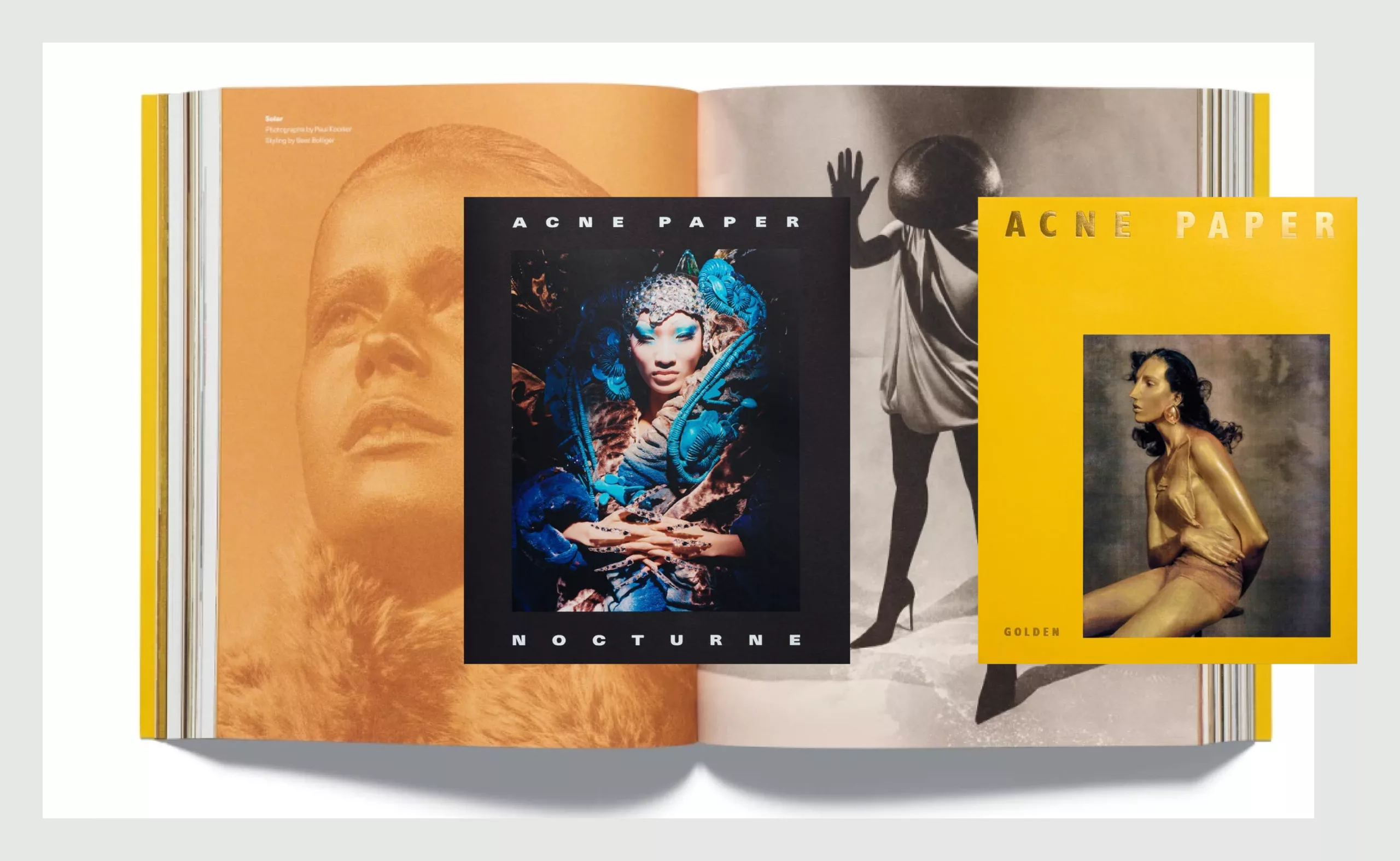
For more than 10 years, almost all players in the luxury world have succumbed to the appeal of paper and the seduction of personal magazines. To the need to stand out from mainstream communication.
Is it a coincidence that this corresponds to the arrival of Instagram in 2014?
A paper magazine offers a different temporality compared to the flood of social media, which levels everything and reduces attention to the present moment. Today, major brands are seeking to set themselves apart by highlighting their tradition of expertise, the excellence of their luxury crafts, and the skills of artisans nourished by decades of experience.
The magazine thus becomes a mirror of the values developed by the brand.
In terms of creation and production, it is no surprise that brands call on recognised professionals, whether they are editors-in-chief, journalists, graphic designers or manufacturers.
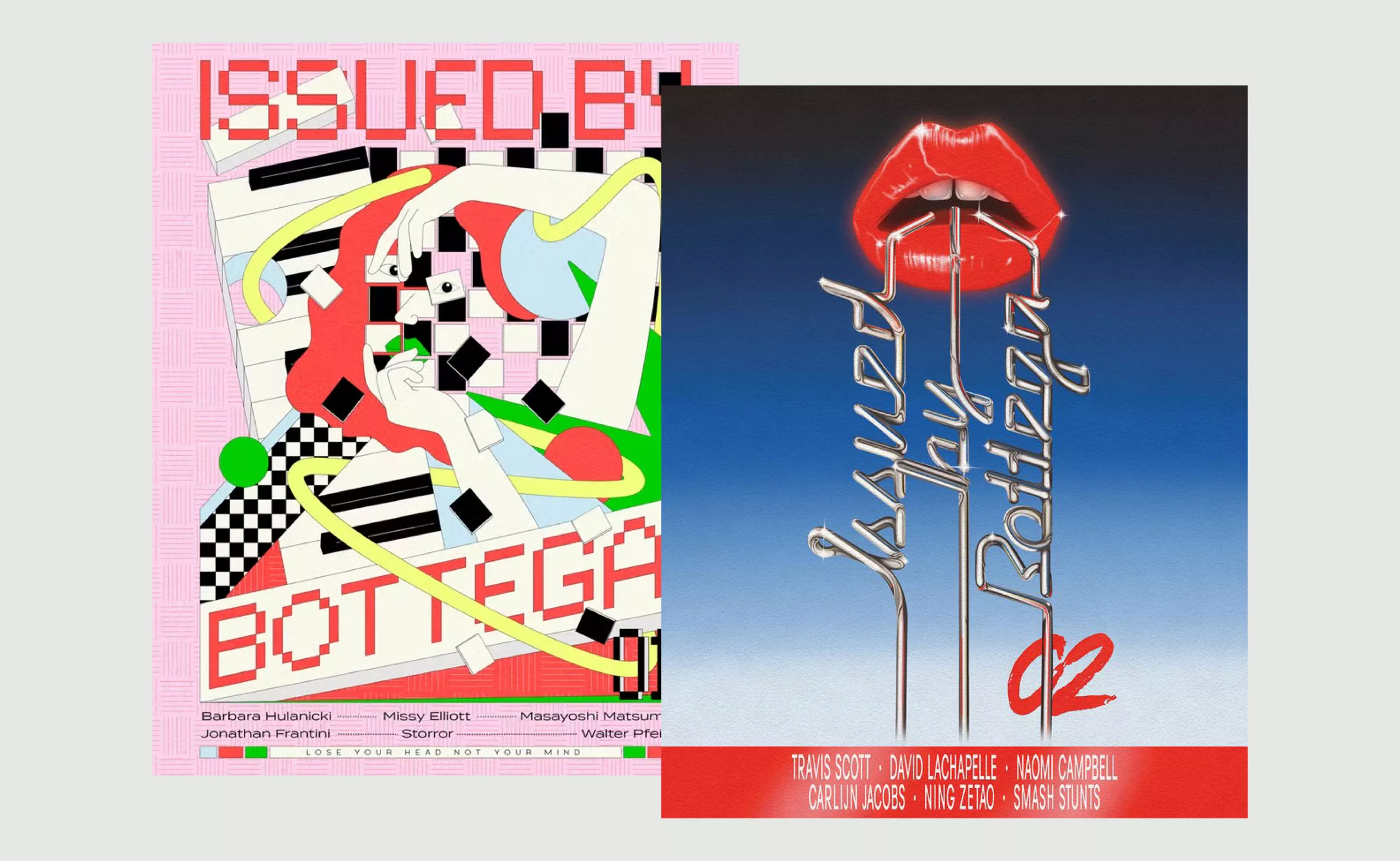
In January 2021, Bottega Veneta, the Italian flagship of the Kering group, caused a surprise by withdrawing from social media and its 2.5 million followers. How can this move be explained when all luxury players are seeking maximum visibility with their publications?
The response was not long in coming.
A month later, Bottega Veneta launched a 132-page quarterly digital magazine, ‘Issued by Bottega’.
The importance of exploring a slower pace in today’s fast-paced culture. A counterpoint to the fashion environment, which is increasingly ‘Instagrammable’ and hyper-connected.
In this fast-paced era, we are also witnessing a shift towards dematerialisation.
Inevitably, the interface of social media does not stand out in terms of format, print quality, paper texture or design.
What if paper could make a difference?
High-end paper magazines offer another world, one of the emotion of touch and the feel of pages. They slow down the pace of discovery and offer an alternative to the immediacy of the screen.
Less intrusive, they are a more respectful medium. Readers choose to browse through magazines picked up in shops at their leisure.
Many luxury brands are investing in the heritage aspect of the product.
‘Social media represents a total homogenisation of culture. I spend a lot of time thinking about what I do, and social media oversimplifies everything,’ Daniel Lee, creative director at Bottega Veneta, recently analysed.
The eternal question remains about the very nature of these media…
Is it information or commercial communication, advertorial content? A mixture of genres that offers little opportunity to go beyond the brand’s conventional wisdom and political correctness.
Things seem less black and white when we question the dependence of all fashion magazines on their advertisers.
How can we take a critical view of a brand that buys advertising space?
In this case, displaying the brand name on the cover would be a form of transparency.
‘Yes, you are reading the Hermès or Acne magazine, and we are proud of it.’ Some even talk about the authenticity of the medium.
Finally, with a touch of nostalgia, behind the word ‘magazine’, what we hear is perhaps also ‘shop’ and the idea of real commerce with shop windows, salespeople and the physicality of products.
Shop and magazine were originally one and the same word and have the same etymological root, ‘Makhzan/Makhâzin’, an Arabic word meaning warehouse. A story of Z that evolved over time into S.
More than 30 years ago, as digital technology began to invade our daily lives, Rei Kawakubo, for Comme des Garçons, anticipated our need for meaning with ‘SIX’.
So, in the age of Instagram, simply running your fingers over the pages of a high-quality magazine feels incredibly good.
Some figures:
Le Monde d’Hermès is over 50 years old and has a circulation of 600,000 copies.
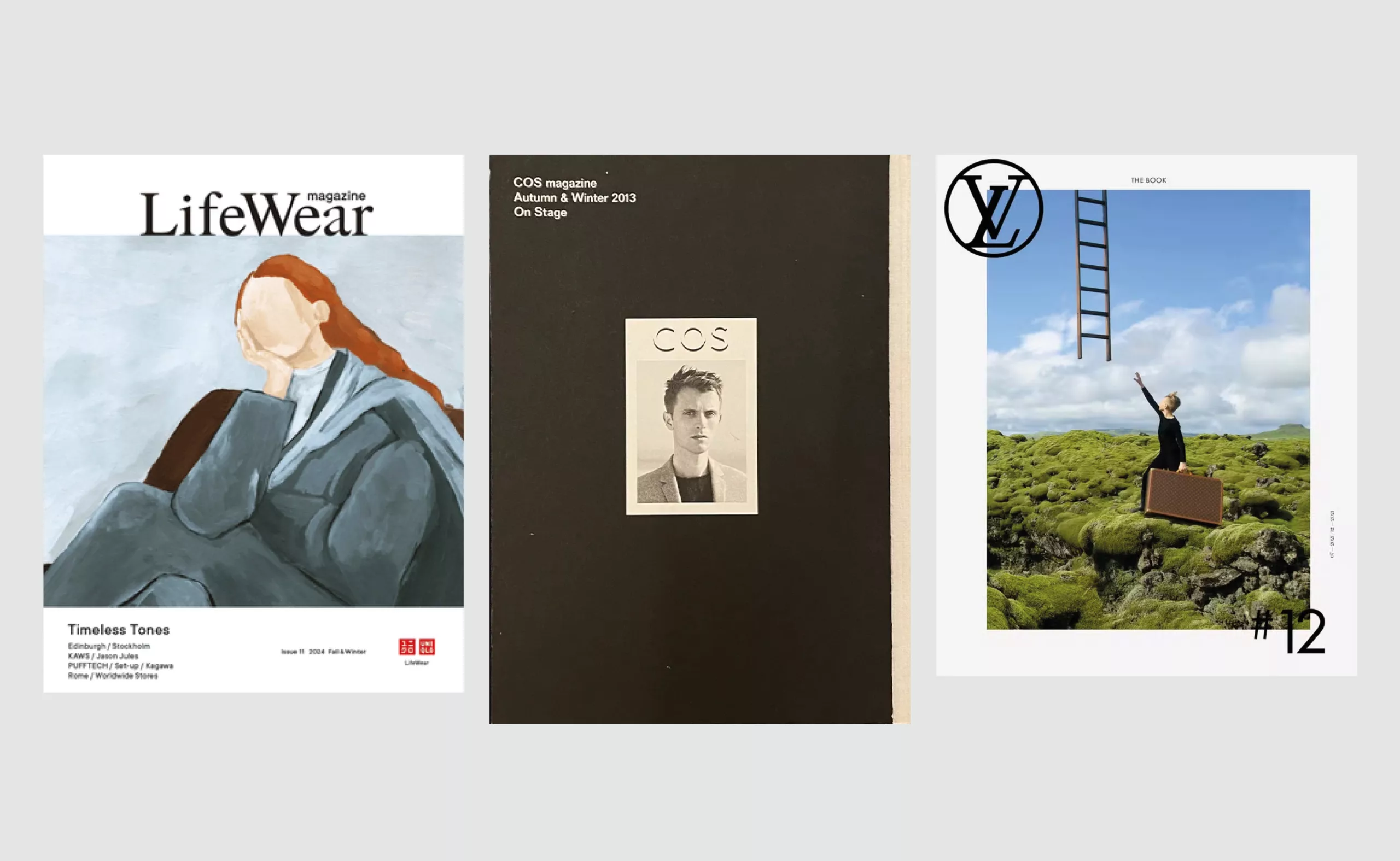
LifeWear, Uniqlo’s magazine, has a circulation of 1.5 million copies.
LV The Book has a circulation of 1 million copies.
Acne Paper has a print run of 20,000 copies.
These print runs are equivalent to those of major fashion magazines. ELLE France has a print run of 350,000 copies, while Vogue USA has a print run of over 1 million copies.
Some dates – Creation
Le Monde d’Hermès, 1973
“Six”-Comme des Garçons, 1988/1991
“Colors-Benetton”, 1991/2014
“Acne Paper”, 2004
“Cos”, 2007
“LV The Book”, 2014, 120 pages, translated into 11 languages
“LifeWear Magazine-Uniqlo”, 2019
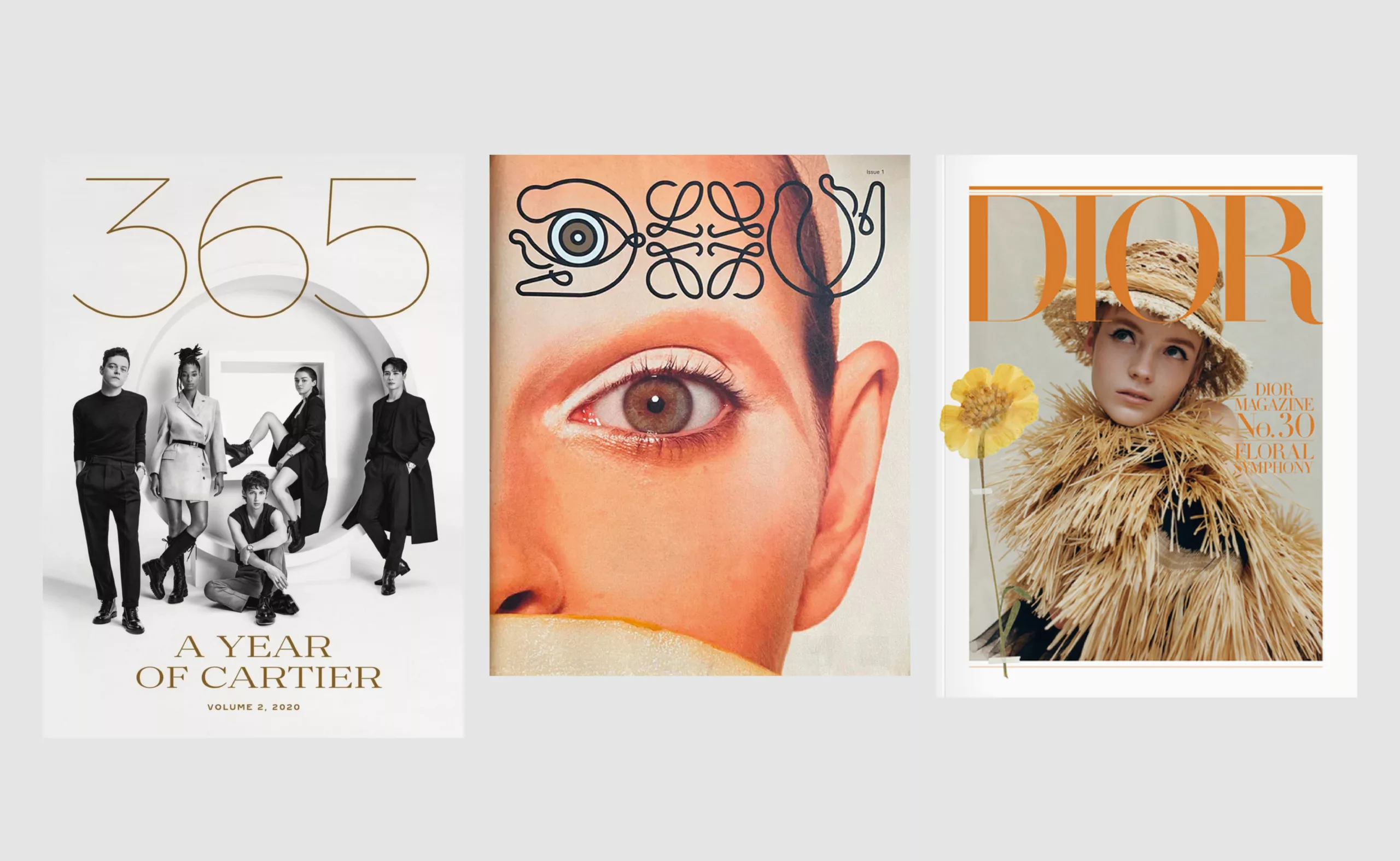
“365-Cartier”, 2019
“Dior magazine”, 2012/13
“Kenzo”, 2021
“Loewe Issue”, 2021
A place
In Paris, a stone’s throw from Place de la République and Carreaux du Temple, is the Ofr. Paris bookshop.
Adored by all fans of contemporary art, photography, fashion and rare publications, it stocks some precious and sought-after vintage magazines.
Written by: François Chevret
On the subject
-
A history of mascots
Mascots, those soft, slightly silly characters, are nothing new. Here’s a look at their origins, from Antiquity to Japan.
-
Color and brands are all about identity !
Many brands use colors as symbols to convey their identity. But can we really legally appropriate a color?
-
There is no smoke without brands!
As there is no smoke without brands, see why the cowboy firm tries to pack of cigarettes without logo.