When the Anatome gallery was the place to be for graphic design in Paris

For a long time, Paris did not have a specific space for exhibiting graphic design.
It was not until the turn of the 20th century, in 1999, that Marie-Anne Couvreu and Henri Meynadier opened the Anatome gallery. For more than 12 years, they took up the challenge of promoting and bringing to life graphic design in all its diversity.
That was 25 years ago. The memories are still vivid for many people for whom the Anatome gallery was much more than just an exhibition space.
It was a place of discovery, exchange, debate and encounters, a festive place where friendship was the order of the day.
This initiative was met with enthusiasm and immense hope… the hope of seeing graphic design flourish in France.
38 Rue Sedaine, in Paris’s 11th arrondissement…
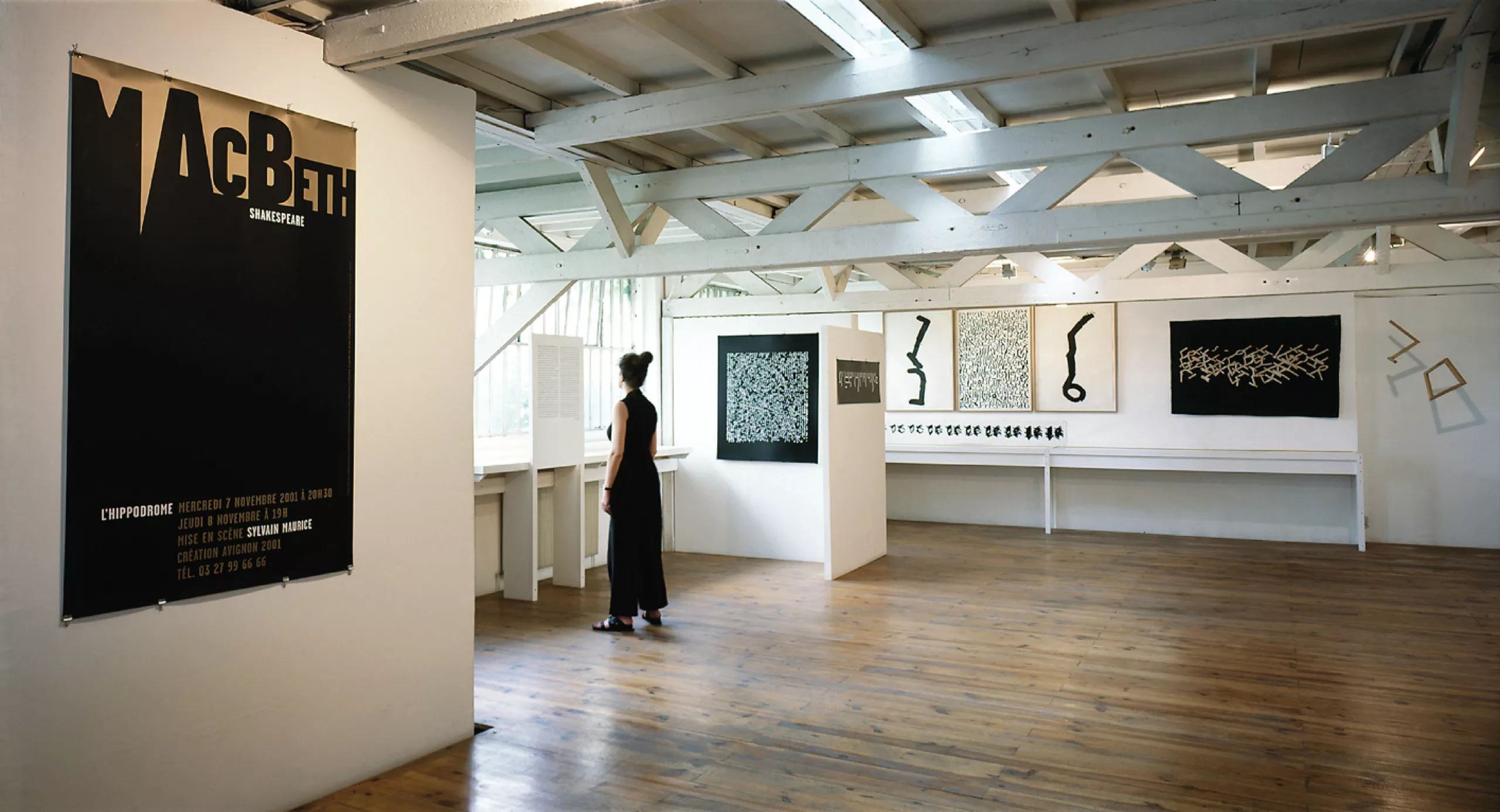
For an entire generation, this address near Bastille still resonates with the opening nights of a unique venue dedicated to graphic design in all its forms, with international appeal… the Anatome gallery.
The neighbourhood offered no particular cultural attractions and, from the outside, nothing distinguished the gallery from the old buildings on the street occupied by clothing wholesalers.
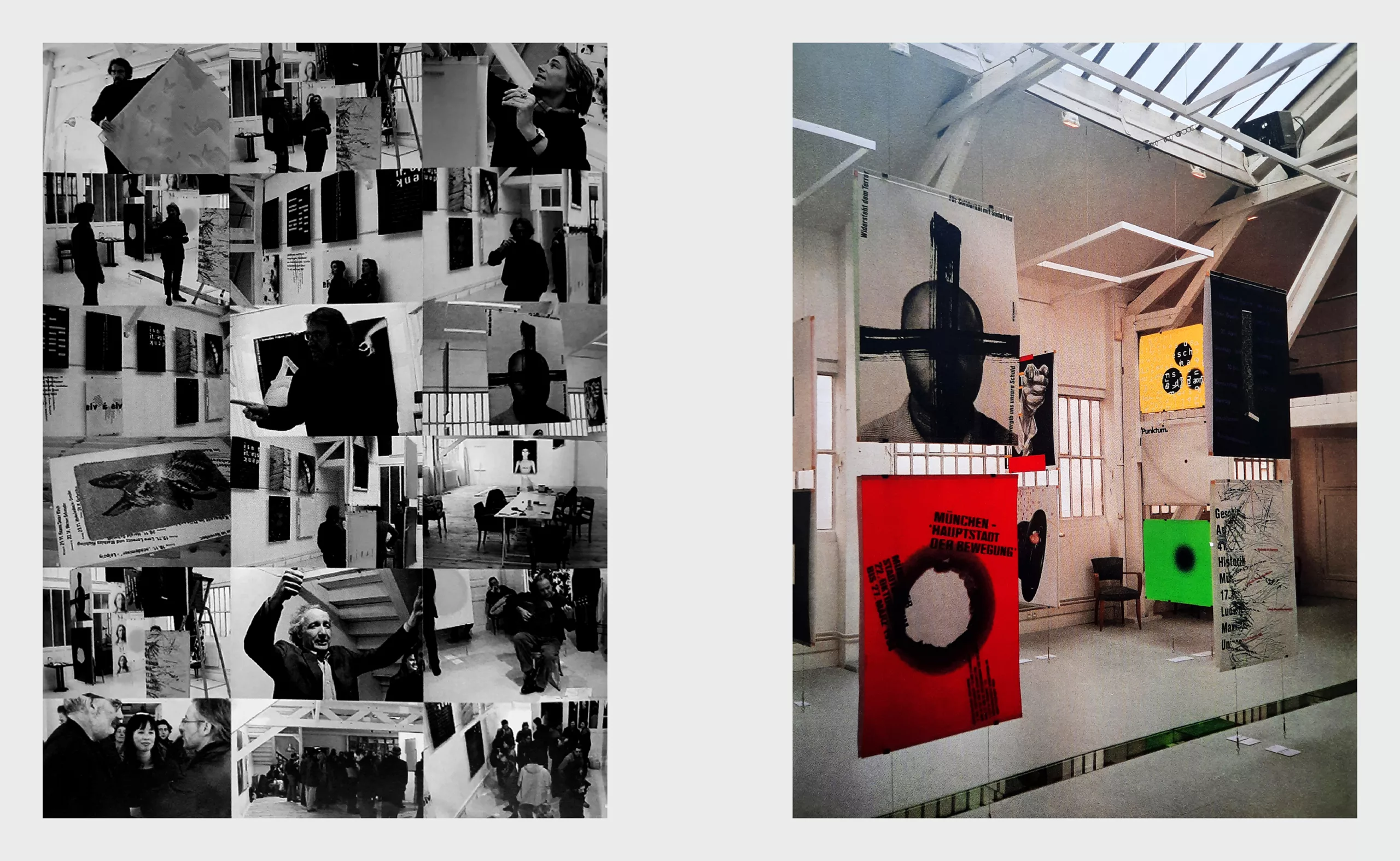
You entered through a paved, heavily planted inner courtyard that led to the gallery, a former workshop with bay windows and exposed beams painted white. It was a vast, bright space measuring 300 square metres over two levels.
At the end of the courtyard, a large two-storey building housed the Anatome communications agency, founded by Henry Meynadier in 1986 in Montpellier. It was home to various left-wing activists who had distanced themselves from the PCF’s overly rigid line.
At the time, the agency managed large accounts including Mutuelles de France, numerous ministries and institutions, as well as the Hérault General Council and its Espace in Paris. At the same time, Anatome established offices in Lyon, Limoges and Marseille.
In 1989, for an event, Anatome Montpellier rented premises that were managed by Michel Lévy, who was entrusted with developing the Paris agency’s business.
After several moves due to its growth, the agency settled in the 11th arrondissement, on Rue Sedaine.
“I didn’t know the gallery very well, as I left just as the idea of opening a space next to the agency was beginning to take shape. That was when we were working with several Swiss graphic designers, including Pierre Neumann, who introduced Marie-Anne Couvreu to Henry Meynadier.
This gallery was a dream for Henry Meynadier, who wanted to be close to artists.”
Michel Lévy, director and founder of the Anatome Paris agency from 1989 to 1993

A large agency, then, with one unusual feature.
“There was a beehive in Henry Meynadier’s office. A real beehive. And every day, tens of thousands of bees would fly off to gather pollen at the nearby Père-Lachaise Cemetery.
A hole the size of a plate had been made in a window so that the bees could fly freely around the offices. And every year, Henry Meynadier harvested the honey they produced. That amounted to about forty jars…
That was the spirit of the Anatome agency…”
Étienne Robial, Chief Creative Officer at Canal+.
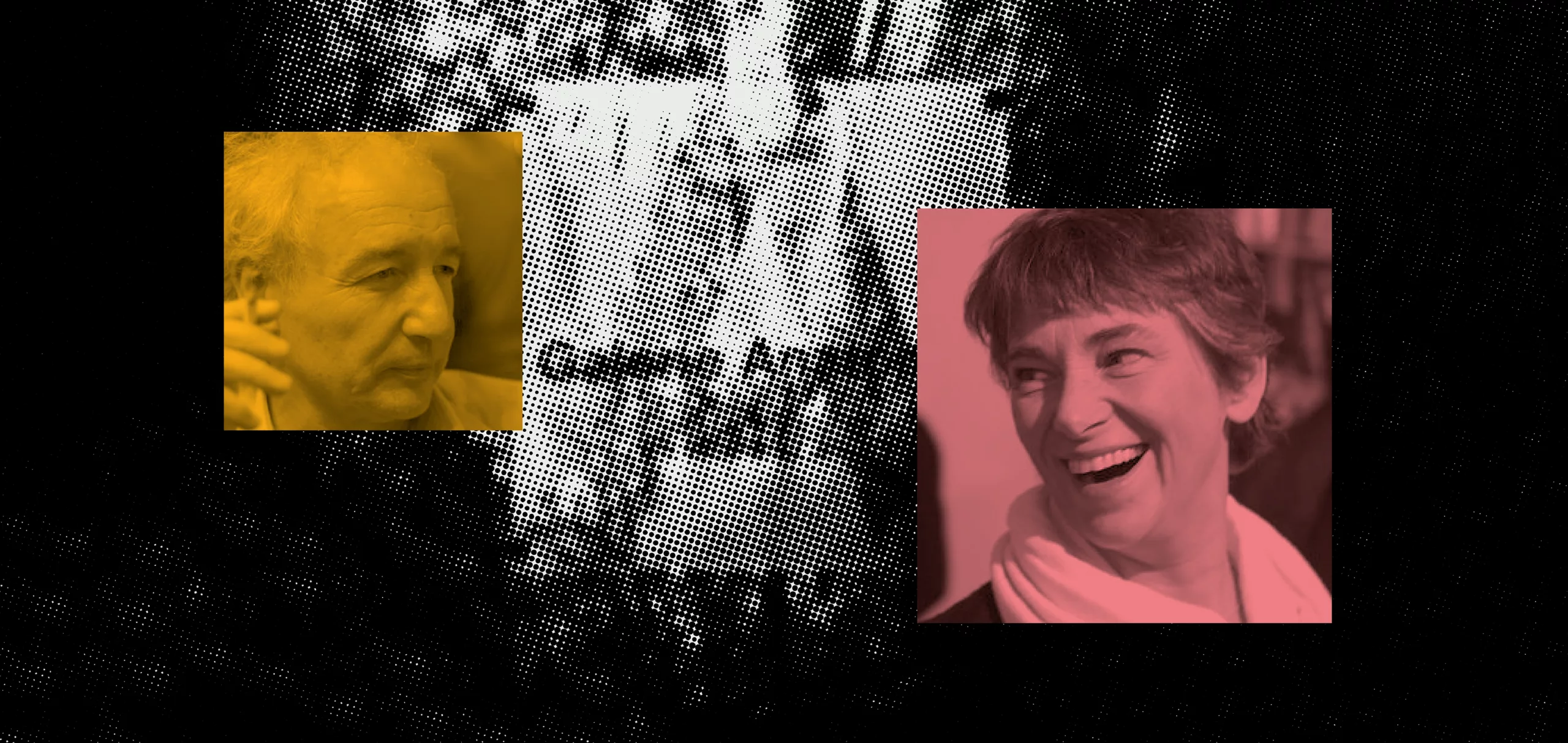
Marie-Anne Couvreu, originally from Switzerland, became creative director at the agency and travelled extensively.
She visited numerous art schools around the world, including Prague, Warsaw, Puebla in Mexico, and Montreal. She wanted to build bridges to welcome students to the agency for internships lasting several months.
With her international experience, she quickly realised how little visibility graphic design had in France and how little knowledge students had of graphic culture.
‘In England, Germany and the Netherlands, there are always places dedicated to graphic design,’ she explains. ‘This culture of graphic design is so widespread that everyone pays attention to their letterhead or the poster on the corner of their street. This is absolutely not the case in France.’
In 1998, the idea of opening a venue dedicated to contemporary graphic design took root in the minds of Marie-Anne Couvreu and Henry Meynadier. Especially since a former architects’ studio overlooking the courtyard was vacant.
The venue existed, but the editorial line remained to be defined.
Marie-Anne Couvreu’s idea was simple: ‘To see in Paris what was impossible to see at the time.’ To exhibit in the heart of the capital what she had discovered at the Warsaw Biennale, in Bonn, Zurich and even at the Mexico City Biennale.
To present life-size posters to an audience that could not travel, with a genuine educational focus on explaining the work of a graphic designer.
Because at the end of the 1990s, few people knew what graphic design was.
It was a time of major prestigious projects… the Louvre, La Villette, the Musée d’Orsay, but also theatres and museums. Culture was opening up to fields that had previously been considered secondary, such as fashion design, product design, comic books… and graphic design.
In France, architecture, photography and even design were clearly defined, but graphic design remained ill-defined.
The Chaumont Poster Festival was launched in 1989, followed by the Échirolles Festival the following year. But in Paris, there was almost nothing; there was no venue specifically dedicated to graphic design.

However, there were a few rare precedents that offered hope for recognition of the discipline.
In July 1972, Alain Le Quernec returned from Poland after spending a year in Henryk Tomaszewski’s studio in Warsaw.
And it was at the Saluden Gallery in Quimper that he exhibited Roman Cieslewicz’s work in 1974, on a personal basis. Then came Hans Hilman (1977), Jan Lenica (1978)… and the following year, Grapus’ first exhibition in France (1979).
Jan Sawka and the new Polish wave, Holger Matthies and Frieder Grindler, Shigeo Fukuda, Uwe Loesch…
It was in Villeurbanne that the first exhibitions were held in which graphic design was given pride of place.
After training as a graphic designer at the Zurich School of Applied Arts (Schule für Gestaltung), Ruedi Baur moved to Villeurbanne in the mid-1980s and created ‘Projet’, a magazine devoted to applied design. The fifth issue, entitled ‘3.06.85 ou projets’, marked a turning point. It took the form of the future catalogues of the Galerie Projets in Ruedi Baur’s studio apartment from 1985 to 1988.
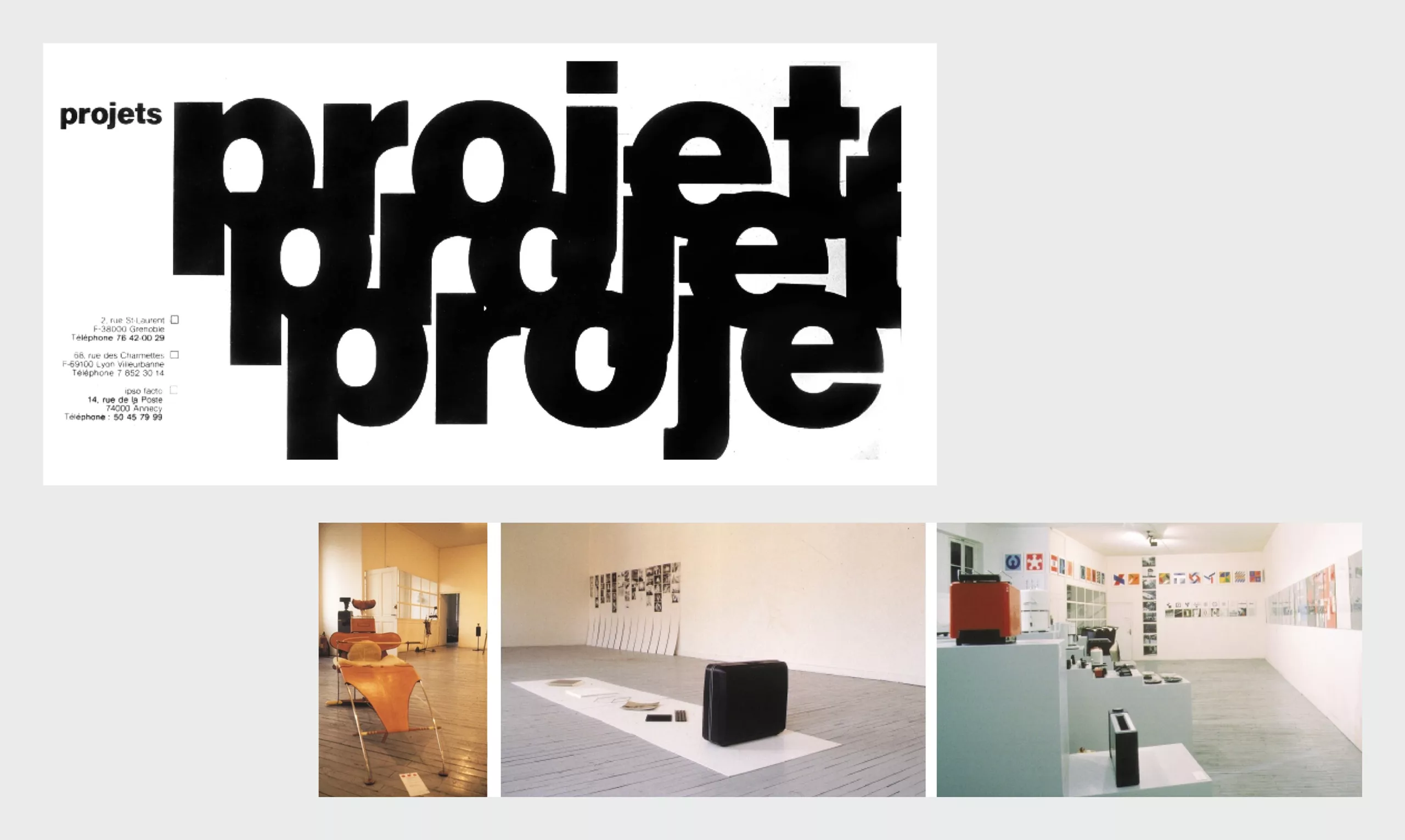
“— It was not a question of developing a commercial activity or presenting our own emerging production, but rather that of iconic designers, allowing us to continue our reflection on this creative attitude that we were gradually shaping. However, the design of these exhibitions gave rise to another line of thinking: that linked to the conditions for presenting and publishing these design projects, which were not intended to be exhibited or reproduced in catalogues.
The eight exhibitions designed as part of the Galerie Projets allowed me, as a very young designer, to approach and exchange ideas with these renowned creators. They helped to open a public debate on the role and interests of high standards in design.
Ruedi Baur thus organised a major series of design exhibitions, often accompanied by catalogues: ‘Made in Switzerland’ (1985), ‘A.G. Fronzoni’ (1986), ‘AGI Italy’ (1986), ‘Kieler Woche’ (1986), ‘Michael Baviera’ (1987), ‘English Design: with Ross Lovegrove and Peter Brown, Peter Saville, Malcolm Garret, Peter Keene’ (1987), ‘Colours Alone,’ and ‘Deutsch Design,’ bringing together Dieter Rams, Anton Stankowski, and Otl Aicher (1988).
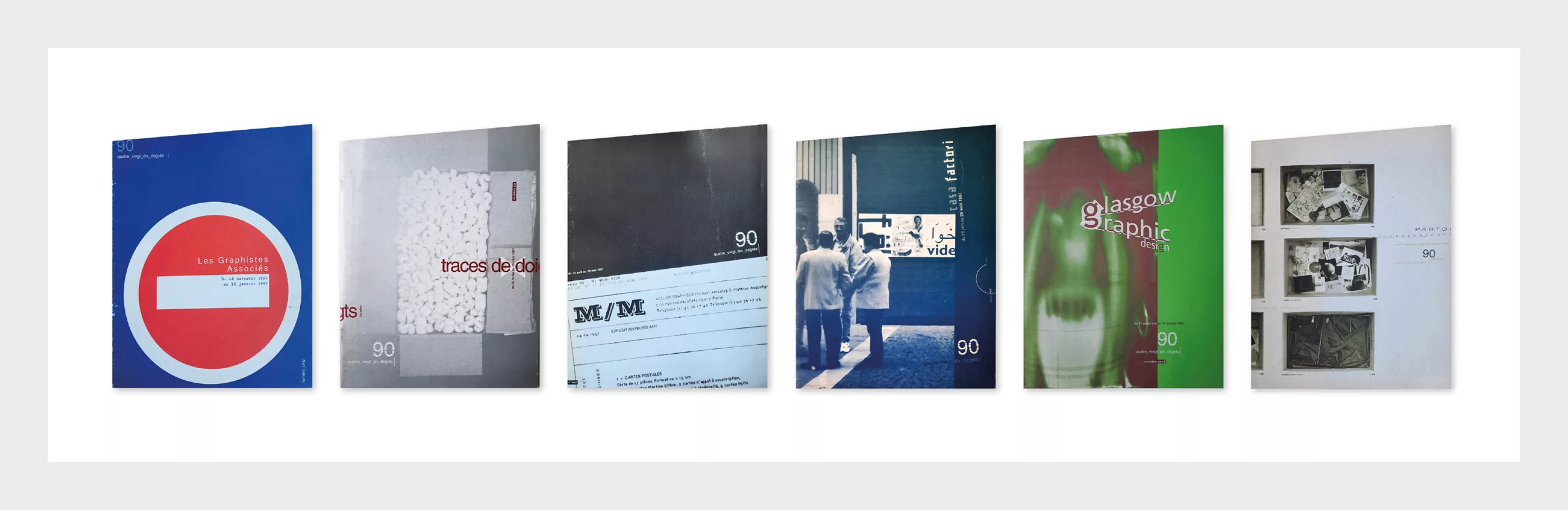
Ten years later, in 1996, Véronique Marrier moved to Bordeaux, where she ran the Quatre-vingt-dix degrés gallery with the help of the collective L’art est net. Three years of activity and 14 exhibitions introduced a wide range of graphic art to an audience that quickly responded by attending the opening nights. It was a place dedicated solely to graphic design.
Ronald Curchod, Les Graphistes associés, M&M, Labomatic, Trace de doigt, Glasgow Graphic Design, and more.
This was a time when the internet did not yet exist.
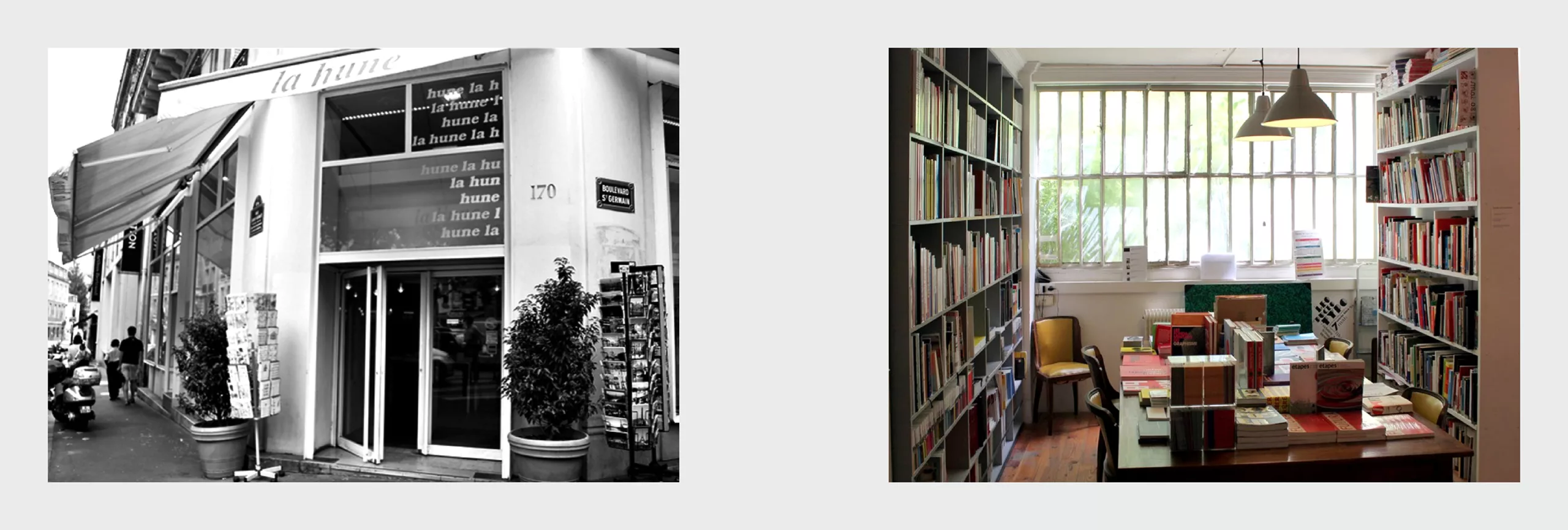
‘The great opportunity I had,’ recalls Véronique Marrier, “was to befriend Émile Solo and Claudia de Bonisse, the managers of the La Hune bookshop in Paris, who were interested in graphic design and who, very early on, heard about our gallery in Bordeaux. Because our internet at that time was La Hune; all the graphic designers came to buy documentation in this historic bookshop on Boulevard St Germain.”

The Quatre-vingt-dix degrés gallery closed in 1999.
And naturally, that same year, the link was made with the ongoing project of the Anatome gallery.
“Two weeks after the Bordeaux gallery closed, I received a call from Henry Meynadier and Marie-Anne Couvreu. ‘We heard that you were closing Quatre-vingt-dix degrés, we want to open a space in Paris and we’re interested in your expertise!
We met, but in the meantime I had just signed a contract with Pyramyd to set up the publishing division,” explains Véronique Marrier.
For some time, Henry Meynadier and Marie-Anne Couvreu had been meeting with various players in the graphic design field who encouraged them in their project. These included graphic designers close to them, such as Pierre Neumann, Une Loesch and Philippe Apeloig, as well as Christian Caujolle from the VU agency, Marsha Emanuel from the Délégation aux Arts Plastiques, François Barré, recently appointed Director of Architecture and Heritage, and many others.
During a dinner with friends, Marie-Anne Couvreu approached graphic designer Michel Bouvet, whose studio was next door to the agency. Bouvet had travelled extensively, exhibited abroad and had a good knowledge of the graphic design world.
‘Michel, do you think it’s realistic to open a gallery dedicated to graphic design in Paris?’
Michel Bouvet responded enthusiastically.
‘Of course! You have no idea how much demand there is, both from professionals and students, who are becoming increasingly interested in this field.’
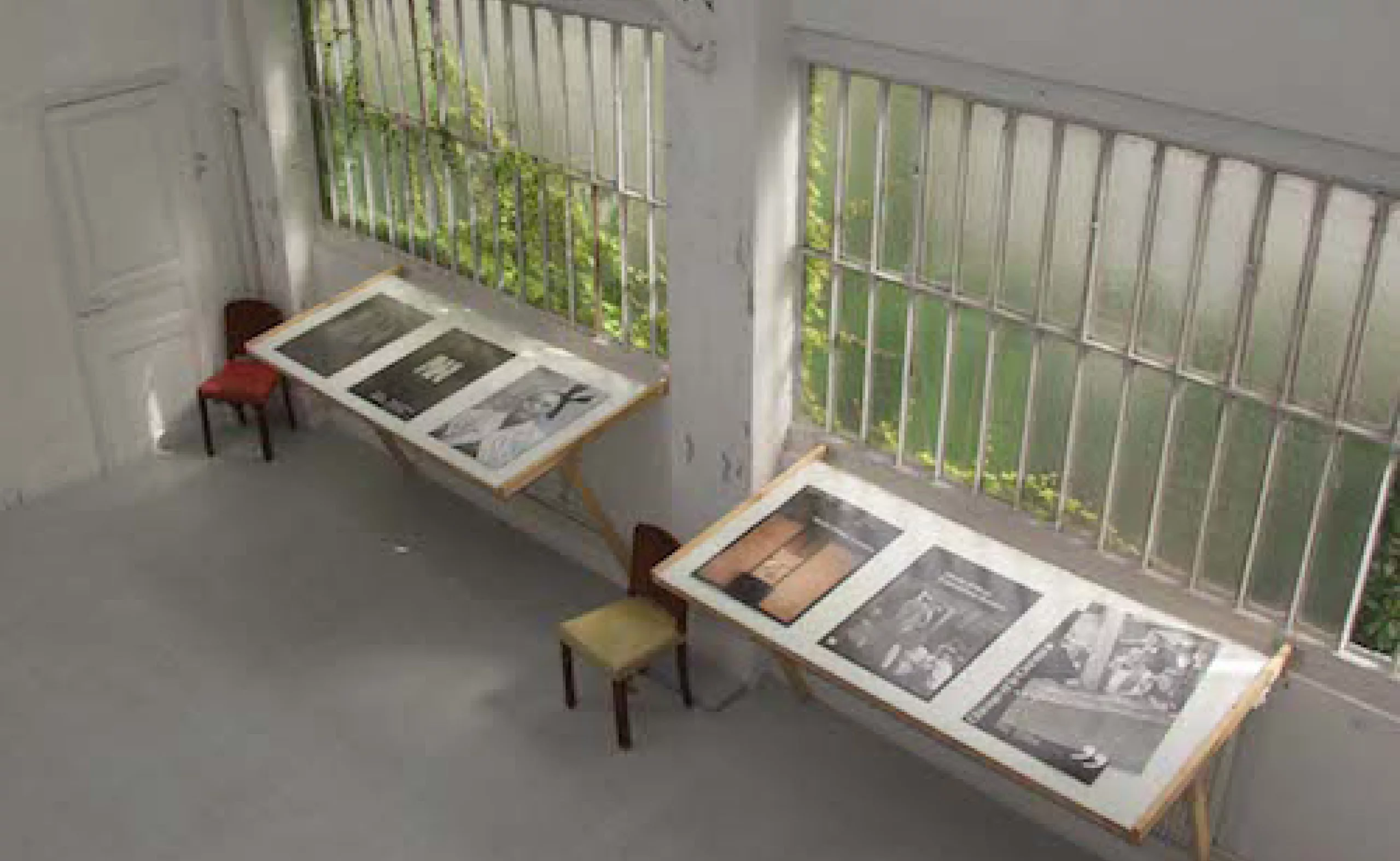
The courtyard workshop can be transformed into a gallery; all that remains is to put together a team, define an editorial line and a programme, with a schedule of three or four exhibitions per year, each lasting three months.
Marie-Anne Couvreu will be the artistic director.
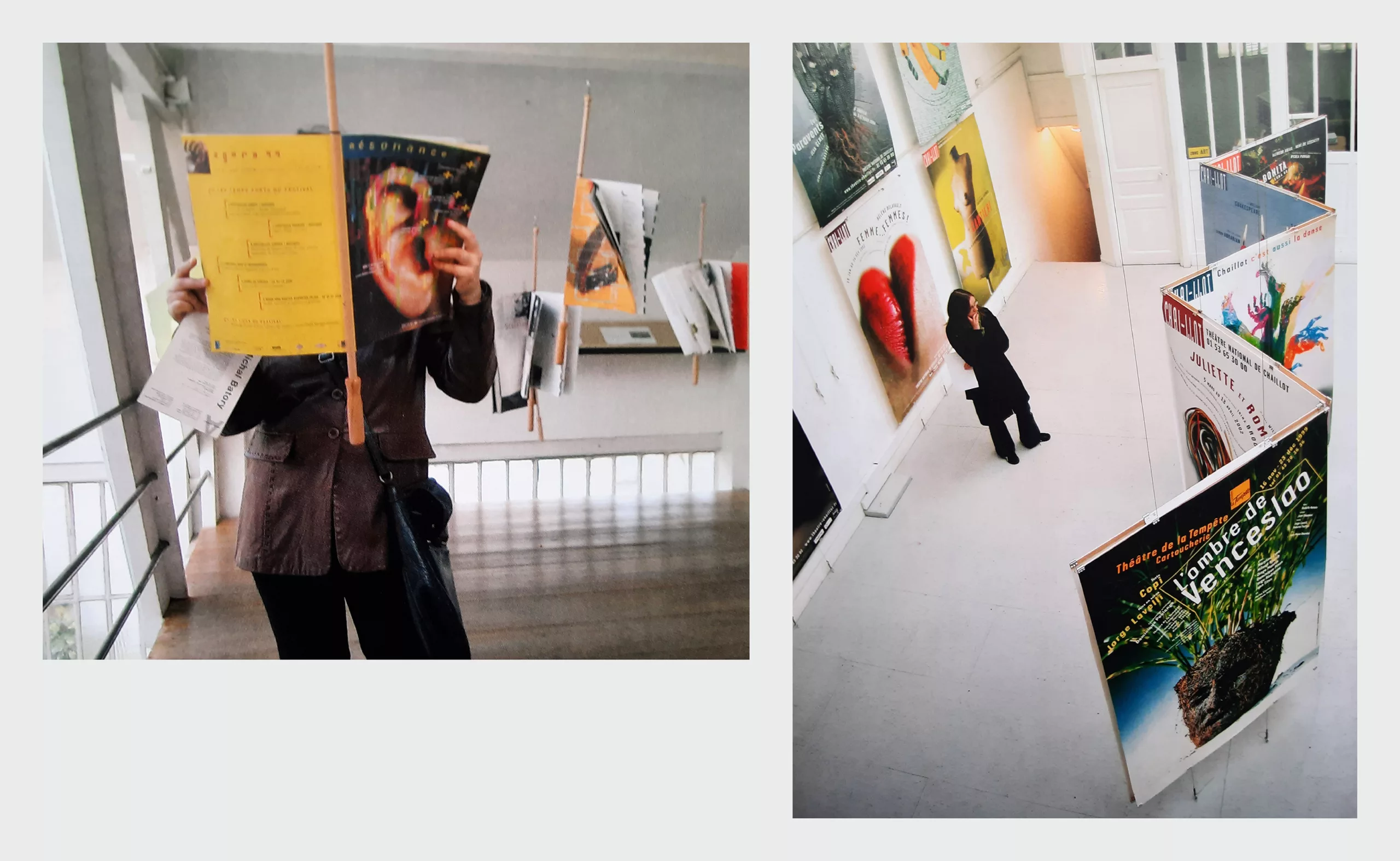
There will be diversity, with French and foreign graphic designers. The aim will be to alternate between monographic and thematic exhibitions where possible. Exhibitions covering the entire field of graphic design, posters, books, television graphics, signage, etc.
Ultimately, posters will dominate the exhibitions.
A priority that is very important to Marie-Anne Couvreu is that the gallery will not host exhibitions that have already been mounted; each one will be a truly original creation.
By bringing together in one place a collection of posters created over time for very different clients, viewers will be able to develop a critical perspective.
The contextualisation of the works on display will be crucial to the audience’s understanding.
Where possible, the poster will be accompanied by the creative process, sketches, variations and drafts.
‘There was a way of displaying the posters that we weren’t used to seeing. The gallery was used to its full potential to showcase the work of the graphic designers.’
Éric Drichemont, educational manager of the Epsaa preparatory course.
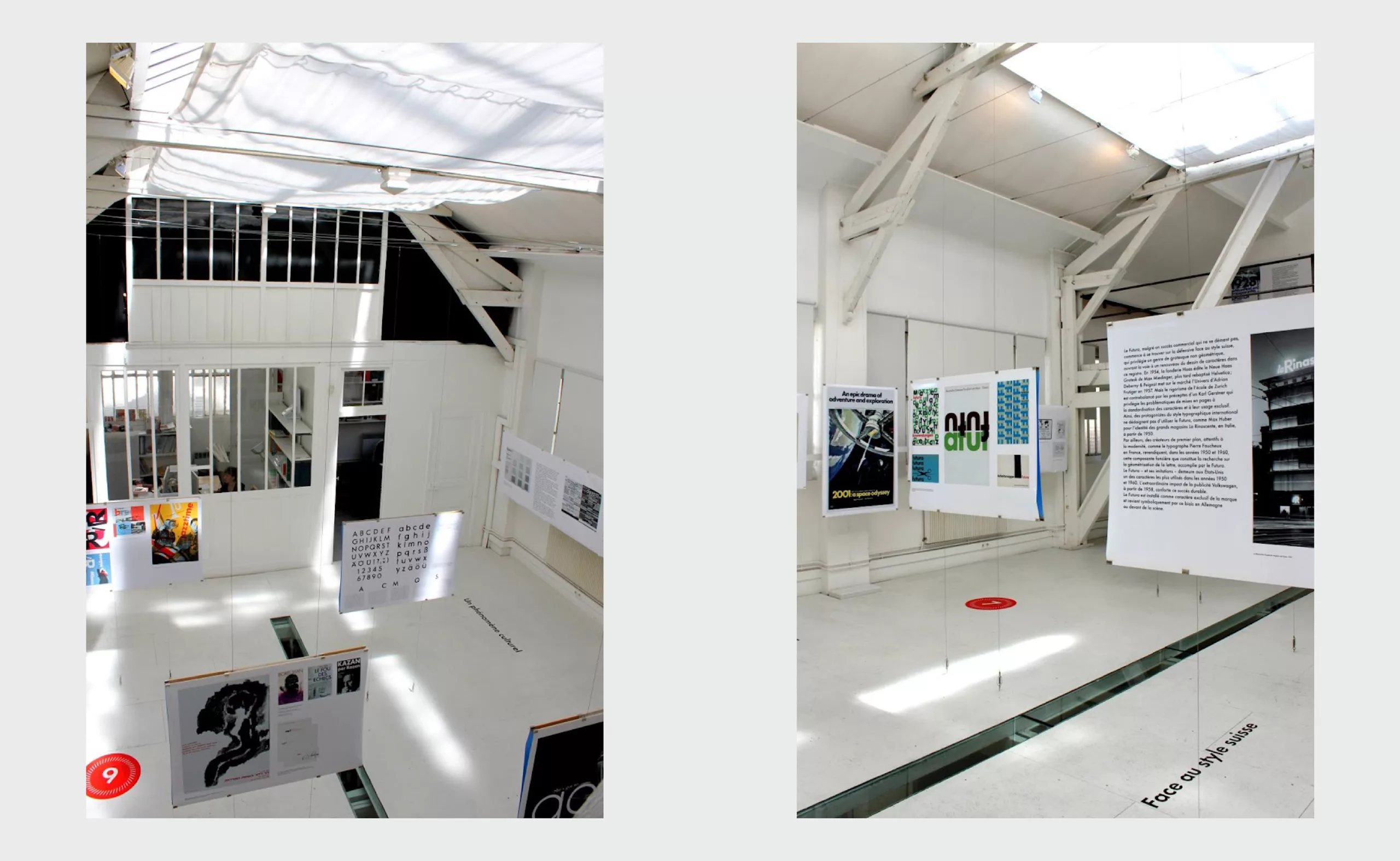
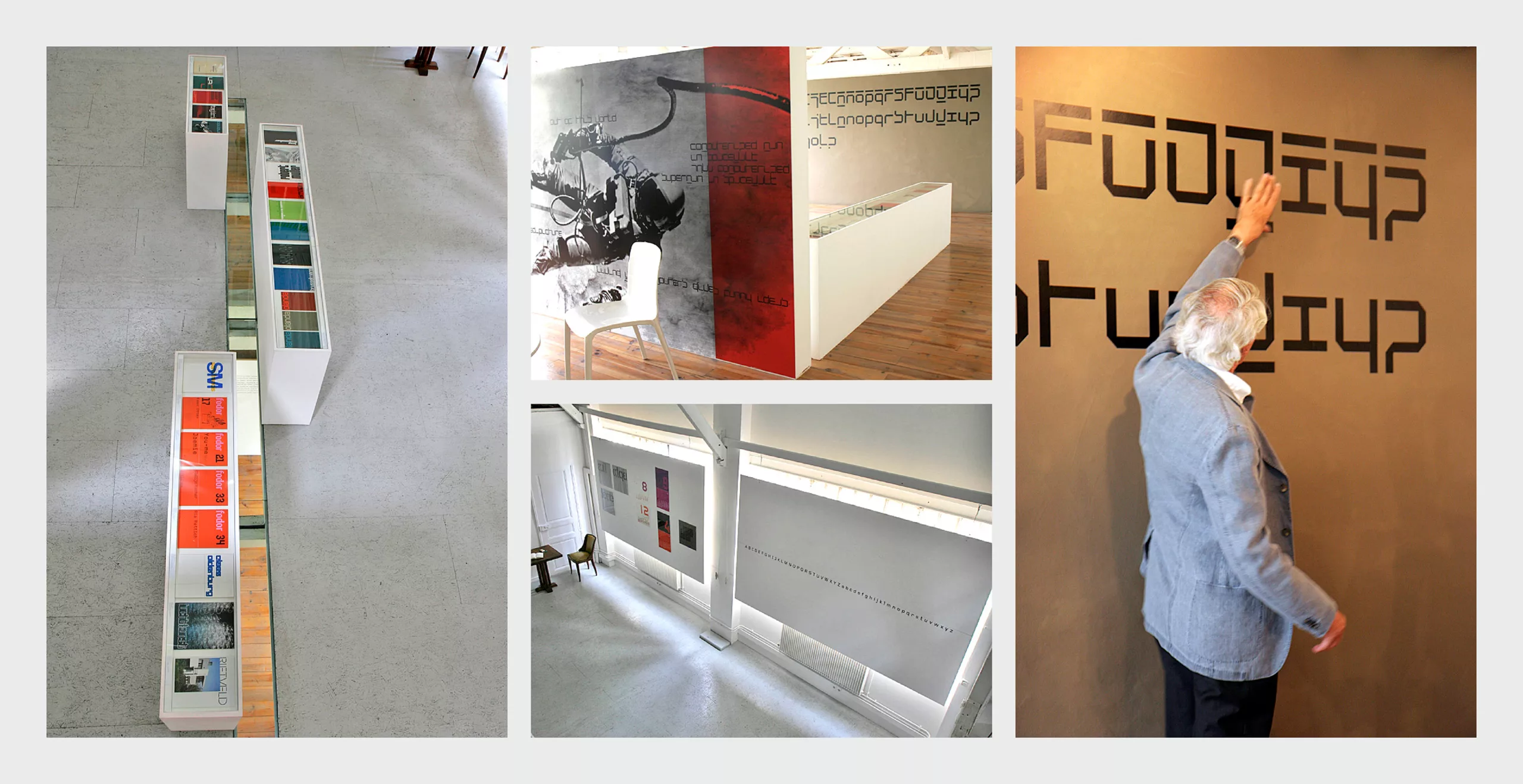
The educational aspect is a priority for the gallery, because in order to raise awareness of graphic design in France, it is necessary to engage the public and discuss it with them. This includes a young audience, particularly art schools.
The gallery often asks exhibitors to accompany visitors on guided tours.
“Looking back, I was incredibly lucky to be able to enjoy the exhibitions at the Anatome gallery during my art school studies (Duperré then Estienne), and this greatly contributed to shaping my typographic/graphic design culture. Catherine Zask, Czech designers… And the little bookshop, on the table at the bottom of the stairs, with all those books available, which were an equally valuable resource.”
Alice Savoie, typeface designer, teacher and researcher in the history of typography
‘The exhibitions at the Anatome gallery were well done, offering a behind-the-scenes look at the creative process, which was unusual at the time. They were very educational and, for students, very meaningful.’
Parick Félices, co-founder of the ECV and Intuit’Lab visual communication schools.
The financial aspect of the venture remains.
The venue will be a gallery in name only and will function more as an art patronage centre, as there are no plans to carry out commercial operations there initially.
The Ministry of Culture and Communication and the Directorate-General for Artistic Creation of the Ile-de-France Region will support the gallery’s launch.
The gallery’s statutes will be filed as a non-profit association under the 1901 law, named ‘Association pour la promotion de l’art graphique contemporain’ (Association for the Promotion of Contemporary Graphic Art).
The final objective is to help shape the perspective of sponsors and advise them in their choices.
“I often tell this story to illustrate that graphic design is an exercise in otherness.
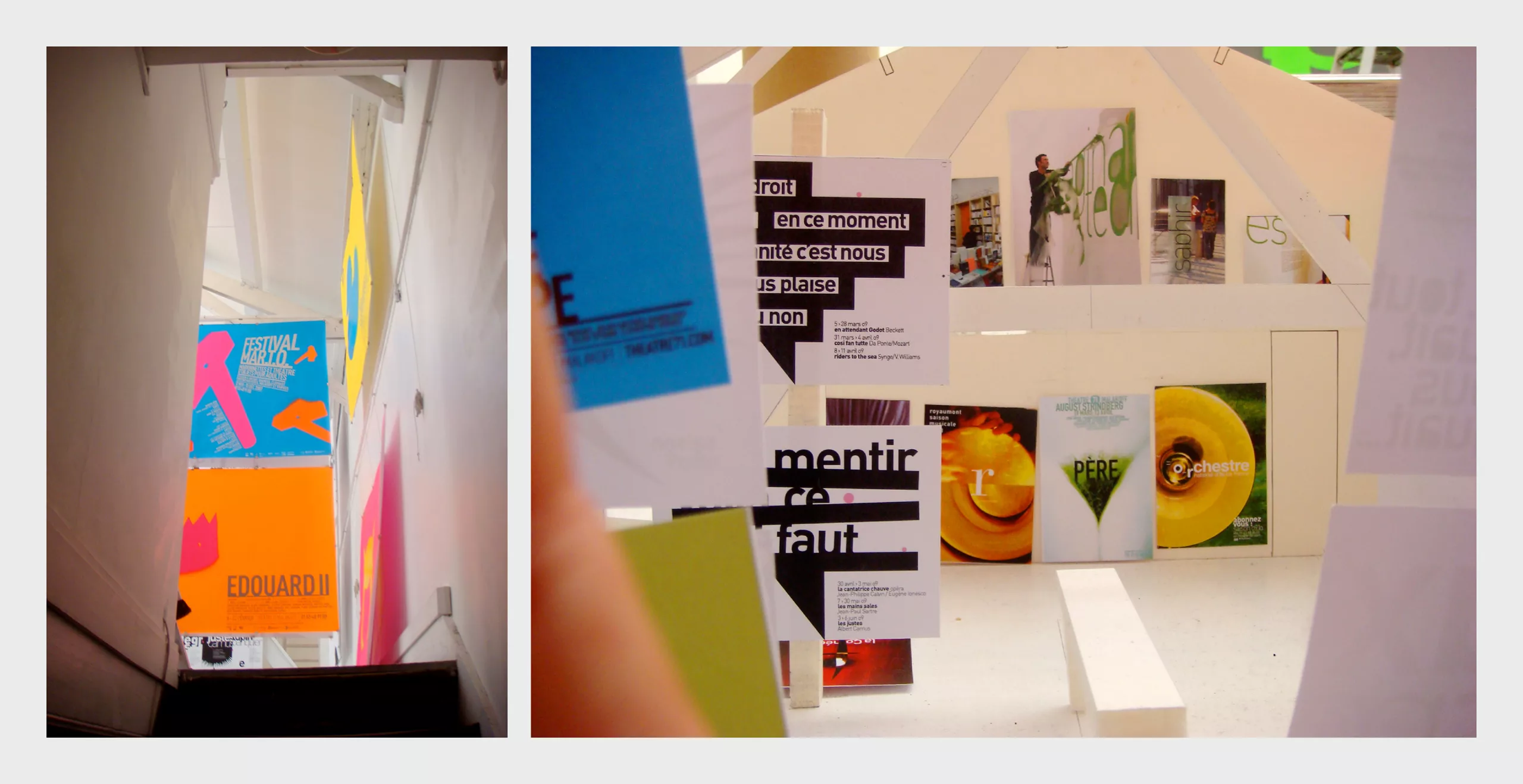
At my exhibition at the Anatome Gallery, several of my clients attended the opening night. I recall standing in front of one of my posters for the Malakoff Theatre, telling a colleague, “This is my last poster, my last creation”. A few moments later, I heard Pierre Ascaride, the director of Théâtre 71 Malakoff, say to a friend behind me, “This is my last poster”… I was moved by this coincidence.”
Malte Martin, graphic designer
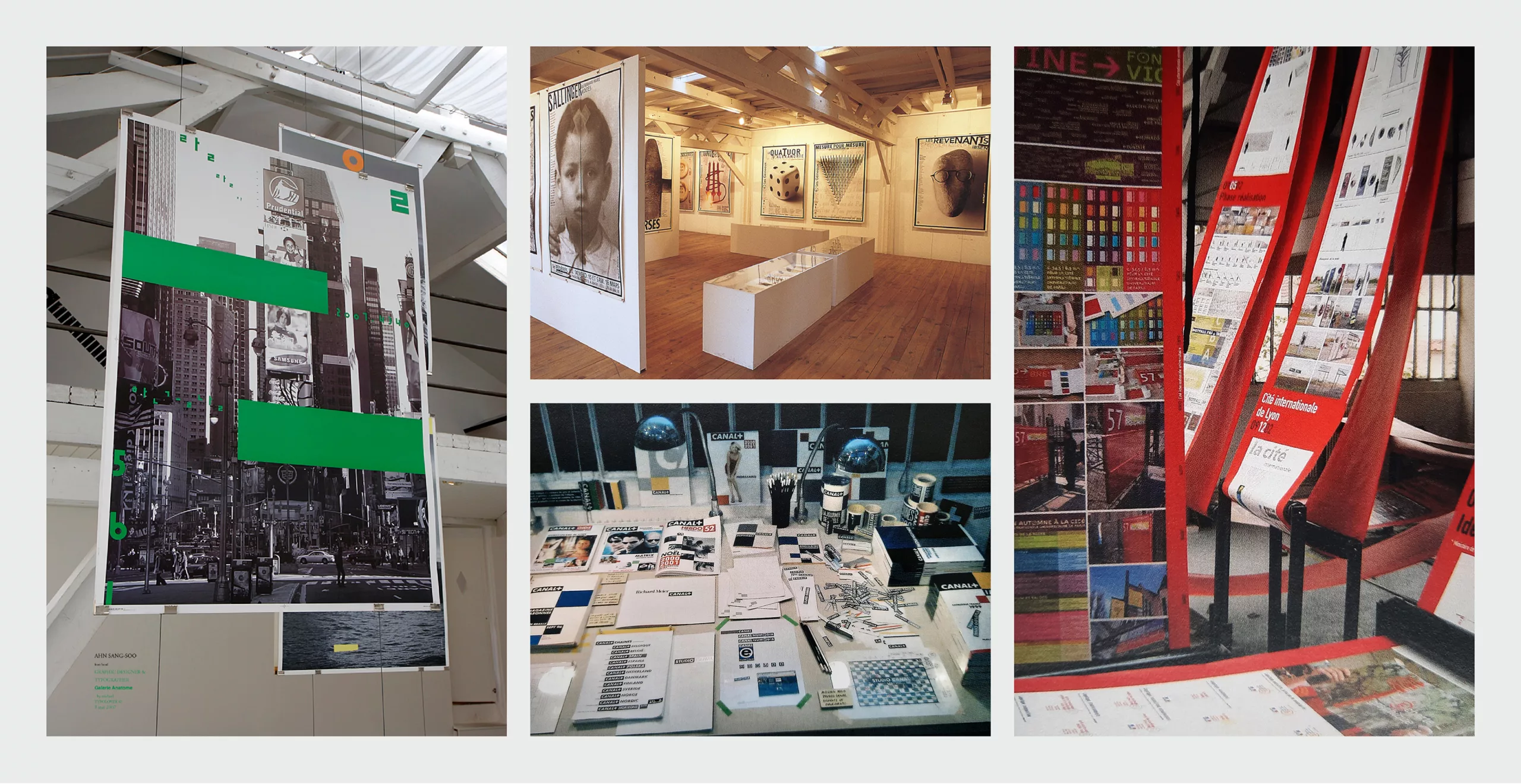
Basically, all the levers needed to raise awareness of graphic design in France are being pulled.
Everything is in place and the gallery is ready to open…
At the time, Rue Sedaine, in the 11th arrondissement, was not a very busy street.
‘Will people come to the opening nights? Will people travel to a neighbourhood where there is nothing but Asian wholesalers?’ These were the questions that preoccupied Marie-Anne Couvreu.
Swiss graphic designer Pierre Neumann inaugurated the venue.
On 29 September 1999, the public discovered more than 50 posters exhibited in the gallery’s 300 square metres of space on two levels.

From the very beginning, Marie-Anne Couvreu recognised the significant impact of opening the gallery.
“We were very surprised by the success of the space.
There were 500 people at the first opening, even though we didn’t have a mailing list yet; word of mouth did all the work. We had 2,500 visitors for the first exhibition.
Le Monde, Libération, and Nova Magazine all praised the event.
Our audience? Lots of students, graphic designers too, curious people who don’t know what a poster is. We also had visits from many politicians and people who are involved in decision-making. Graphic design schools extend the teaching of the discipline within the gallery.
For each exhibition, we welcome no fewer than 150 groups of students.”
“Marie-Anne Couvreu wasn’t necessarily looking for a guiding principle; she left a lot of room for the artists on display. She immediately sensed things in terms of how they were constructed and structured. She saw things.
She didn’t intellectualise them, she spotted them, and I learned a lot from her. I learned to see and to assemble. She composed the exhibition, because it was a space that we reappropriated with each exhibition.
Nawal Bakouri, director of Galerie Anatome 2005/2011
The gallery quickly brought cultural credibility to the agency, which had a strong left-wing political stance. Bertrand Delanoé attended the openings and the agency worked regularly with Paris City Hall.
“At first, some of the committed graphic designers kept their distance or remained observant, and there was a certain amount of mistrust towards a “communications agency” launching a graphic arts gallery, with questions about its orientation and intentions.
But very quickly, the ice was broken and the opening nights were always a whirlwind of graphic and human excitement: hundreds of people, from established graphic designers to the youngest, mingled with sponsors and graphic design enthusiasts.”
Malte Martin, graphic designer and visual artist
“The story of Anatome is the story of a successful imposture.
It marks the irruption of communication agencies into the small world of socio-cultural graphic design under the guise of patronage – with the gallery of the same name. The Anatome agency was to discover the pleasures of tax breaks and, above all, compete with graphic design studios by giving away their creations to town halls, trade unions and other associations, while profiting from media plans. By dividing the studios with prizes and other distinctions.
I knew Henri Meynadier, he was friendly and all the more dangerous for it… At the time, Anatome was a bad omen for me!!!
François Miehe, Grapus, Atelier François Miehe & Cie
Laure Alberhe, who now hosts ‘Matins jazz’ on TSF Jazz, had been working for several years at the Anatome agency in Montpellier as a project manager. Henry Meynadier brought her to Paris to join the team and take charge of managing the gallery.
In 2001, Étienne Robial was assisted in setting up his exhibition by two students from the Ésad in Amiens, Stéphane Dupont and Maxime Bardier, who within a few months became permanent members of the gallery staff. Stéphane went on to become vice-president until the gallery closed in 2012.
Étienne Robial, Maxime Barbier, Stephane Dupont and Michel Bouvet will be members of the association’s Board of Directors.
“I used to visit the gallery when I was a student at ECV, just a stone’s throw away (between 2005 and 2008). I remember that several of us students from different Parisian schools would lend a hand with hanging the artworks and preparing for the openings. It was interesting to have access to the collections, to discover how an exhibition was put together, and with a bit of luck we had the opportunity to meet some of the “celebrities” of the graphic arts world at the time (Malte Martin, Philippe Apeloig, Ich&Kar, Michael Batory, etc.).”
Lilith E. Laborey, graphic designer
“Anne-Marie Couvreu and her husband came to visit me at my studio in the countryside at the tip of Brittany to tell me about their gallery project and ask me to be one of their first artists to exhibit there. That was in late 2000 or early 2001. It was my second exhibition in Paris after the one at the Musée de l’Affiche on Rue de Paradis in 1987. I was honoured that my provincial work was once again being showcased.
The world of graphic designers and poster artists is a small one; it’s always the same people you meet at Agi, at biennials, at conferences.
For a while, the Anatome gallery was THE place to be in Paris. I didn’t often have the opportunity to attend the openings because of the distance, but the personalities of the other artists honoured me insofar as I shared the same vision of graphic design.
It was a private initiative. If it was short-lived, it was perhaps (surely) because the cultural services of the Ministry of Culture had other priorities, or rather other objectives for promoting graphic design. And to avoid any competition, this lack of financial support from the public body led to the end of the adventure. It’s a shame. The multiplicity of venues was not a handicap, quite the contrary, particularly for Anatome because it was in Paris.
Alain Le Quernec, graphic designer
The gallery will soon develop other complementary activities.
— A specialised bookshop, in collaboration with La Hune bookshop in Saint-Germain-des-Prés.
— The creation of a core collection of reference materials.
— A website covering international graphic design news.
— Finally, a programme of meetings, conferences and debates. The gallery is an exhibition space, but it is also a place for exchanging views… a lively place where people like to speak their minds.
These will be conferences/debates organised with the Syndicat National des Graphistes (SNG) and the Rencontres Internationales de Lure.
‘We were trying, with limited resources, to create a real art centre.’
Nawal Bakouri, director of the Galerie Anatome 2005/2011
“One of my most vivid memories of the Anatome gallery is a lecture given by Adeline Goyet to present her DSAA diploma project on Bobby Lapointe. Adeline was a recent graduate and was clearly nervous, but her presentation was splendid and very inspiring, and encouraged me all the more to pursue the same DSAA path. ”
Alice Savoie, typeface designer, teacher and researcher in the history of typography.
“Grapus and Anatome didn’t get along,
Anatome didn’t come to Grapus,
Pierre (Bernard) sometimes ventured to Rue Sedaine,
Grapus was too much, too much, in every way,
they were nasty pieces of work, basically!!! ”
Jean-Paul Bacholet, Grapus
In just a few years, the gallery became an essential meeting place for graphic designers from all over the world passing through Paris. The spirit of San Francisco’s ‘Blue House’ in Paris, as sung by Maxime Leforestier in 1974
Especially since a studio adjoining the gallery welcomed graphic designers during the installation and exhibition periods, allowing them to remain available to discuss the exhibition with the public.
“It was a wonderful place, it was like a ray of light. It was finally a place that celebrated our craft. For those of us who had been meeting for years to raise the profile of graphic design, it was beyond our wildest dreams. I immediately fell in love with the place. It was a celebration. I loved EVERYTHING about Anatome…!!! ”
Catherine Zask, graphic designer, artist, etc.
‘You know, Michel, when I travel and have to go through Paris, I always make sure I find the time to go to the Galerie Anatome before catching my connecting flight.’
David Tartakover, graphic designer (quoted by Michel Bouvet)
“I didn’t have much contact with Anatome, given that I live in Toulouse.
No invitations to exhibit (perhaps in a group exhibition?).
They displayed a few of my published books…
For me, it was above all the essential place to go when I was in Paris
to see, talk and exchange ideas about the profession, which was essential for a young graphic designer from the provinces, something that was practically non-existent in Toulouse at that time…”
Ronald Curchod, graphic designer, painter
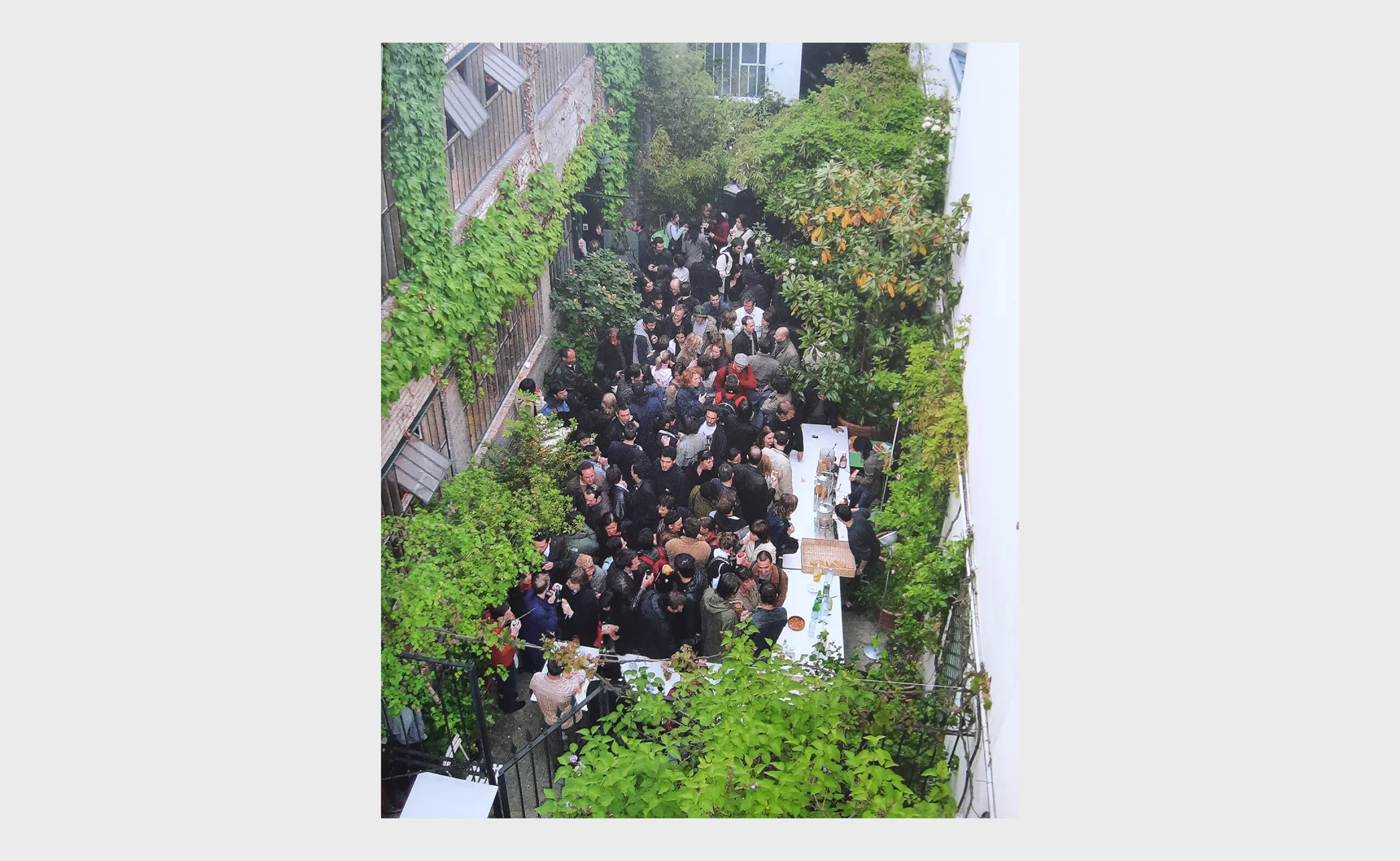
On a daily basis, the space operates like a friendly community of friends who think, invest themselves, and gather around a table to discuss graphic design, programming, and organisation.
In the heart of Paris, an ‘informal family’ has been created for graphic designers, communication professionals, art school students, sponsors, graphic arts enthusiasts, and even the curious. It’s like the hive next door to the agency.
“For my exhibition, I invited the managers of Canal+ to come to the opening and discover the full scope of graphic design. I was forced to note their absence.
In response, and because he thought that graphic design needed to be given more visibility, Pierre Lescure organised a Canal+ board meeting at the Anatome gallery. In the middle of the exhibition!”
Étienne Robial, Chief Creative Officer at Canal
The exhibitions followed one after another, each one a resounding success.
On some opening nights, people were turned away. Stéphane Dupont, equipped with a people counter, made sure that safety standards were not exceeded, concerned about the condition of the mezzanine floor.
There were also memorable opening nights that lasted late into the night.
Neighbours complained and parking difficulties led to parking tickets…
And this success reinforced the mission that Marie-Anne Couvreu had set herself… To exhibit, introduce, recommend and advise.
‘Yes, Anatome was an important place for all of us who love graphic design. I don’t think I missed a single exhibition. It was like a family…’
Romain Lacroix, Public Relations Service, Culture and Creation Department, Centre Pompidou
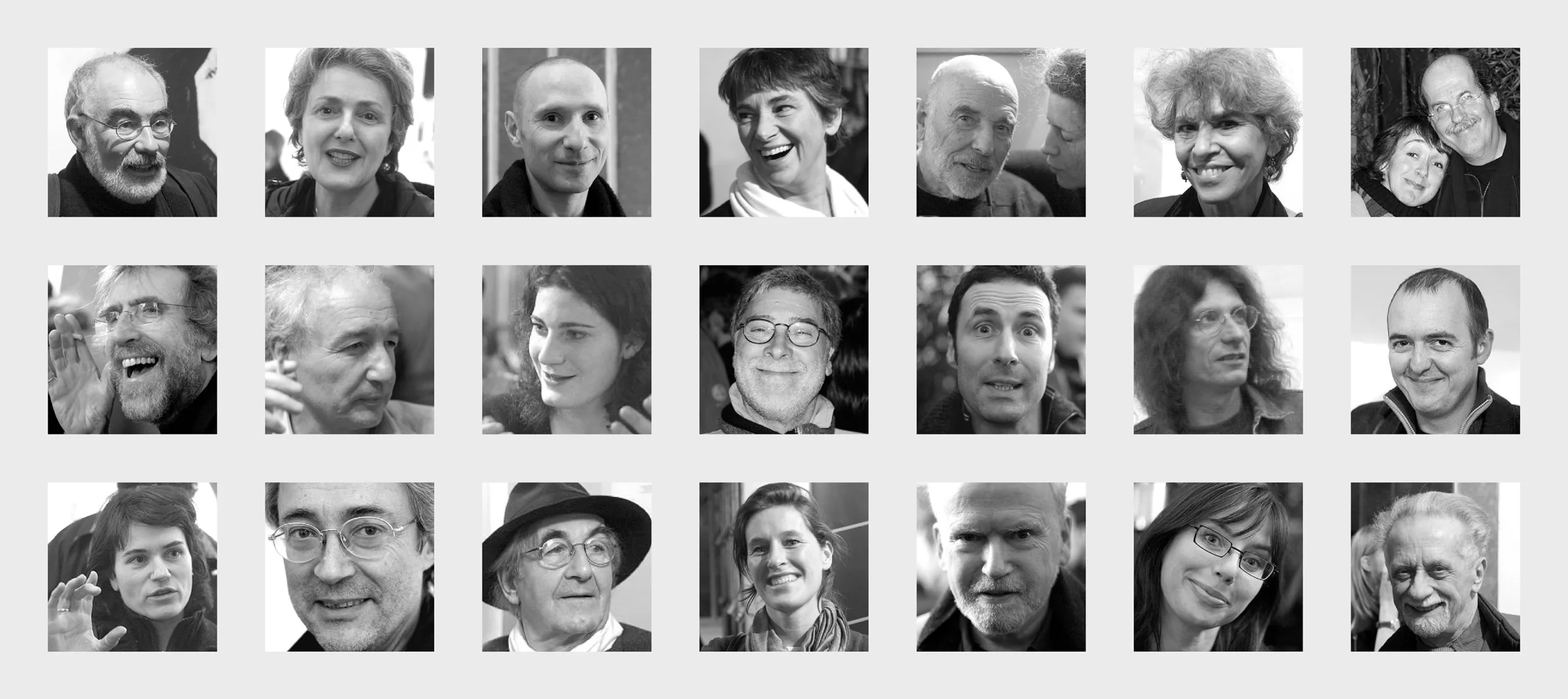
However, in 2002, the situation was clear: the gallery had become a victim of its own success and was facing serious financial problems.
Operating costs were constantly rising, with no new income to offset them.
Unlike contemporary art galleries, the Anatome gallery is not a commercial venue; graphic art is not sold there, but exhibited in all its forms.
Within a few weeks, the entire profession rallied to organise an auction on Christmas Eve to support the gallery. Eight hundred works arrived from around the world, including more than 150 original posters and documents, which were presented to graphic art enthusiasts.
This operation gave rise to the ‘Association Galerie Anatome’, which now has more than 1,000 members.
Subsequently, the gallery began offering graphic works for sale.
“The Anatome Gallery—if only because of its name—fostered fantasies and created illusions. It wasn’t even a commercial enterprise: graphic design had no market, and still doesn’t, apart from a few rare poster sellers, and despite their efforts, they never managed to create one. Nor was it an art gallery, for that matter. Because graphic design, and this is what makes it so rich and valuable, remains an applied art, not a “plastic” art — with the exception of a few cases where artists themselves take it up.
This, I think, is the limitation of the Anatome gallery: it failed to look for graphic design anywhere other than among graphic designers. Even if almost no one is interested in it.
Yet it was the ideal place to organise exhibitions and produce such rare documentation on graphic work — precisely — and, for example, that of an artist like Marcel Broodthaers.
It was a time when boundaries were clearly defined, and graphic designers were reluctant to venture outside their comfort zone… That is changing, and so much the better.
However, the situation remains bitter, because there has been no successor, or very little, apart from PROGRAM/ME run by M/M (Paris) and Syndicat. Glory to them!
Nicolas / ABM Studio
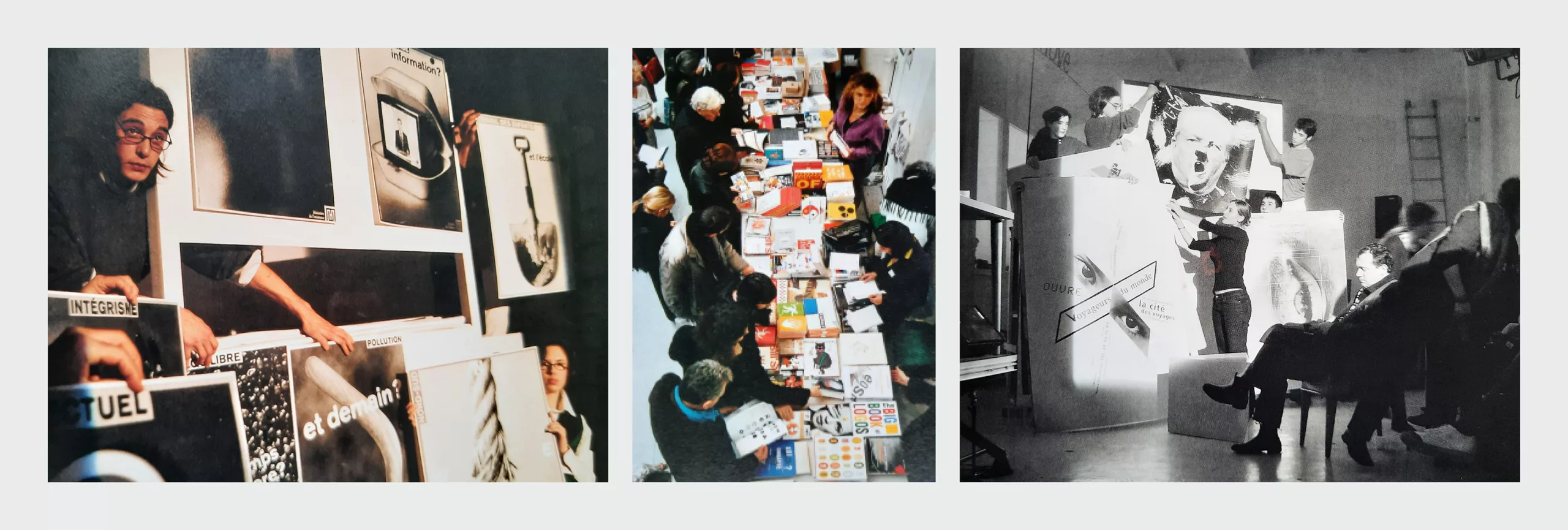
In 2005, following Laure Alberhe’s departure, Nawal Bakouri, who had just completed her studies (art history, aesthetics and cultural management), joined the gallery as director.
The H5 exhibition, which marked an important milestone, was a success.
This was the period when the gallery’s operations were redefined in the form of co-management of the space.
“I learned a lot about graphic design from many people who came from all over. Strong friendships, which still exist today, were formed during those few years.
When I arrived at the gallery, the project was still very much a family affair. We wanted to make it more professional. This meant seeking funding to pay two people, which would have practical benefits in terms of programming, setting up and organising exhibitions.
Nawal Bakouri, director of Galerie Anatome 2005/2011
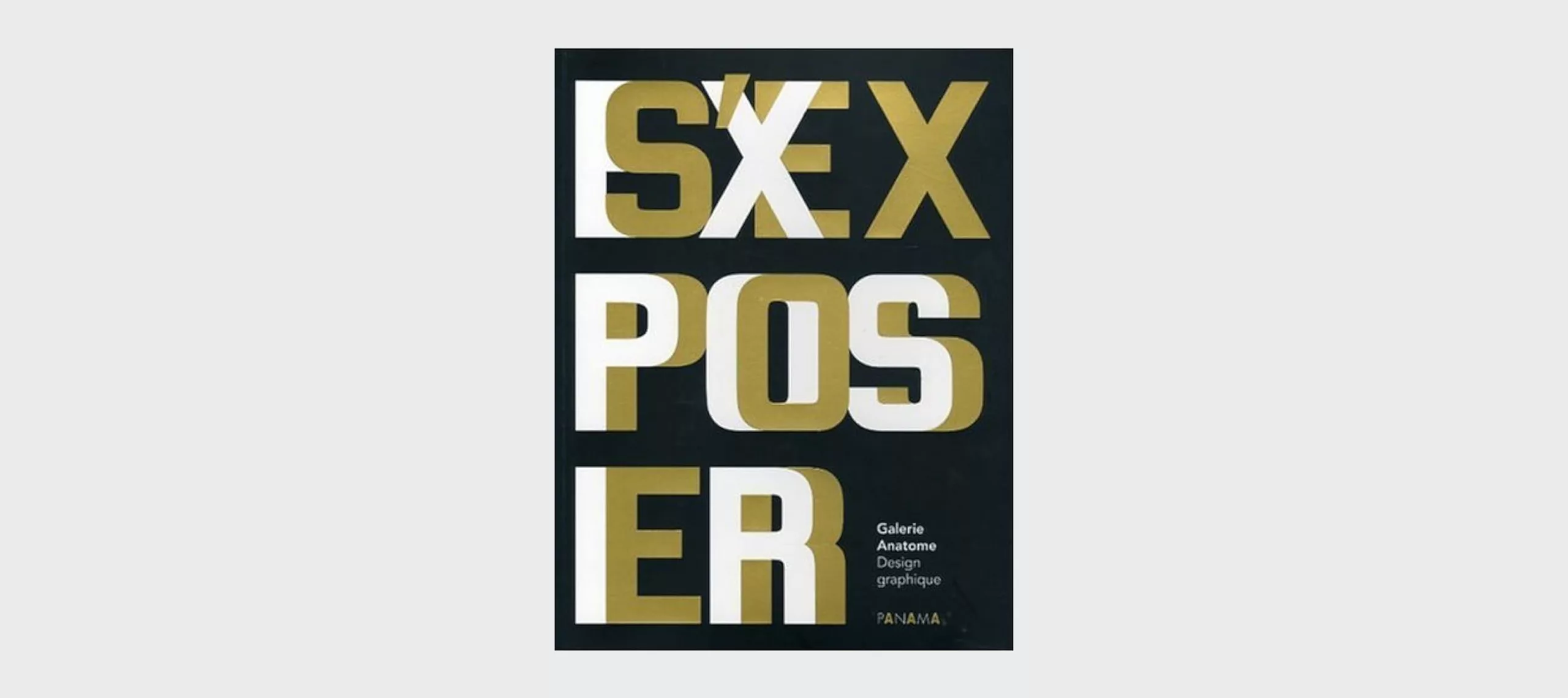
The book Exposer/s’Exposer, with text by Michel Wlassikoff, published in 2006, celebrated the first six years of a rich and encouraging programme.
With an indisputable reputation, Galerie Anatome became the benchmark for the entire profession.
However, in the same year, in the daily newspaper Libération, Marie-Anne Couvreu did not hide her concern about the future of the gallery.
‘The Ministry of Culture’s subsidy has just been withdrawn from us!!!’
The exhibitions continued with the same success and diversity.
They featured Korean graphic designer Ahn Sang-Soo, as well as the legacy of May 1968 in posters, Peter Knapp, and the competition for the most beautiful French books. Malte Martin and Futura typo. It was the 80+80 exhibition, organised in collaboration with the Vu gallery, that initiated a dynamic of encounters and comparative creations with photography.
“I loved putting together the Peter Knapp exhibition.
It made us question the complexity of artistic direction, whereas we were used to exhibiting graphic design and posters.
It was an opportunity to visit the Galeries Lafayette archives on site, with Peter and Jean Widmer.
It was an opportunity to present magazine layouts and videos that were rarely shown in graphic design exhibitions.
Nawal Bakoui, gallery director 2005/2011
Alongside the exhibition, “Original Version, Sofia-Strasbourg-Paris”, in September/October 2008, the gallery will publish a small journal (16 pages, A6 format) to accompany each exhibition.

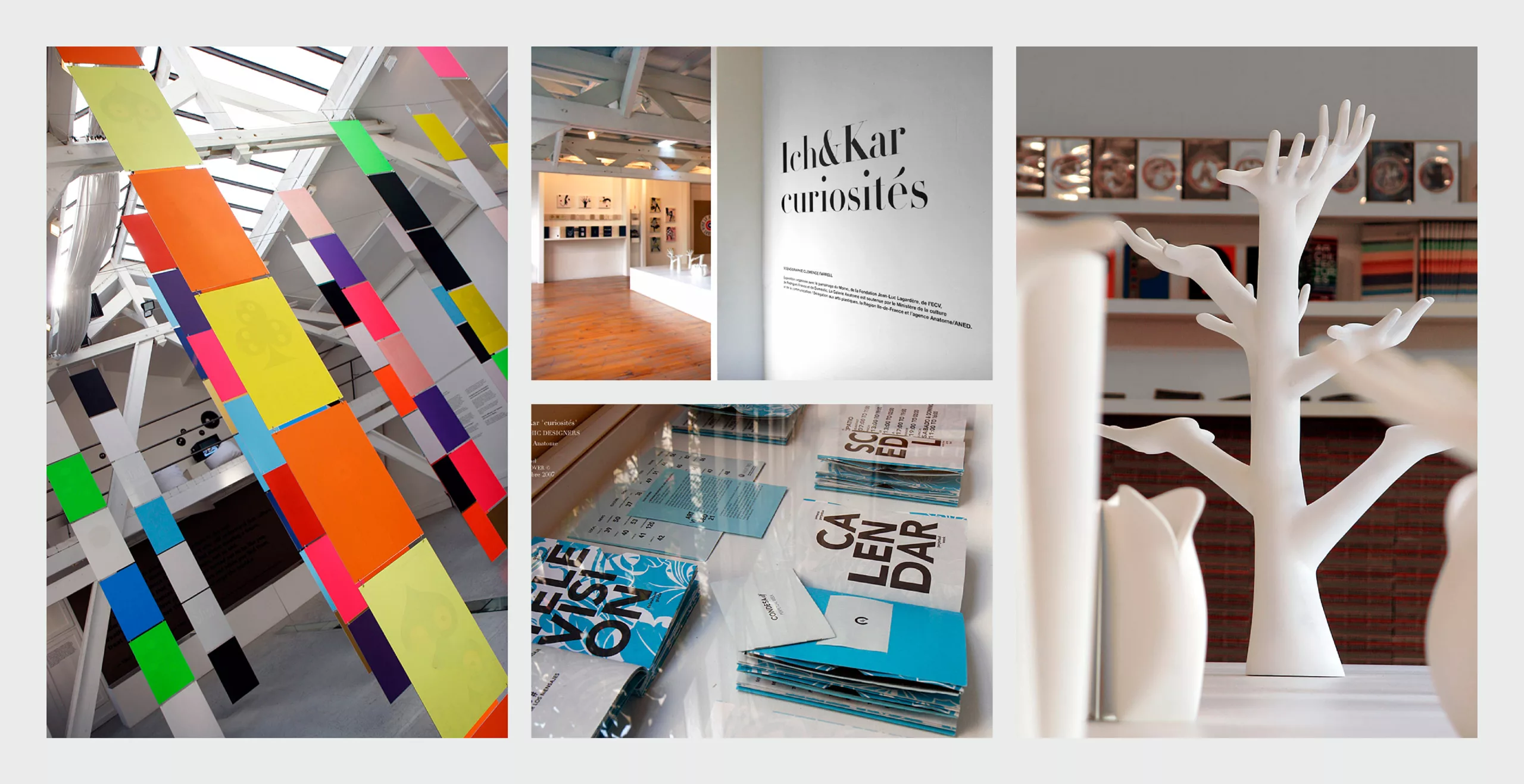
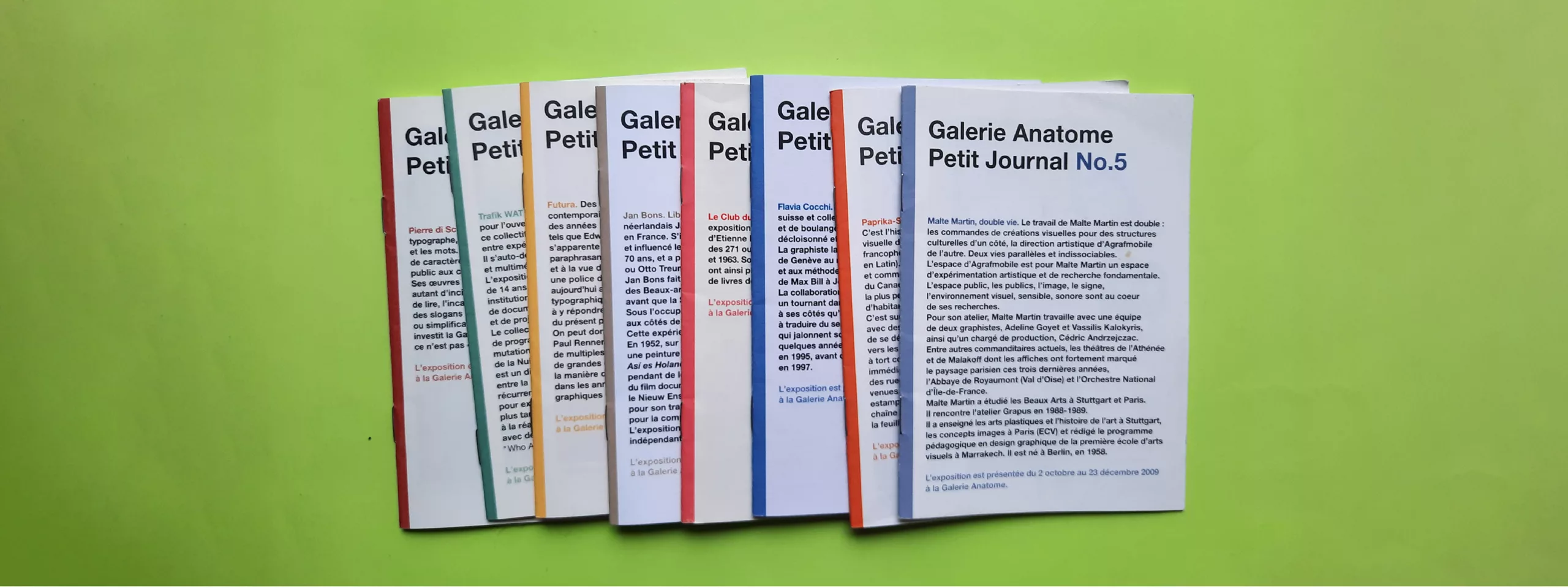
The gallery’s 10th anniversary (1999/2009) will be marked by a major event bringing together the graphic designers who have exhibited there. Almost all of them will be there!
Pierre Neumann, Uwe Loesch, Etienne Robial, Philippe Apeloig, Alain Le Quernec, Peret, Raul, Flavio Morais, Marc Taeger, Isidro Ferrer, Petr Babak, Tomas Machek, Ales Najbrt, Ralph Schraivogel, Ruedi Baur, Seymour Chwast, Michel Bouvet, Catherine Zask, Michal Batory, Chaïka, Andrey Logvin, Youri Surkov, H5, Werner Jeker, Cyan, Wim Crouwel, Ahn Sang Soo, Ich&Kar, Reza Abedini, Peter Knapp, Jonathan Barnbrook.
On the initiative of Nawal Bakouri and Étienne Robial, a large 30×40 ‘Manifesto’ newspaper has been published for this anniversary.
The title of Michel Wlassikoff’s introductory text rings true as a statement of the obvious: ‘The place of graphic design in France’. As for the text by Marie-Anne Couvreu and Henri Meynadier, its title is undoubtedly prescient… Alert.
This 72-page booklet will be widely distributed in all design schools, art centres and bookshops in France and abroad.
This is also the first opportunity to bring together the leading figures in French graphic design, Échirolles, Chaumont and Galerie Anatome, around one table to discuss graphic design.
With one underlying question on everyone’s mind… ‘When will France finally recognise graphic design for its true worth?’
Then it will be the turn of Guillaume Frauly, former editor-in-chief of Étapes magazine, to take over the gallery for a while.


However, the sky above Rue Sedaine is already darkening.
2012, Libération headline: ‘Galerie Anatome under threat’
Since rumours of a possible closure began, graphic designers have once again rallied together.
Meanwhile, Henry Meynadier has sold the agency and the new owner, Eric Zajdermann of the Taxi Jaune agency, seems less enthusiastic about keeping the place alive.
Graphic designers, teachers, school principals and students are rallying around a petition entitled ‘Long live Galerie Anatome!’
Excerpt from the petition: ‘This would be a serious blow to graphic design in all its forms. The current situation requires not only a fight to keep the gallery where it is, but also for it to break away from the Anatome agency that has supported it until now. As an independent entity, it will urgently need the support of public institutions responsible for promoting culture.’
In a matter of weeks, then months, more than 2,000 people signed the petition.
The signatories called on the French Ministry of Culture, the public authorities and the local authorities concerned ‘to finally grant the Anatome gallery the necessary resources to continue and develop its work.’

But more than ten years after its inception, everyone felt that graphic design had evolved.
In 2005, the H5 collective, which was not yet an agency but a studio, exhibited at the Anatome gallery. It was an opening exhibition that sparked debate… This was when H5, in order to finance its ambitious Oscar-winning animated film project, Logorama, transformed itself into a communications agency.
Perhaps this heralded a turning point for many creative studios?
“One of my vivid memories of the Anatome gallery is the H5 exhibition in 2005, which in a way marked the end of a “graphic” era: that of French Touch and a form of H5 supremacy. The exhibition set the record straight about their creativity at the time and their impact on the electronic scene of the era. During the exhibition, all the album covers were there, and it had a huge impact, along with the famous music videos and other works. The large number of visitors filled the space, and the atmosphere was festive, generous, almost electric — a welcome break from the usual exhibitions, which were too often stuffy and dull, those of a small world of silent graphic designers and their rare heroes. It was good to hear bass and ultra-bass there, because the little kingdom of Anatomie took itself very seriously, when in fact there was little reason to do so…”
Nicolas / ABM Studio
The years of the Anatome gallery also correspond, in the field of graphic design, to a generational shift and the dawn of the digital age.
From 2010 to 2015, social media became an essential part of communication, which now takes place via smartphone screens rather than posters.
The distinction between graphic designers and communication agencies began to fade.
In Manifeste, a book published for the gallery’s 10th anniversary in 2009, graphic designer Philippe Apeloig reflected on the state of graphic design in France and the role it can play.
“— I’m torn. I want to say that graphic design is doing well when I compare it to when I started my career. Nowadays, both the general public and students have a better understanding of the subject. In the space of twenty years, there has been an extraordinary leap forward. It’s hard to say that things were better before. Before, there was almost nothing.
However, the economic situation, the dominance of advertising and the escalation of marketing make graphic design a complicated practice. The conditions are deplorable: difficult relationships with clients (mainly cultural institutions with no real communication budget) who too often do not understand how to work in agreement with a graphic designer, incessant calls for tenders (without a competent jury), an accumulation of validations that leads to the deterioration of a project, and endless procrastination over the presence of sponsor logos on every piece of printed material (a veritable visual pollution that graphic designers are forced to orchestrate), etc.
Thus begins a kind of march to Calvary. In this desperate context, how can one run a studio on a daily basis and maintain quality work without becoming a workaholic?
Philippe Apeloig, graphic designer
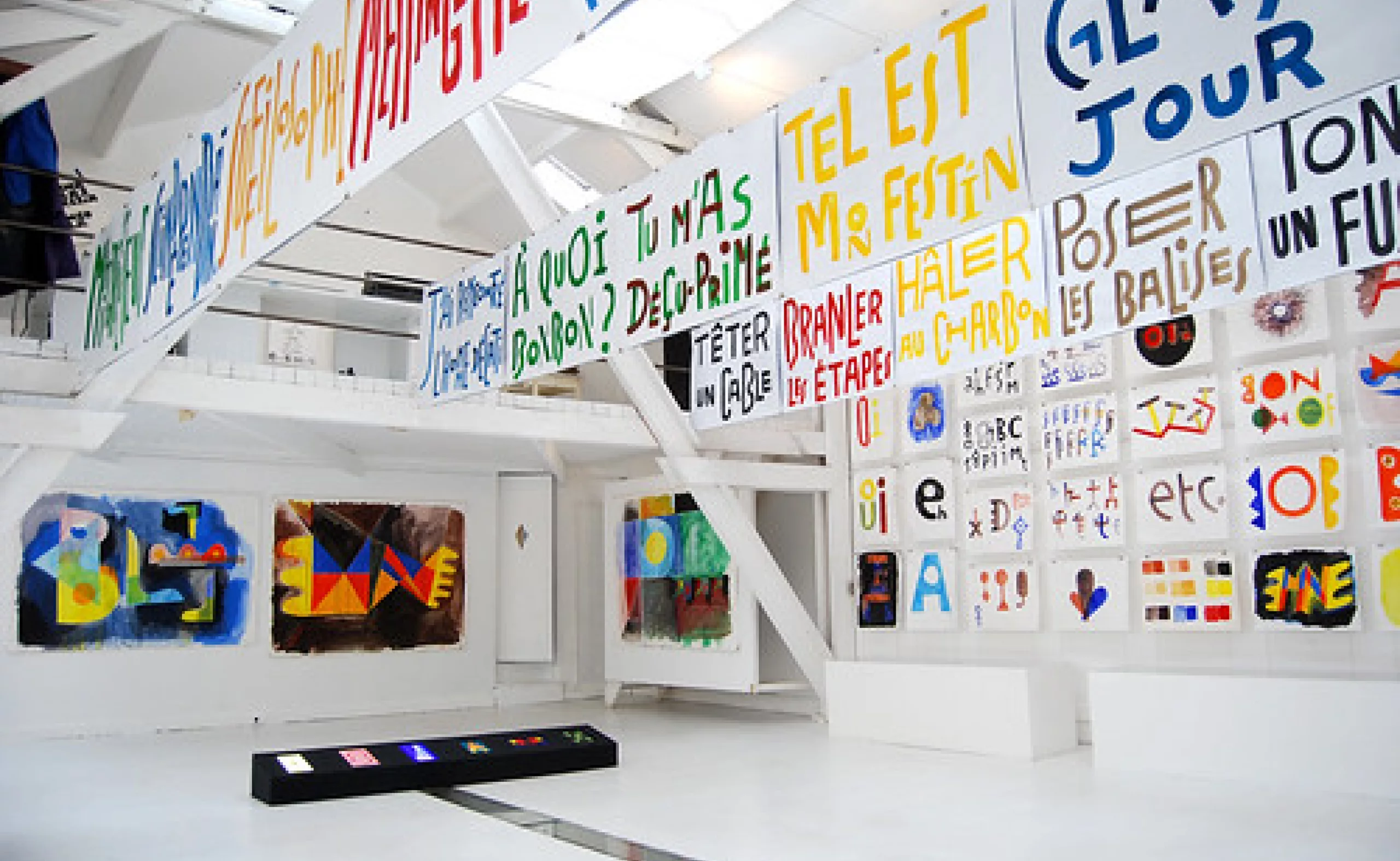
The final exhibition will be devoted to the work of graphic designer Pierre di Sciullo, bringing the cycle to a close.
‘During those “Anatome years”, we learned how to exhibit graphic design in France, which was no easy task. We learned how to exhibit and think about graphic design. We learned how to professionalise exhibitions. We moved from posters to collectible posters…’
Nawal Bakouri,
Then information about the gallery became scarcer.
It closed permanently in 2012 without any media coverage.
‘I physically closed the gallery, turned the key for the last time… Looking back, it was all quite traumatic!!! I set aside 10m3 of documents and archives, which I stored at a friend’s house.’
Stéphane Dupont, graphic designer
Since then, no venue dedicated solely to graphic design has opened in Paris.
One last anecdote that speaks to the Gallery’s visibility.
“It was in the early 2010s, and I was invited to Venezuela, to the University of Los Andes, for “Signo 2011”, a series of meetings and conferences on graphic design, sociology and philosophy.
We were at an altitude of 4,000 metres in the Andes, and it was the end of a day rich in discussions and presentations. We were having coffee when someone asked me, ‘How’s the Anatome gallery doing?’ We were 10,000 or 12,000 kilometres from Paris, and Latin American graphic designers were asking about the Parisian gallery. That was the reach of the Anatome gallery.
A gallery unlike any other in the world.”
Michel Bouvet, graphic designer and poster artist
Calendar (to be completed!) of exhibitions at the Galerie Anatome from 1999 to 2012
— Pierre Neumann, septembre 1999/janvier 2000
— Uwe Lösch, janvier/avril 2000
— Hong-Kong>Canton, juin/juillet 2000
— Carteles de Mexico, septembre/décembre 2000
— Etienne Robial – décembre 2000/février 2001
— Warszawa, mars/avril 2001
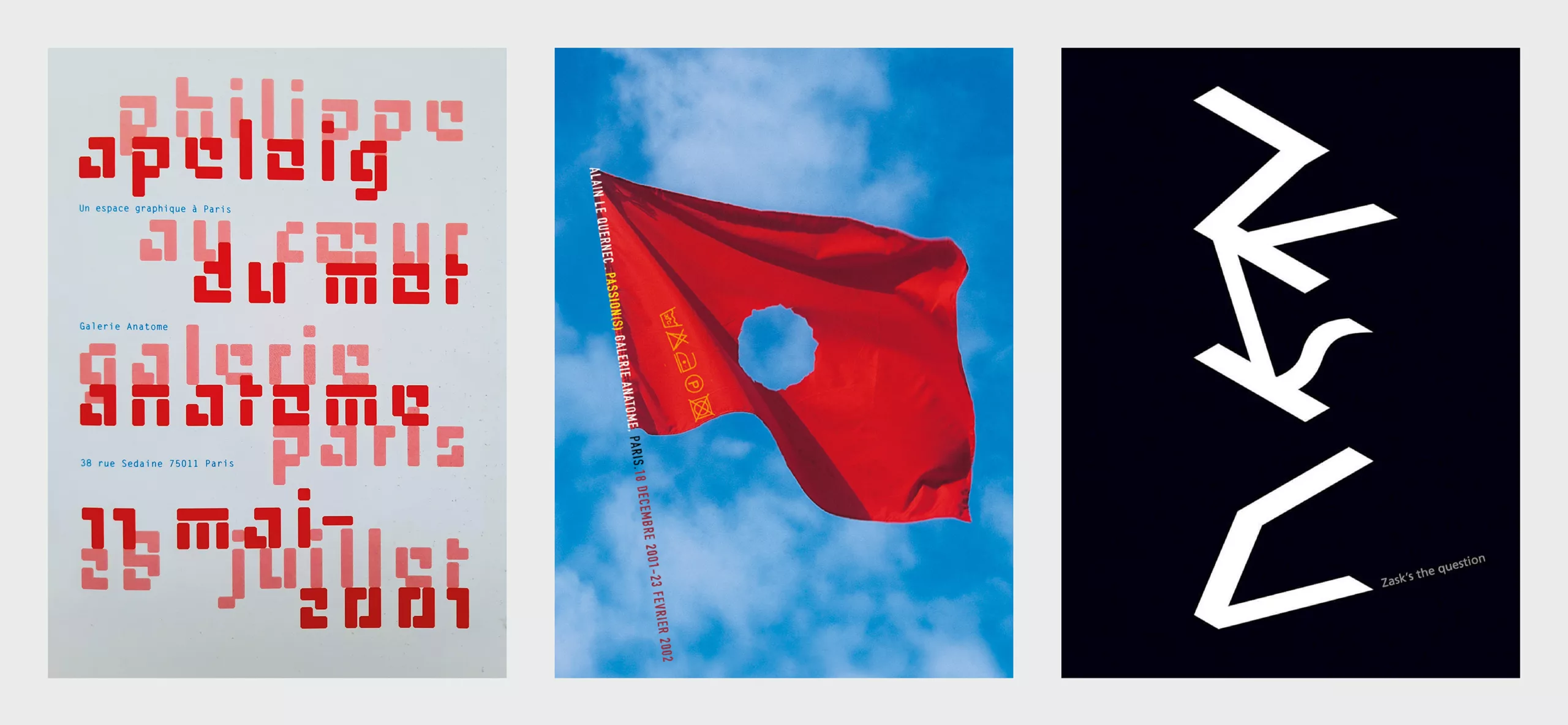
— Philippe Apeloig – mai/juillet 2001
— Paris vu par… 127 graphistes AGI – septembre/décembre 2001
— Alain Le Quernec, décembre 2001/février 2002
— Vivamus, mars/mais 2002
— Achtung Graphisme, Mai/juillet 2002
— Tchèque In, septembre/décembre 2002
— Vive le graphisme, vente aux enchères, décembre 2002
— Ralph Schraivogel, janvier/mars 2003
— Ruedi Baur, avril/juillet 2003
— East Coast/West Coast, octobre/novembre 2003
— Michel Bouvet – janvier/avril 2004
— Catherine Zask, avril/juillet 2004
— Michal Batory, octobre/décembre 2004
— Tri Bogateiria, septembre/décembre 2004 ?
— H5, mai/juillet 2005
— Werner Jeker, janvier 2006
— Cyan (collectif berlinois), mai 2006
— Wim Crouwel, avril 2007
— Ahn Sang-Soo, juin 2007
— Ich & Kar “Curiosités”, octobre 2007
— Mai 68, l’affiche en héritage, mai/juillet 2008
— Version originale, Sofia-Strasbourg-Paris, septembre/octobre 2008
— Peter Knapp, l’oeil moderne à la galerie Anatome, novembre 2008/janvier 2009
— Concours des plus beaux livres français, 2008 Mars 2009
— 10 ans de la galerie Anatome, septembre 2009
— Malte Martin octobre/décembre 2009
— Tonik, janvier/mars 2010
— Paprika-Seripop – Un regard graphique sur Montréal, mai/juillet 2010
— Flavia Cocchi, septembre/décembre 2010
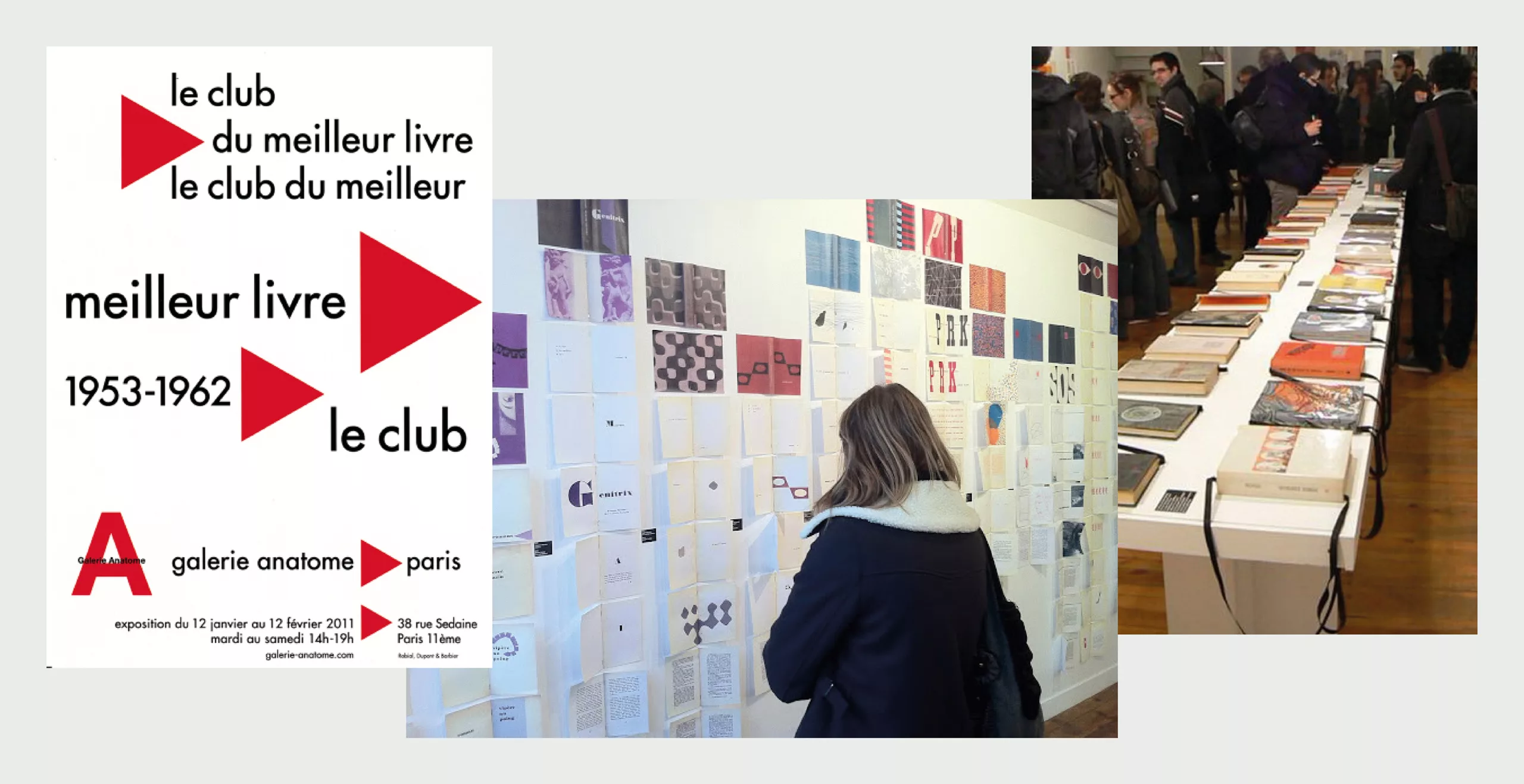
— “Le Club du meilleur livre”, janvier/février 2011
— Jan Bons – Libertés de mouvements, mars/avril 2011
— Futura typo, mai/juillet 2011
— Trafik WAT ?, octobre/décembre 2011
— Pierre di Sciullo – En esthète de gondole, janvier/mars 2012
“Exposer/S’exposer”, texte de Michel Wlassikoff, éditions Panama, Paris 2006
Interview de Marie-Anne Couvreu, Galerie Anatome
Expositions Galerie Anatome
Written by: François Chevret
On the subject
-
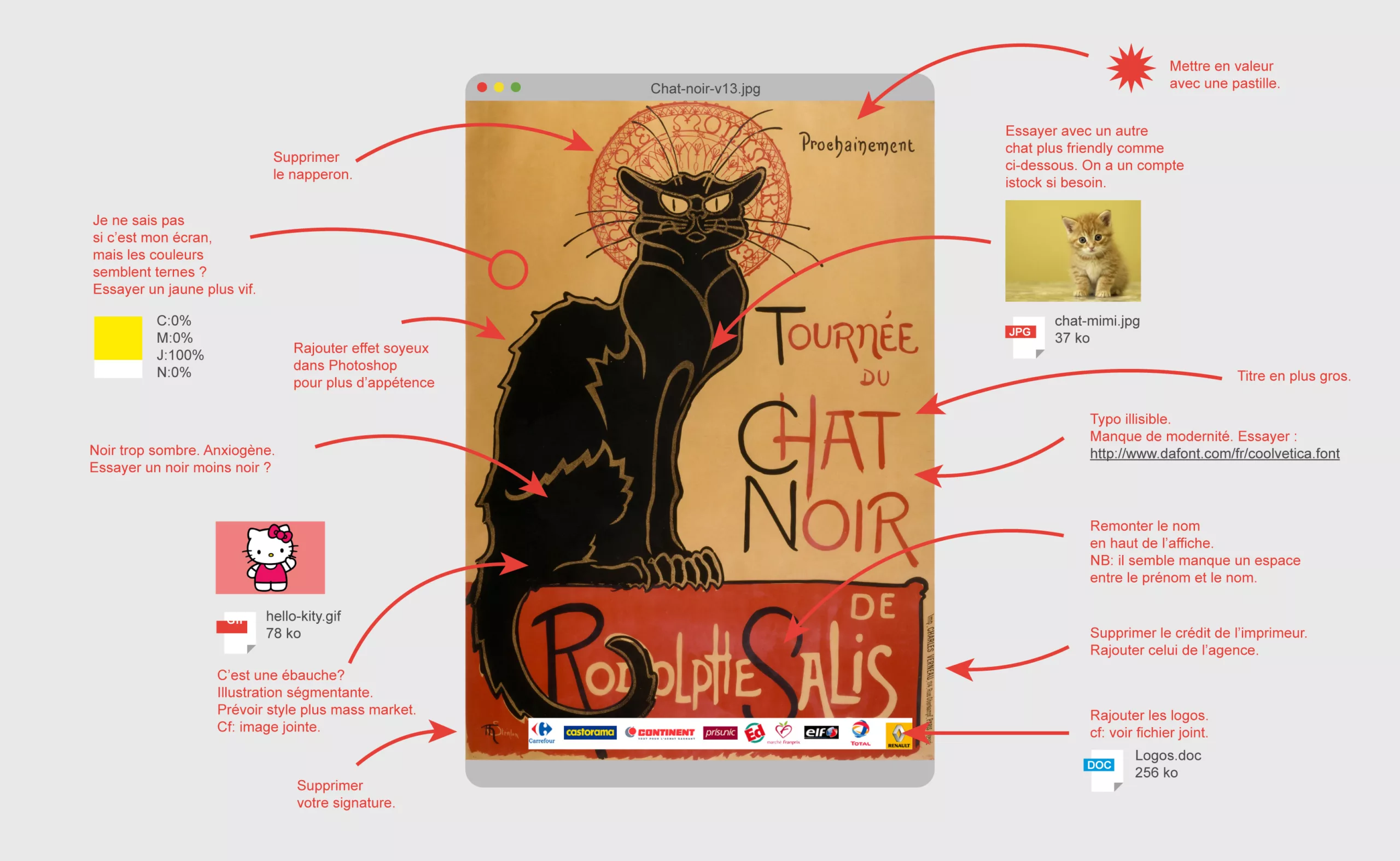
My client is a graphic designer
Imagining customer feedback on mythical posters. The tone is exacerbated and any resemblance to real and actual feedback is purely coincidental.
-
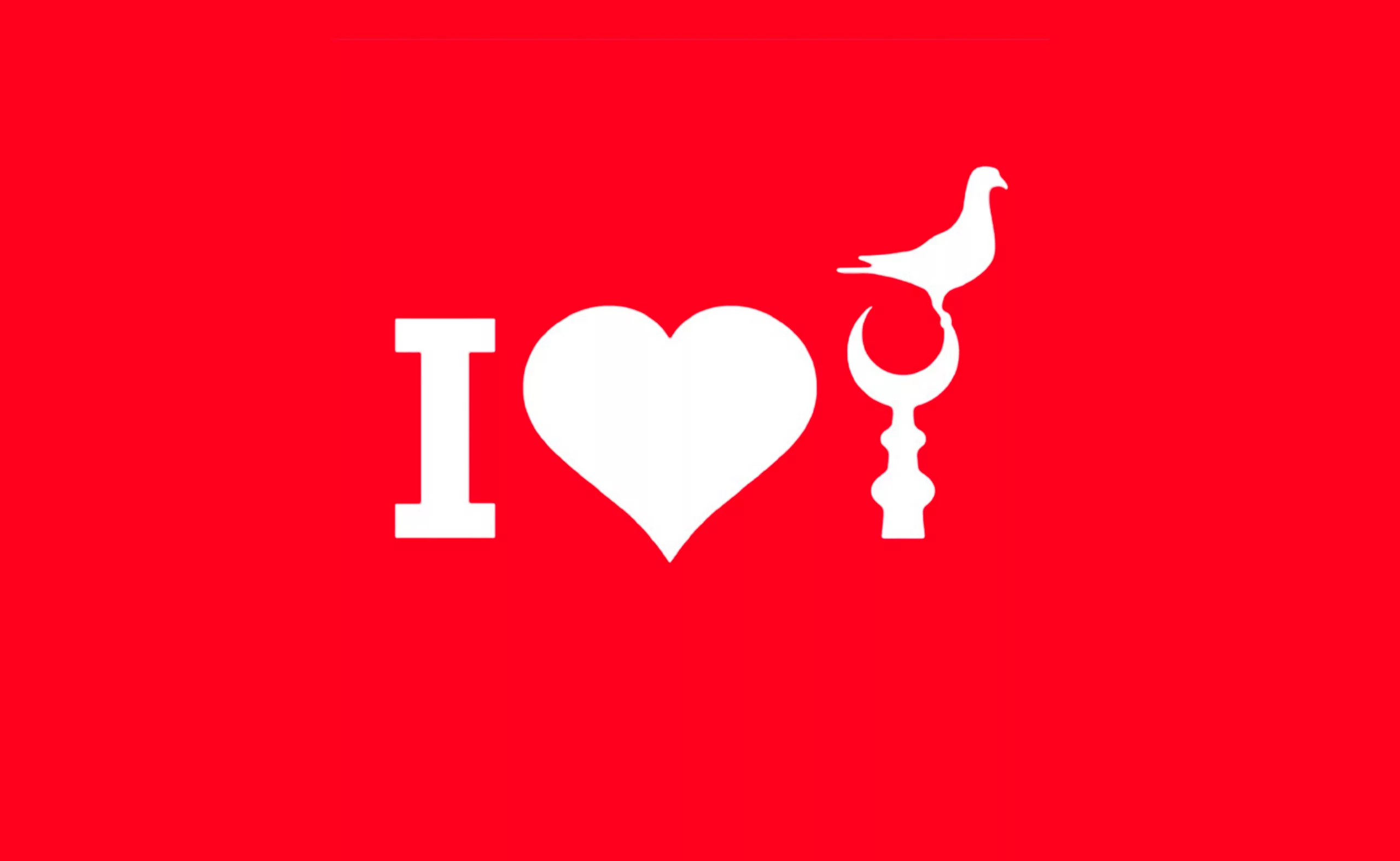
Turkish graphics
Fortunately, as I turned down an alleyway, I came across the “Istanbul Design Center”. It’s a school of applied art, a venue for exhibitions, workshops and conferences, a publishing house… in short, just what I was looking for!
A few posters have piqued my curiosity!
Unfortunately, I had to drop in outside opening hours… not a single student, just a calligraphy teacher who suggested I drop in again the following week… sniff… So it’s back in France that I find out more about this place and discover an amazing communication made by the founder of this place: Faruk Akın ( with a “ı” without a dot ! like in our Graphéıne logo! 🙂 )