3 questions for Matthieu Bernard: Thinking of real estate as a brand.
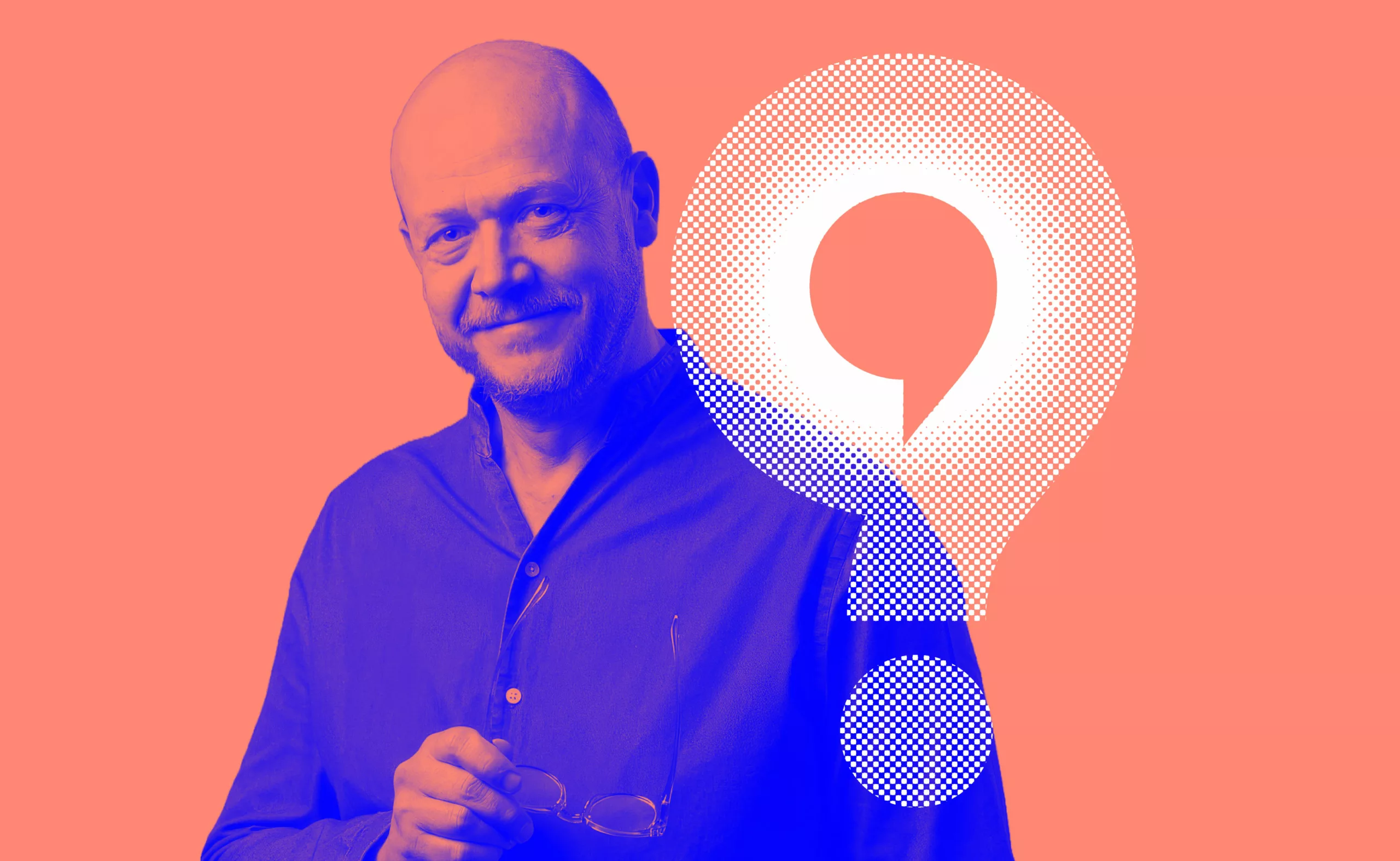
Thinking of Real Estate as a Brand
Trained as a lawyer, Matthieu Bernard moved into advertising before specialising in real estate. For the past ten years, he has developed a distinctive approach: seeing a building not simply as an asset to be marketed, but as a brand to be positioned, narrated and brought to life.
Drawing on his career and experience, he reflects on the evolution of real estate marketing, the growing importance of experience and emotion, and more broadly on the role brands now play in shaping collective narratives.
You approach your clients’ real estate assets as brands in their own right. Could you tell us more about this approach and where it comes from?
Matthieu Bernard: “It all started with a series of encounters, but also with a passion. After studying law and working as a lawyer ; I completed postgraduate degrees in business law and audiovisual communications law ; I entered the advertising world through an uncle who ran an agency in London. And I loved it. Later, I met an ESSEC graduate with whom I went on to found Nineteen.
As I was approaching 40, one of my oldest friends, who was working for a major Belgian insurance company, happened to be setting up its French subsidiary and got in touch with me. He said: ‘We have a real estate asset in Montrouge that we need to market, but we have no idea how to present it.’
At the time, the standard response to this kind of project was essentially a conventional brochure with a few photographs, floor plans and sales arguments.
My response was: ‘I come from advertising and I don’t know much about real estate. But what we can do is approach your building in the same way we approach commercial brands.’
We started from the idea that we could change the way people perceive their workplace by giving the building a soul. And giving it a soul means creating an identity, a name, a logo, a story and a communication concept that provides a consistent thread throughout the project. The aim was to position this particular real estate asset in a way that would differentiate it from all the others.
This was in 2014, at a time when perceptions of offices and workplaces were extremely negative. Around 80 to 85% of the people surveyed had a rather negative view of their professional environment. The building we were working on was one of the first at the time to make extensive use of white Corian, a refined material with a very smooth finish. We built the entire story around this characteristic and called the project White.
We created an origami-style brochure that unfolded the story of the building in an unexpected and surprising way. The building literally unfolded before your eyes. At the time, it felt like a genuine revolution.
A few years later, Covid and remote working completely changed the game. Suddenly, a major question emerged: ‘How do we get people to come back to the office?’ Gradually, the agency shifted 100% of its activity towards these kinds of projects.
Today, our starting point is often a building that needs to be completely renovated. The question becomes: ‘How do we reposition it in the market?’
Ultimately, the process is very similar to the one used for a consumer brand. You analyse your target audiences and their needs and behaviours, identify the key pillars, and then develop a positioning from which you can build a whole set of tools and define the appropriate language and messaging.
In other words, you build a complete brand and marketing strategy around a building.”
You often quote the American poet, author and activist Maya Angelou: “People will forget what you said, they will forget what you did, but they will never forget how you made them feel.” What role does emotion play in your approach?
Matthieu Bernard: “One of the main things I took away from advertising is that you should never leave people indifferent. You can leave a positive or a negative impression, but what matters is leaving an impression. Neutrality simply does not work in communication.
If you want to stand out, something has to happen at some point. We work for investors who visit a great many buildings. Their decisions are sometimes based on rational factors, and sometimes on more instinctive ones.
The brain has two hemispheres: the left, associated with logic and rational thinking, and the right, associated with creativity. It is the latter that triggers an immediate positive or negative reaction. That is the part we are trying to speak to.
One of our biggest challenges is bringing clients onto a construction site where even architects can sometimes struggle to imagine the finished result.
Maya Angelou’s words really gave us a framework and a clear objective. If we wanted something to happen, we had to create a genuine experience. What people feel is incredibly powerful. It is what allows us to create differentiation and build stronger memories. A building under construction is noisy, and the smells are not always particularly pleasant. So how can we approach those sensations differently?
We have developed a major hub in Vannes, on the Gulf of Morbihan, dedicated to imagery and innovation. Its team specialises in creating highly immersive visualisations that allow people to experience a project as it will ultimately look.
Alongside a physical visit to the building, we equip visitors with Meta headsets and take them into a mixed-reality experience. They can explore augmented reality combined with a model of the building as it currently exists, before being fully immersed in the future spaces as they have been designed.
We also work with start-ups specialising in scent to introduce additional olfactory experiences, as well as sound and specially selected music. In this way, we create a sense of life in a place where, physically, almost nothing exists yet. And the impact is absolutely remarkable.
Today, the agency is made up of three entities:
- a consulting division that completely rebrands buildings;
- a spatial design division led by a former collaborator of Jean Nouvel;
- and a division that produces all the imagery of the future site, as well as the tools that help users imagine themselves within the space.
It brings together a deliberately broad range of skills that you would not normally find within a conventional agency.”
Has the brand therefore become an essential vehicle for any narrative today?
Matthieu Bernard: “Absolutely. And that leads us to ask another question: ‘Before brands, who carried the narrative?’
If we look back, collective narratives were largely shaped by institutions. Some were religious, providing shared stories that people collectively embraced. Others were state-led, through schools and education, which also played a role in teaching people how to become citizens.
As those institutions gradually lost some of that influence, another source of narrative began to emerge towards the end of the post-war economic boom: major commercial brands. At the time, they were not yet communicating in such an emotional way, but they gradually began to build collective narratives of their own.
Today, people need something to connect to, and brands are increasingly able to provide stories that are simple, shareable and desirable. They create a sense of imagination and aspiration that is sometimes lacking in the broader structures that shape how we live together. People need to dream.
For example, we are increasingly asked to approach office spaces in the same way as hotels. But a hotel today no longer simply sells a room key; it sells an emotional experience. And it goes even further than that. We work with hotels that ask us to develop programmes designed to extend that experience beyond the hotel itself.
We have come an enormous way from the office environments of 2015, before Covid, to where we are today.
This narrative dimension is now at the heart of every strategic and creative process.
We need to create desirability, and there are not countless ways of doing that.
We no longer really talk about buildings as such, but about places to live, communities and shared experiences. You may spend 35 years of your life in an office.
So we have a responsibility to tell compelling stories.”
On the subject
-

3 Questions for Paul Vacca About the Brand
Paul Vacca analyzes the evolution of brands: the disappearance of the claim, new strategies, fluid identities, and the concept of a “habitable world.”
-
W®rds are dead, w®rds live!
The privatization of languageWhen brands privatize language, it’s death of words. Yet language must remain a common good, not susceptible to privatization.