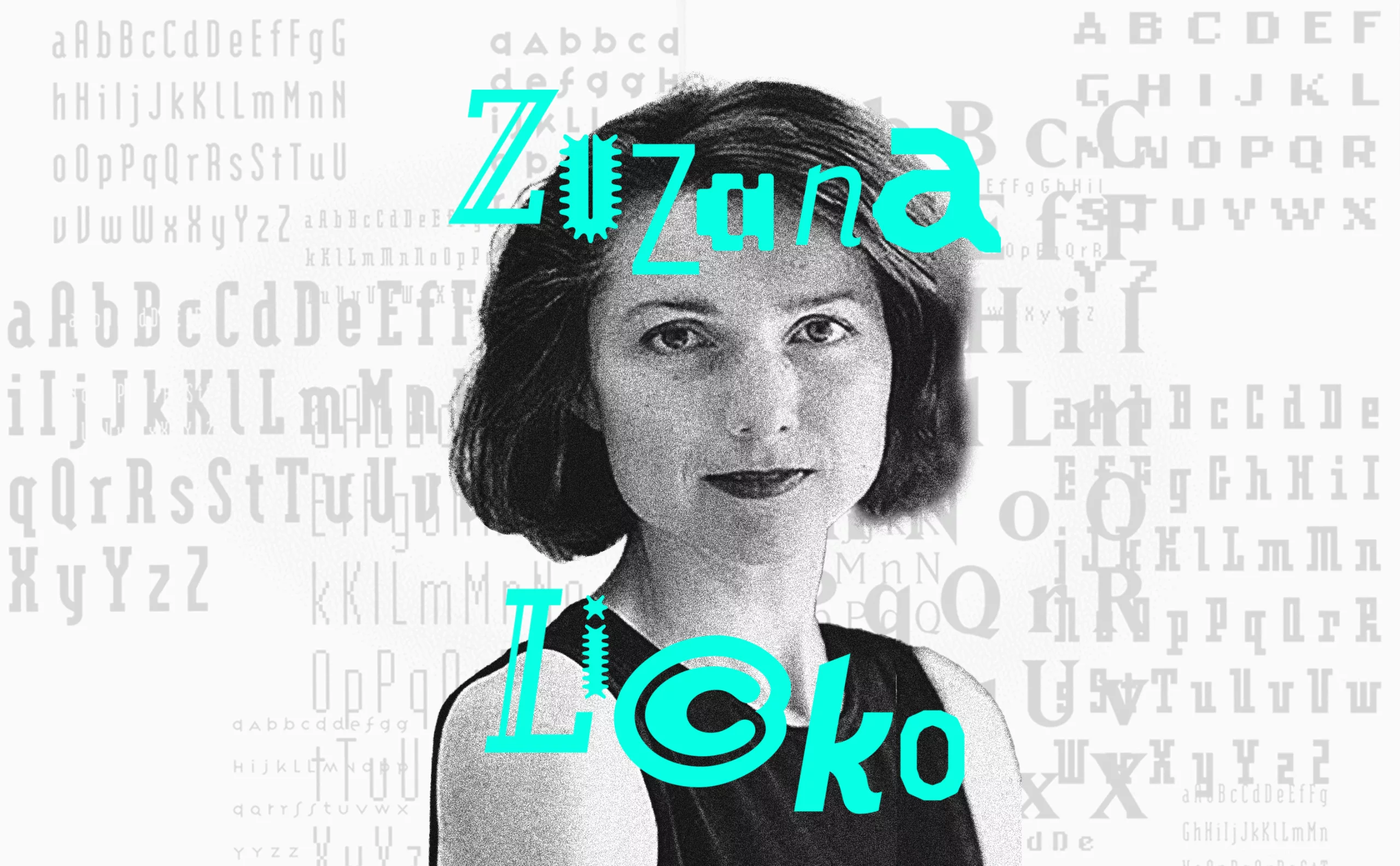
3 questions for Annie Bocel on typography and engraving

Following our article on The cabinet of type punches, treasure of the Imprimerie Nationale, Graphéine went to meet Annie Bocel, who possesses the expertise in the design and casting of typeface dies, the first link in the printing chain.
These precious hallmarks were coveted by kings and empresses, used by foundries and playwrights, and, in some cases, included amongst the Crown Jewels.
Nowadays, software is used to create typefaces. But Annie is the last in a line of designers who know how to draw and then engrave these letters into metal, whilst waiting to pass on this knowledge in turn. In her workshop in Brittany, she practises engraving, printing, teaching through workshops, and artistic research based on traditional techniques.
- What are you seeking to create when you craft a type punch, given that this craft survives solely through your expertise?
First and foremost, I would like to make it clear that this is not my expertise. This craft, which is relatively little known, has for a long time been practised by only a handful of people. James Mosley, a historian and lecturer at the University of Reading, who passed away in 2025, counted around 580 engravers since Gutenberg perfected the process in the 15th century. That is very few – a tenuous thread. I am not the only one; Nelly Gable, Raymond Stanley Nelson, Richard Årlin and young engravers in the United States are also taking an interest in it. I feel more as though I am joining this tradition than carrying it on. In reality, we are not just five practitioners, but those 580 counted by James Mosley, that anonymous multitude of whom so few traces remain, and perhaps those yet to come. There is much to be done to understand how this practice has been able to, and can, be brought to life.
When I sat down at the workbench, I felt as though I had a problem that needed solving. As I wasn’t motivated solely by the idea of preservation, my vision of this craft could not be based on reproducing typefaces for restoration or engraving a typeface identically – a typeface that wasn’t designed to be engraved. What interests me, and what I feel really makes sense, is to explore the distinctive features of this technique and seek to reveal them, to suggest just enough through the engraving to intrigue the viewer. In short, to play with the very essence of the craft so that it reveals itself and invites a fresh perspective.
The disappearance of all things invites us to connect with their essence, their origin and the reason for their demise. It is, therefore, at the very heart of the process that we seek to look. In engraving for printing, there lies a multitude of concepts that inspire me and which I seek to explore. In this act, which requires embracing constraints and becoming one with the craft, lies a freedom akin to free expression. This tells us something about our relationship with the act of making, and in turn – as it involves delving into the past – about the role of the hand today. It also speaks of writing, of print, of anthropological memory…
The disappearance of a trade is a fascinating issue, providing an opportunity for deep reflection. I set out to elevate and poeticise this context through engraving. I began writing a text whilst we were conceiving the book Dessins de geste with Nelly Gable, a Master of Art, published in 2019 by Éditions des Cendres with the support of the Institut des Savoir-faire. At that time, and in response to it. The book Dessins de geste is a manual, an attempt to ensure that knowledge is not lost. It is a visual account supported by Nelly’s narratives and technical annotations.
This second text, written in parallel, is a shadow of the first. Perhaps it is another way of bringing the first work, Dessins de geste, into sharper relief. There is a desire to set a precedent, to give an idea of what might emerge from this knowledge. It is a preparatory text for the engraving of a typeface, a final typeface. This project is currently underway.
- Tell us about your relationship with the image, the letter and time: how do you bring them to life, and what role do you assign to slowness in a world where we are constantly seeking greater productivity and speed?
We hear a lot about slowness, but I don’t feel as though I’m doing things slowly or living slowly. I’m very impatient by nature; I have a fire inside me, a fever at the workbench. It’s that same fever that keeps me in front of the engraved plate and can lead me to trace lines for hours on end. It’s a state of complete absorption, of extreme concentration, sometimes of a held, suspended breath, until I reach a point of release. When people talk to me about patience and slowness, I find it absurd. It’s as if the craftsman were expected to be a wise, almost docile being. I have an ever-growing need to learn, to listen, to read, to see, to experiment with engraving and to realise that it resembles life more than anything else. And this is achieved through the image. An image that disappears into the engraving only to reappear in the form of a print.
The craftsperson is intimately linked to productivity; we must repeat movements until we find the most efficient one, until we learn to use our bodies economically so as not to tire every muscle. It is a ceaseless quest. But, unlike other situations where a machine, acting as an intermediary, would increase output, here our speed is determined by our movements. The body is our overarching unit of measurement. And in these workshop activities where the hands take over, the mind may have other desires, inviting different rhythms, thwarting the passage of time. In this craft, the scale is that of reasoned thought , and today this resembles slowness. It resembles slowness because we compare it to a world in acceleration, a world that sets itself no limits, that refuses to see limits. This same world, governed by certainty, comfort, exact science and utility.
I love engraving in the 21st century because, as it plays no part in the practical affairs of today’s world, it is relegated to the realm of the useless. Yet, every form of uselessness has its own subtle usefulness. A necessary irregularity in the pulse of the modern world.
That very same engraving, once renowned for its meticulous detail and precision – so far removed from any approximation – that tool of reproduction, indeed of forgery (I am thinking of intaglio printing and banknotes), is today made available. We can learn the techniques, evoke its legacy, and juggle each stage of the process – whereas in the past, these very stages were compartmentalised, relegated to specific craftsmen or workshops. There is no need for royal authorisation to engrave dies today, nor to print texts. Would such freedom not be disconcerting to our ancestors?
Engraving is a way of thumbing one’s nose at, a ruse to escape the foibles of our age. A lovely diversion.
- The punch is a tiny object that holds the potential to disseminate ideas on a massive scale. In your opinion, which object or technology today holds the same promise of universal transmission?
There is a sort of myth surrounding movable-type printing and its role in disseminating ideas on a large scale. I’m thinking of the work of Joël Langonné, a senior lecturer in information and communication at UCO Niort, and his research The Archaeology of Copy and Paste. All of this revolves around lead and typographers, the descendants of Gutenberg, rather than the type punches themselves. The type punch has generally remained rather obscure – the hidden part of the process.
From what I have been able to gather, this invention, when it first appeared, was intended to generate profit by replacing the handwritten book, which had become too slow for a rapidly developing society. Following their experience of marketing small lead mirrors to the pilgrims flocking to the Rhine, the intention of the ingenious Gutenberg and his associates was to design something visually similar to the handwritten book and sell it at a reasonable price. This imitation, this copy, could be produced much more quickly.
What strikes me as interesting is, in fact, this set of printing blocks – the first step in a chain of events that would lead to the printed work, the reproduction and dissemination of the book across a devout Europe, ravaged by wars and the plague, and questioning its religious authority. To go from there to comparing this invention with today’s technologies… We are so far removed from the context in which this process first emerged. To do so would risk anachronism, or even anatopism, and would oversimplify a history that is anything but simple.
Personally, the very idea of a technology that promises universal transmission today troubles me. The word technology acts as a barrier. I prefer the forces of life, which are more promising. It is this mechanism that interests me today. How can we connect with, or even mimic, a form of writing inspired by living things? Establishing a rule, breaking it – in short, playing with it. And this involves the principle of the alphabet, of typography, of standard elements designed to be combined in order to create new forms, the beginnings of a spectrum…
On the subject
-

The cabinet of type punches, treasure of the Imprimerie Nationale
The Imprimerie Nationale holds a treasure of 500,000 typographic punches, the first links in the printing chain. Only one person on earth holds this expertise.
-
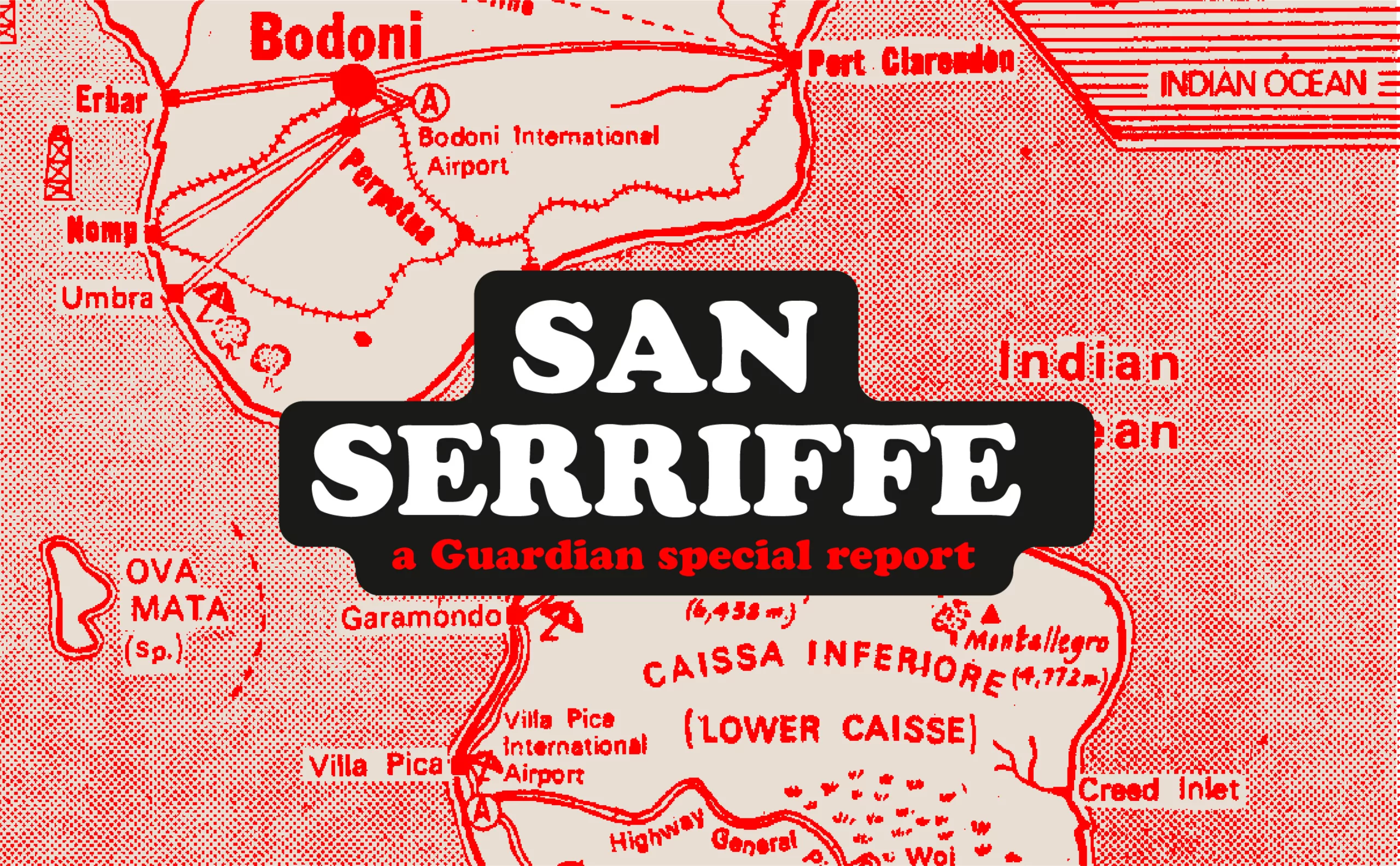
San Serriffe typographic Island
Discover how The Guardian tricked its readers into inventing the island of San Serriffe, a fictional republic born of a typographic April Fool’s joke that has become cult status. Between subtle satire and typographic wordplay, immerse yourself in one of the most brilliant journalistic hoaxes of the XXᵉ century.