5 questions to Stefan Sagmeister
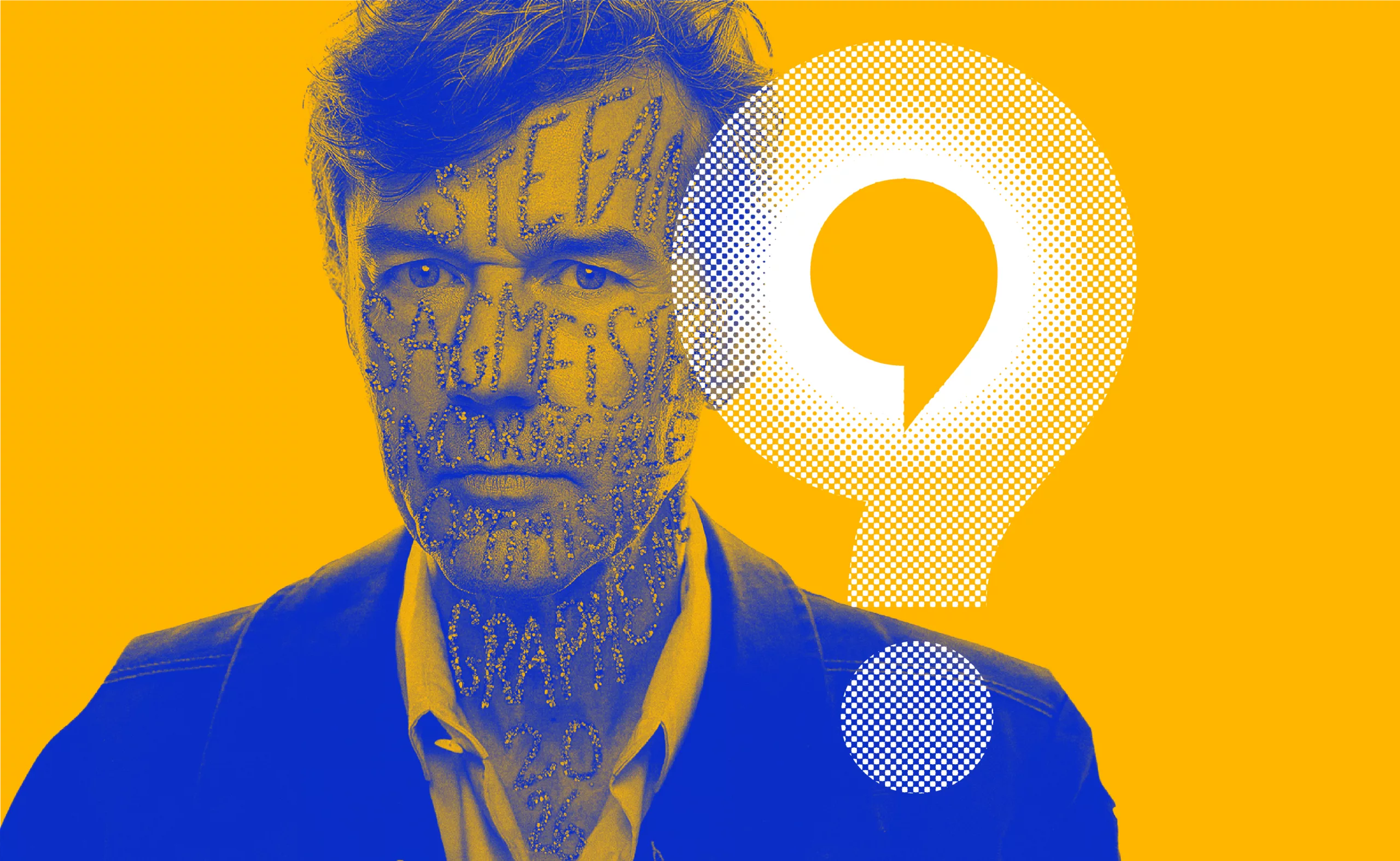
Following our article about Stefan Sagmeister, we took the opportunity to ask him a few questions about his work, his philosophy, and his approach to his craft. Enjoy the read!
- You give the impression that you’ve never stopped playing, learning, and experimenting—and that you’ve never grown tired of practicing design. What advice would you give to a designer looking for a remedy for boredom and a lack of creativity?
Stefan Sagmeister: I do get bored, quite easily, which is why the studio closes for a year every seven years. If a year is not possible, take one day a week that nobody pays you for and spend it on the subject you actually care about. And make many bad versions, with your hands if you can. Try to improve them.
- You’ve also managed to step back from situations where everyone had only one point of view, and show something different (for example: stepping away from digital communication back when Adobe reigned supreme and creating a handmade poster using coffee mugs / using your own body or nature to create imperfect typography / putting together an exhibition on beauty when everything else was understated and minimalist / creating an optimistic exhibition when everyone else believed we were doomed). Why and how do you take this step off the beaten path? Is it out of curiosity, provocation, optimism, or simply because it’s in your nature?
- How do you feel about minimalism, functionalism, and the lack of ornaments in today’s society? Do you have a cure, or is it not a disease?
- In 2003 you created a poster about Adobe without using computers. Do you feel like AI nowadays echoes this situation, and that the process of creativity could shift towards something more human? How do you see the future of creation?
Partly. A model trained on everything returns the average of everything, so by default AI makes work more alike, and that is exactly the situation in which something made by hand stands out. The machine can answer any brief, it cannot care which brief is worth answering. When output becomes infinite, proof that another person bothered becomes valuable.
- You’ve often engaged yourself physically in the process of making your art/design. And you’ve done long experimental researches about happiness. How important is it to you to want to make people (including you) more happy with your work?
On the subject
-
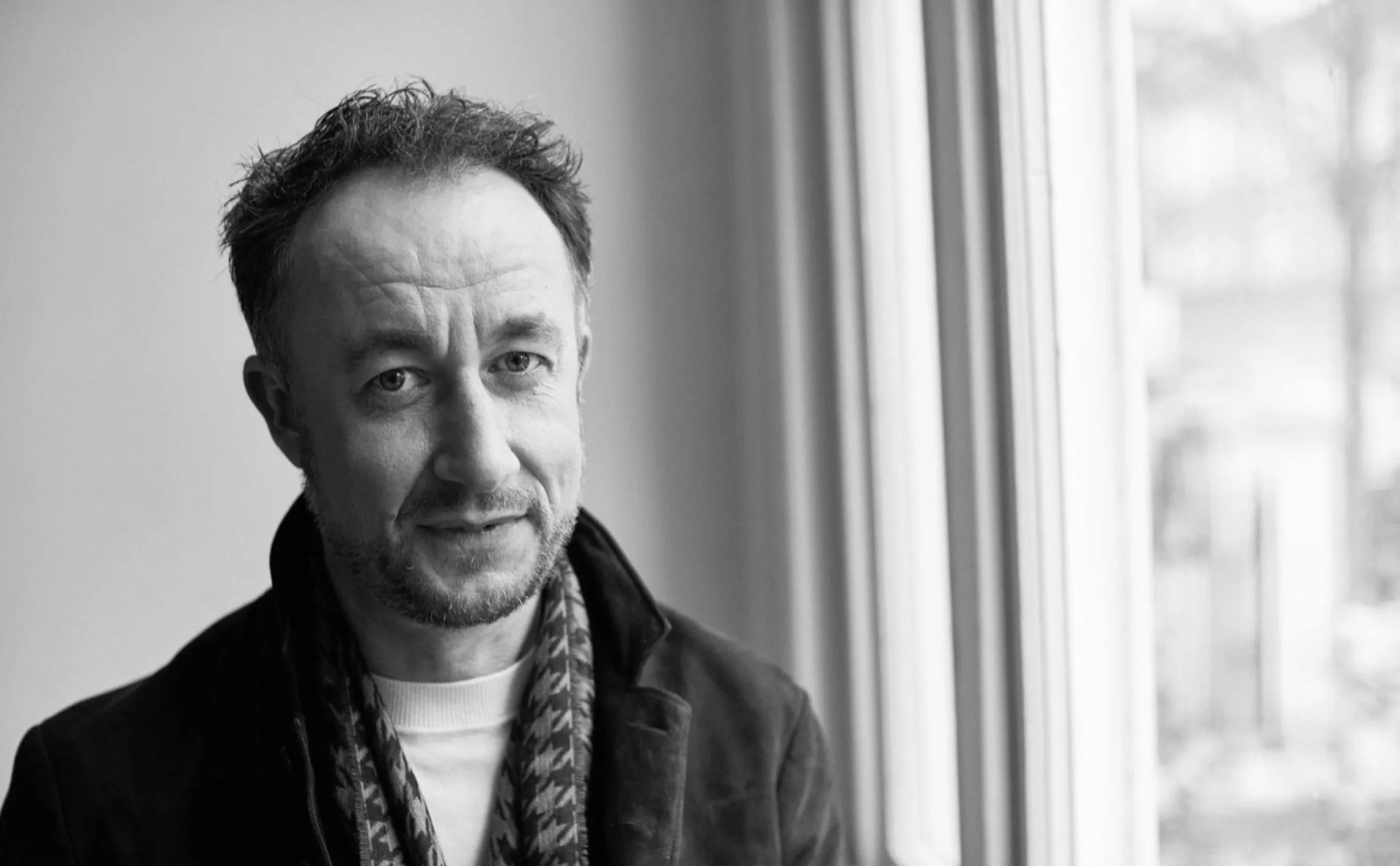
Miles Newlyn, cool design
Miles Newlyn, designer of logos for Unilever, Suez, Tate Galleries and Société Générale, answers ActuLogo’s questions.
-
Interview with the designer of the AC/DC and HBO logos: Gerard Huerta
Gerard Huerta, designer of many famous logos, including AC/DC, PC Magazine, Time, HBO and the Swiss Army, answers ActuLogo’s questions.