The crossed Ꝃ: Brittany’s forbidden letter
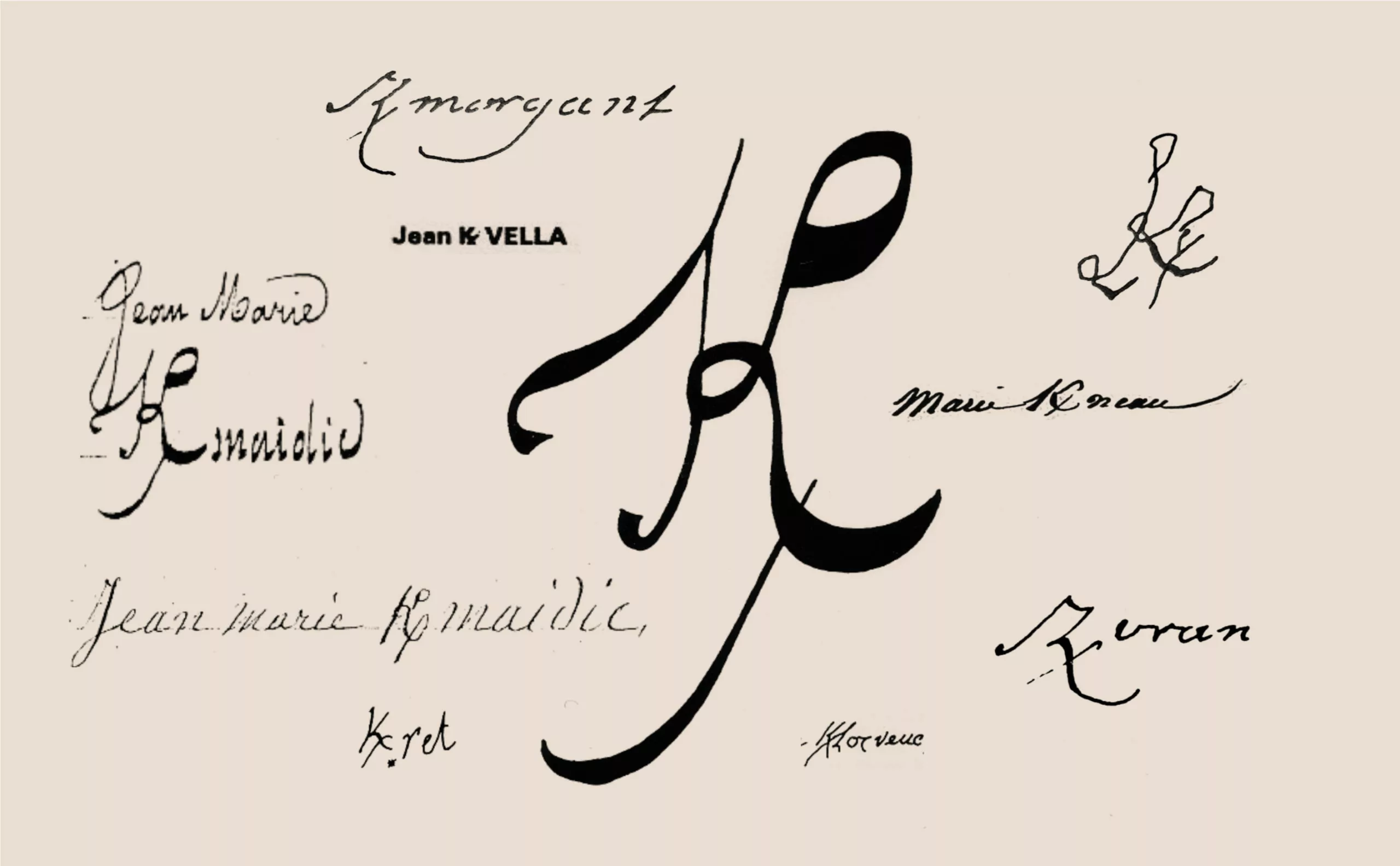
Long used to spell names beginning with ‘Ker’, this famous symbol Ꝃ disappeared over a century ago. Whilst it has managed to survive thanks to Breton expatriates, could we envisage a revival in its use? The answer comes from the Breton cultural magazine BIKINI, which has published an article on the subject.
Ꝃ (struck through)
The last time we interviewed the director and actor Gustave Kervern, it was to talk about his most memorable binges. It was 2012, and he had just published Petits moments d’ivresse, a delightful book in which he spoke to various personalities (Miossec, Benoît Poelvoorde, Marjane Satrapi, Édouard Baer…) about their more or less pronounced penchant for a tipple. A book which, beneath its apparent light-heartedness, revealed the complexity of the interviewees in their most sublime yet most intimate moments. A book that made you thirsty as much as it made you think, thus finding its place just as easily on the counter of a betting shop as in Charles Pépin’s cosy studio on France Inter.
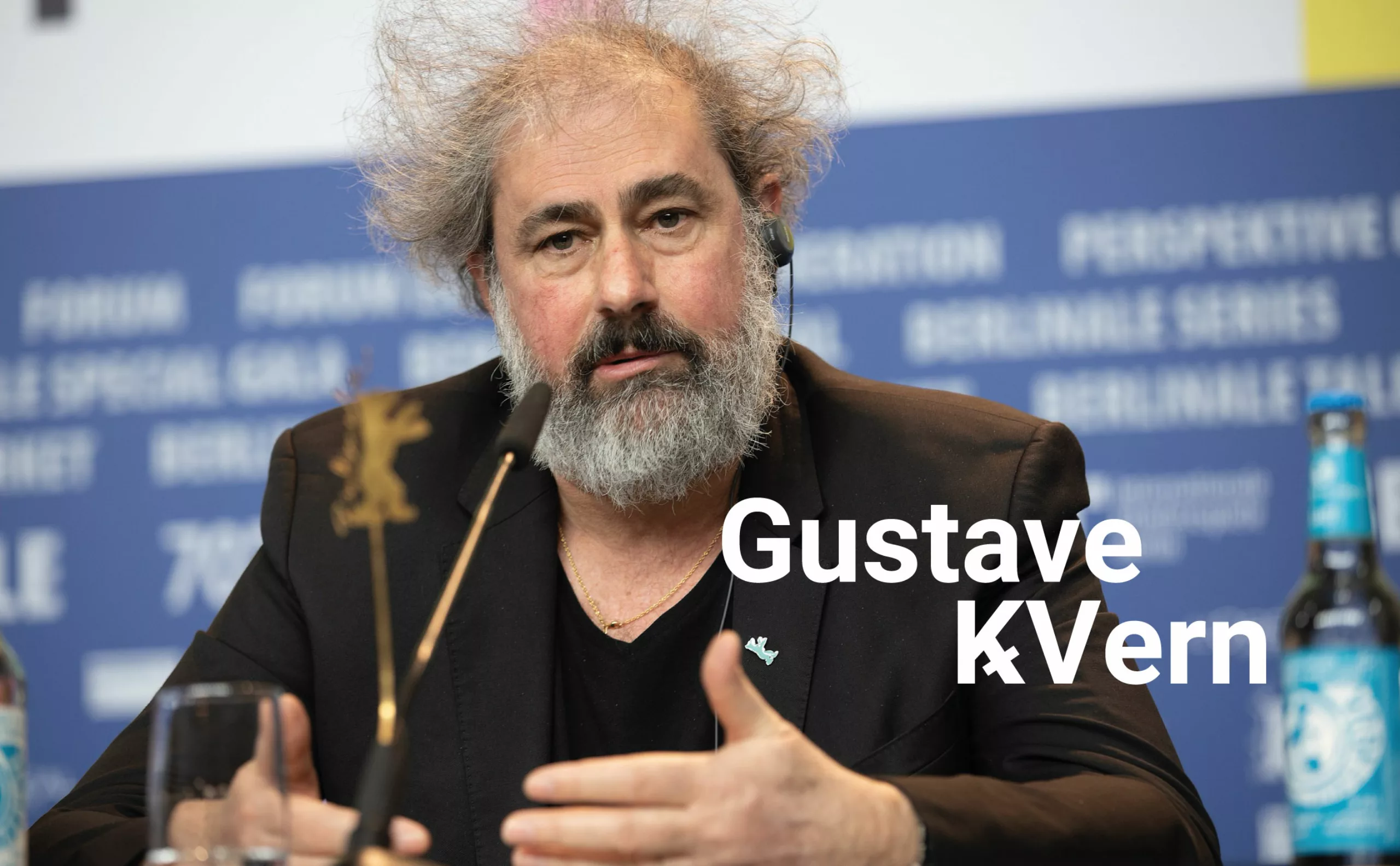
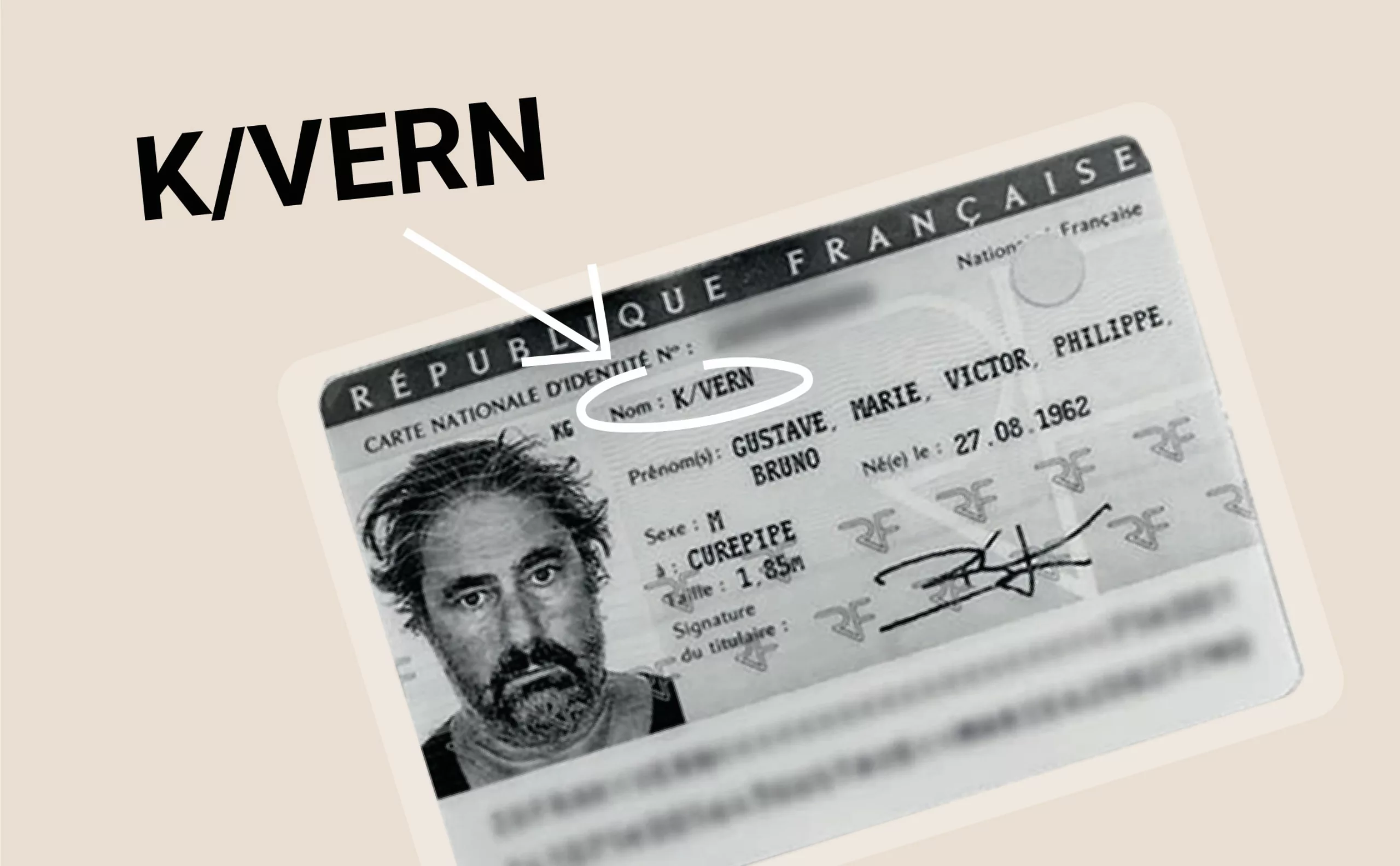
Today we catch up with Groland’s mainstay on a far more sober subject: the spelling and etymology of his surname. A complete U-turn that brings a smile to the face of Benoît Delépine’s sidekick (with whom he is preparing the upcoming release of Dada, starring Catherine Deneuve).& “It always amuses me to talk about my name. It’s a quirk I rather like,” he begins straight away, even before we’ve asked him a single question. For whilst his surname is written as “Kervern” on cinema posters and in TV credits, it is actually spelled differently on his identity documents. “On my passport, it doesn’t say ‘Gustave Kervern’ but ‘Gustave K/Vern’.”
The letter K followed by a slash, which is a modified form of a letter of the Breton alphabet that has now been forgotten: the Ꝃ. “ It is a diacritical mark,” explains Yann Riou, an ethnolinguist from Finistère and author of a study on the subject. It is a letter of the French alphabet with an added mark, namely a bar across the stem. Before 1900, this ‘barred K’ was used to spell names beginning with Ker. This is why, for example, the surname Kergall was written as KGall in birth, marriage, death and baptism registers. ”
Spelling errors
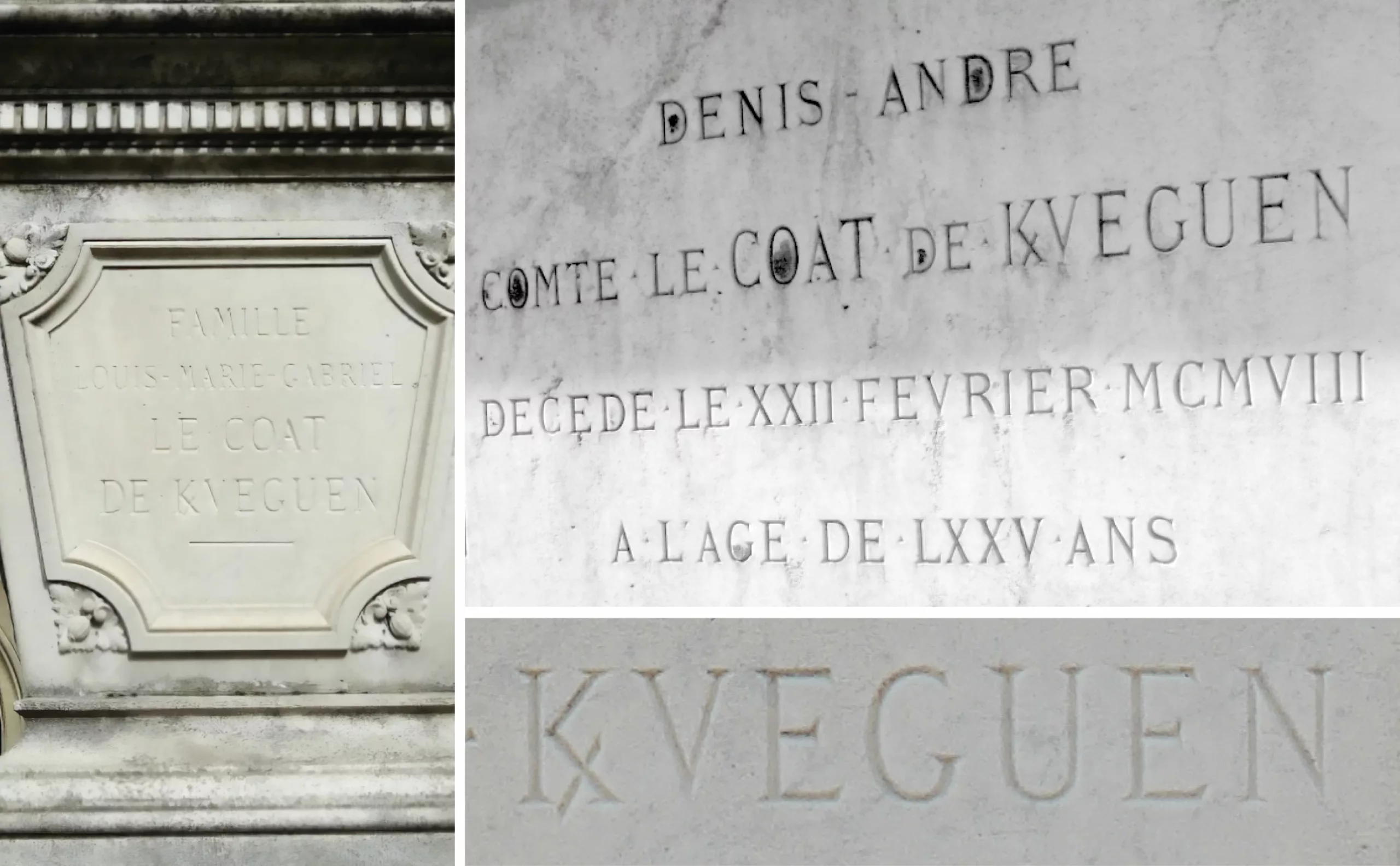
The same applies to the many localities whose names begin with ‘Ker’: Kermeur, Kerdual, Kerbihan… On old map backgrounds, there were countless instances of the letter ‘K’ being crossed out. “ It should be noted that ‘ker’ comes from ‘caer’, which, in Old Breton, referred to a fortified place and then, from the 10th century onwards, to a hamlet or any group of houses. It was from this point onwards that we saw a proliferation of places with this prefix throughout Lower Brittany. ”
A ‘everyday use’ of the Ꝃ, which, at the end of the 19th century, came under attack from the French authorities. “In 1895, a ruling by the Council of State ordered the banning of the barred K, explains Yann Riou. This ban was reiterated in 1955 by a general instruction relating to civil registration, which deemed the symbol to be a “clear alteration of the spelling”. It was also felt that this could cause problems with reading. Outside Brittany, there was a risk that names would be mispronounced. If your name was written as ‘Kros’, you might be called ‘Kros’ instead of ‘Kerros’. This is what is known as orthographism: pronouncing a word exactly as it is written. ”
Whilst the Ꝃ will therefore disappear from official documents, it will nevertheless undergo a change. “For some names, the bar will ‘slide’ between the K and the second letter,” continues the ethnolinguist. It will be replaced by a slash or an apostrophe. These forms will endure, thanks in particular to Bretons living abroad.”
From Mauritius to Grosland…
This is the case with Gustave K/Vern. “ Charles K/Vern, one of my ancestors, was a Breton sailor. He set sail from Brest in 1774 on a ship called La Fortune – which was rather ill-named – to settle in Mauritius,” recalls the man from Groland. A few hundred years later, my family is still there. That’s where I was born. My Breton roots go back a long way, but I still carry them proudly in my name. ”
An unusual surname that’s caused him a fair bit of trouble. “The slash often doesn’t show up on official documents. For two years, I didn’t have a driving licence, for example: they couldn’t find me in their computer records. Luckily, I had a friend who worked for the police and was able to look into it: my name had been spelt “Kivern”, with the slash replaced by an ‘i’… When I book flights, too, the slash isn’t always recognised. Once, at an airport in the US, I nearly got stuck because the spellings didn’t match.”
Despite these difficulties, the filmmaker says he is attached to this unusual spelling. “Given that everything is getting more and more of a faff when it comes to paperwork, it would have been simpler to Frenchify my name, but I quite like the idea of keeping this unconventional aspect. Lots of people don’t know what it means or how to pronounce it, but I’m keen to keep it. My two sons, aged 17 and 21, also plan to keep it, even though one of them was worried he wouldn’t be able to sit his A-levels because of it… ”
These are situations that jazz musician Olivier K/Ourio understands; on stage, he has chosen to go by the stage name “Ker Ourio”.& nbsp;“Simply to make sure it’s pronounced correctly,” argues the harmonica player from Réunion, who, as a small child, had wondered about his unusual name. I remember going with my father to the departmental archives. We managed to trace it back to a certain Joseph K/Ourio. One of my Breton ancestors, born in the Lorient area, who in 1728 had decided to try his luck in Réunion. That’s when I realised why I was one of the few fair-haired, blue-eyed children on this island with such a mixed population ! ”
A crossed-out ‘K’ that he’d tried to get rid of about fifteen years ago. “I’d applied to have my civil status amended, backing up my case with extracts from Breton dictionaries, but my application was rejected. It still causes me a few minor mix-ups with Sacem or duplicate entries with the social security system, but I’ve eventually got used to it… ” , says the man who, in Réunion, wasn’t the only one with a K/. One of my teachers at secondary school was called K/Dilès; I also knew a K/Morvan… ”
Another notable local figure is Émeline K/Bidi, a NUPES MP elected in 2022 in the 4th constituency of Réunion. Her name is said to derive from that of a farmer from Quimperlé who, in the 18th century, is said to have left mainland France for the island in the Indian Ocean.
Traces of the ‘K’ with a bar, which Yann Riou still enjoys tracking down. “On genealogy websites, in geographical distributions, it’s more often found outside Brittany: Mauritius, Réunion, the Paris region, the Var… Places where Bretons have emigrated over the centuries and where they have managed to retain their distinctive spelling more easily than here. It is also interesting to note that when one comes across K/Bidi or K/Ros families in Brittany today, they are generally people who have returned after two or three generations of living abroad. ” Although it seems to have almost completely disappeared from the landscape, the Ꝃ can still be found on rare occasions on the gables of houses or on old gravestones.
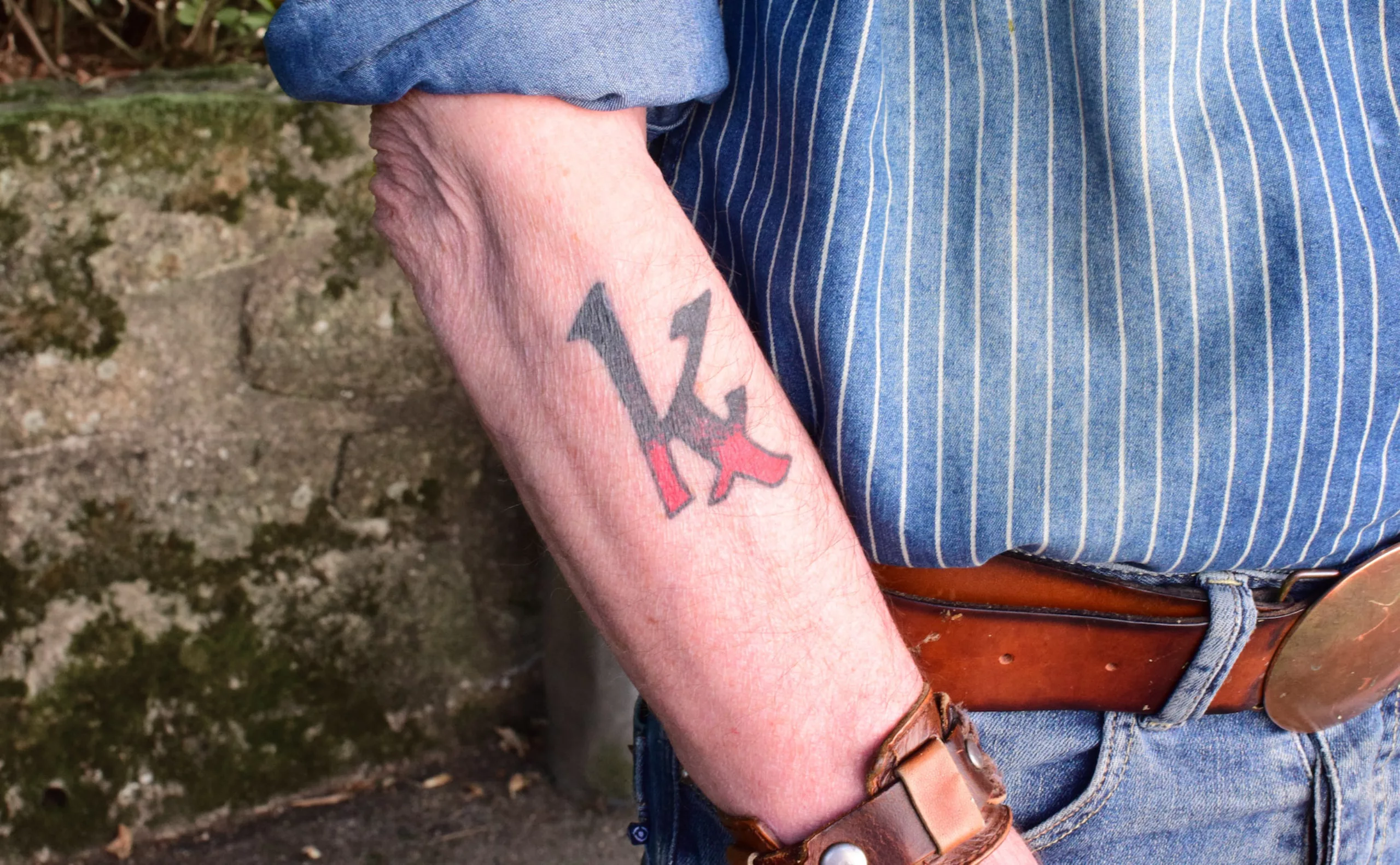
An archaism that some advocates of the Breton language regret. This is the case for the musician Dom Duff, who, in 2016, released the album K/Kwll, a folk-rock record entirely devoted to the letter K with a bar. “All the tracks are a nod to it. This project was a way of raising awareness of this letter, which, I feel, remains little known in Brittany, even amongst Breton speakers. I also wanted to promote the richness of the Breton language and, more broadly, to defend linguistic diversity : why ban a letter that served a purpose? , wonders the singer, who admits to having had fun with the musicality of the lyrics. The sounds ‘K’ and ‘Ker’ always sound rather good. ” Just like the crossed-out ‘K’ he had tattooed on his forearm when the album was released.
Older than French
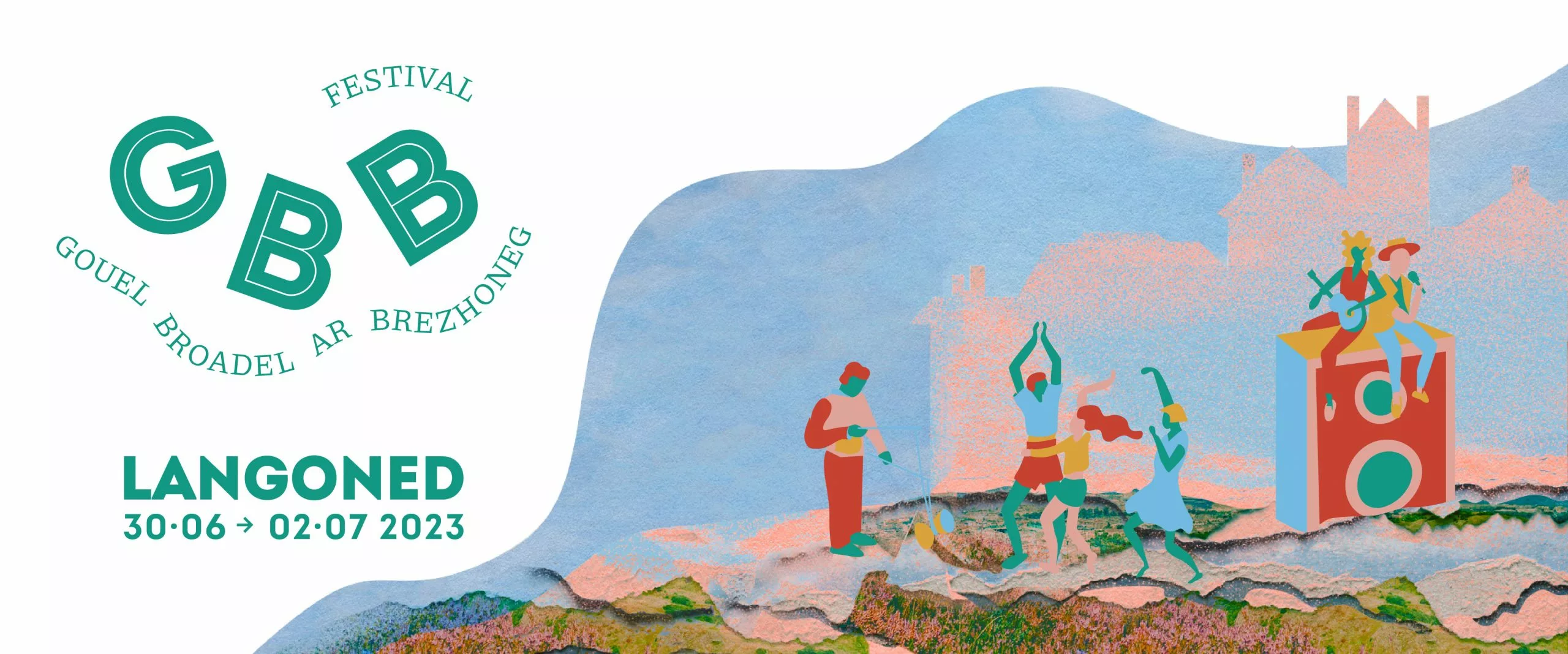
A spotlight on this now-defunct character, which we also have the Gouel Broadel ar Brezhoneg (GBB) festival in Langonnet, Morbihan, to thank for. For its 2023 edition, held last July, the festival named one of its stages “Leurenn Ꝃ”. “Just for a bit of fun—K with a line through it/cabaret” , explains Anaïs Scornet of the Mignoned ar Brezhoneg association, which oversees the organisation of the GBB and, more broadly, campaigns for the recognition of Breton as an official language in the region. “ A few years ago, we’d already assigned a letter to another stage: “Leur Ñ”. Beyond the play on words (‘leurenn’ means ‘stage’ in Breton, ed.), it was a way of supporting the family of little Fañch, who, since 2017, have been fighting the authorities to keep the ‘ñ’ in the spelling of his first name. A battle we are still following. ”
Whilst he, too, insists that we must not forget the tilde over the ñ (“otherwise it’s pronounced ‘Fantche’ rather than ‘Fanch’”), the graphic designer and typographer Fañch Le Henaff has been fascinated by the peculiarities of Breton orthography for some twenty years. This led him to create, in 1995,the Brito typeface, which incorporates the diacritical marks and other letters specific to the Breton language.
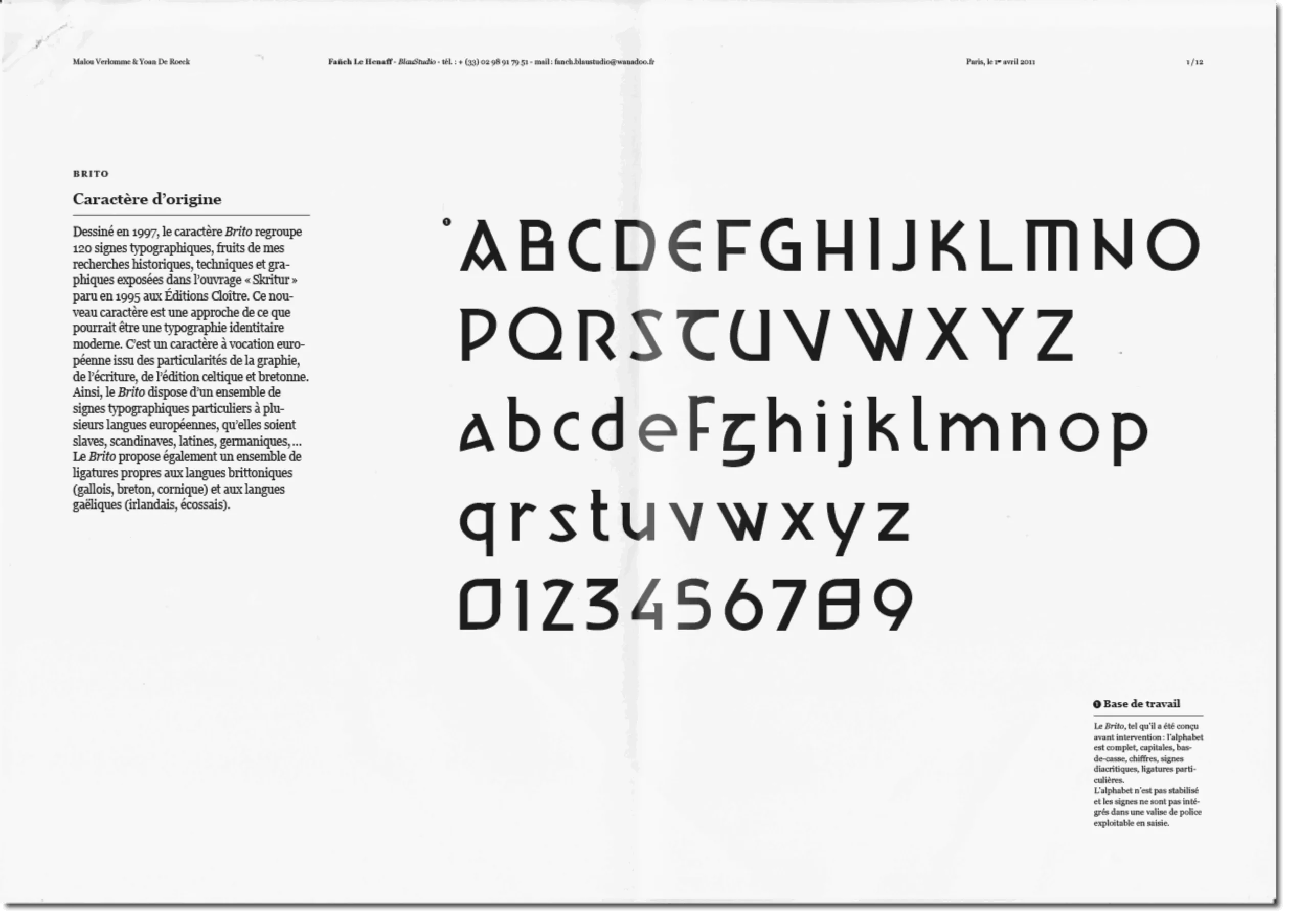
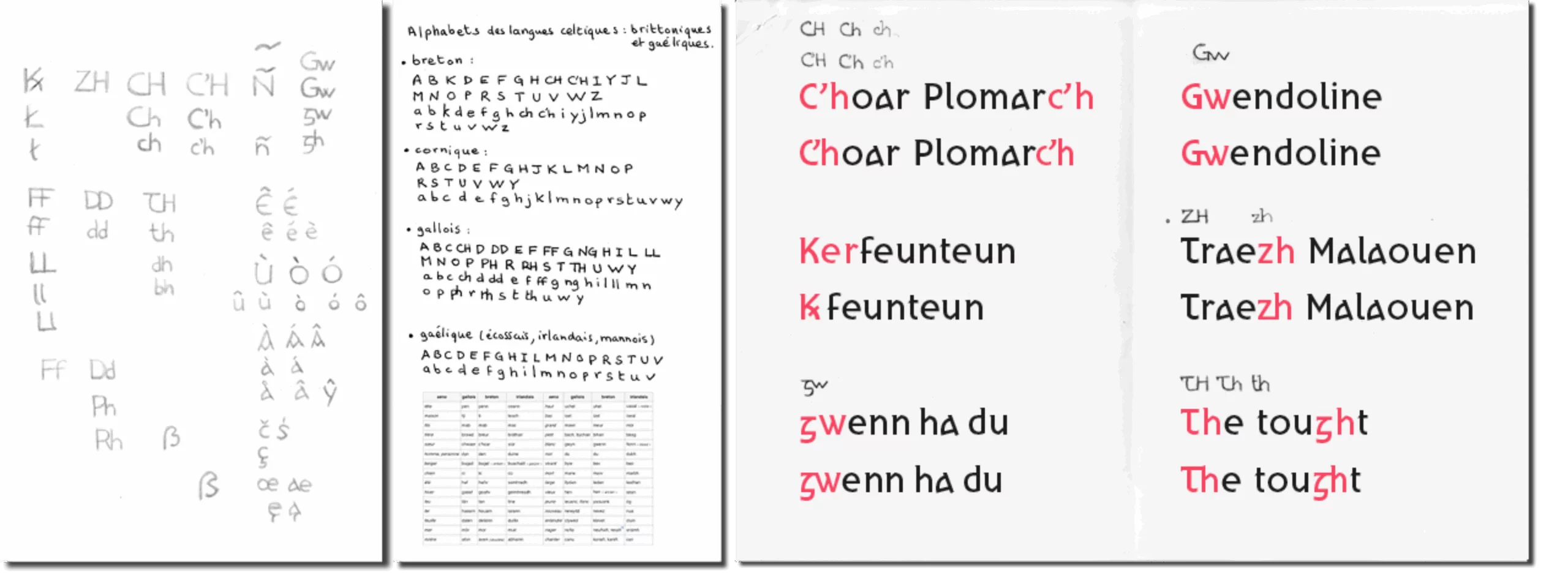
‘For example, there’s the “c’h”, the “gw” and the “zh”, for which I created dedicated glyphs. And then there was this other symbol that I’d been thinking a lot about: the famous crossed K. I felt the urge to turn it into a specific character because it kept cropping up in various documents I’d come across, explains the man who, in doing so, hoped to dispel certain preconceptions. Breton has often been portrayed as an oral language, one that wasn’t really written. This is incorrect. The oldest written text in Breton predates the first written text in French : it is the Leiden manuscript, held at Leiden University in the Netherlands. It dates from the late 8th century, a few decades older than the earliest known French text. ”
A fixed spelling
Stabilised and digitised in 2013 in a second version of Brito, which was updated this year, the Ꝃ therefore has its own typographic character. A way of restoring it? A futile struggle, according to Yann Riou. “Some families want to put together cases to reinstate their crossed ‘K’, but it’s a lost cause. The spelling is now set in stone. Any judge will say that the customary pronunciation is ‘Ker’ and that, for three or four generations, the person’s name has been spelled that way – a fact no one can dispute, says the ethnolinguist, highlighting the French administration’s intransigence. When you see how difficult it is to add a little wave over the ‘n’ in Fañch, imagining a barred ‘K’ seems very complicated to me… ”
For the creator of the Brito, its revival will come about through its use. ‘Language evolves through the tools it has at its disposal to express itself. Written language is everywhere today, particularly on new digital platforms, hence the importance of having this typographical symbol. The Ꝃ is there; after that, it’s up to people to embrace it – or not – and bring it to life. “This shows that a language is a living organism, constantly evolving, and that nothing is set in stone ”, says the graphic designer from Locronan, who, in his 2023 update of the Brito font, has also added a new character : the crossed-out G. “ A typographical character that didn’t exist before. Until now, people used to write ‘G/’. This corresponds to an important grammatical rule: the mutation of certain initial letters. It’s a bit tricky to get your head round at first when you’re learning Breton, but once you’ve got the hang of it, you’re sorted. ”
Julien Marchand
Article originally published in the September–October 2023 issue of the Breton cultural magazine BIKINI (www.bikinimag.fr for further information)
A brief note from the editors: the Ꝃ is not the only one of its kind. There are other letters with bars, inherited in particular from Latin, Cyrillic or Arabic, known as “inscribed bars”, which can be found, for example, on Wikipedia. One example is Ꝅ, “k with a horizontal bar”, which has two bars – one in the ascender and one in the descender – and was also used as an abbreviation in Latin. Some of these letters are still in use today, in several languages.
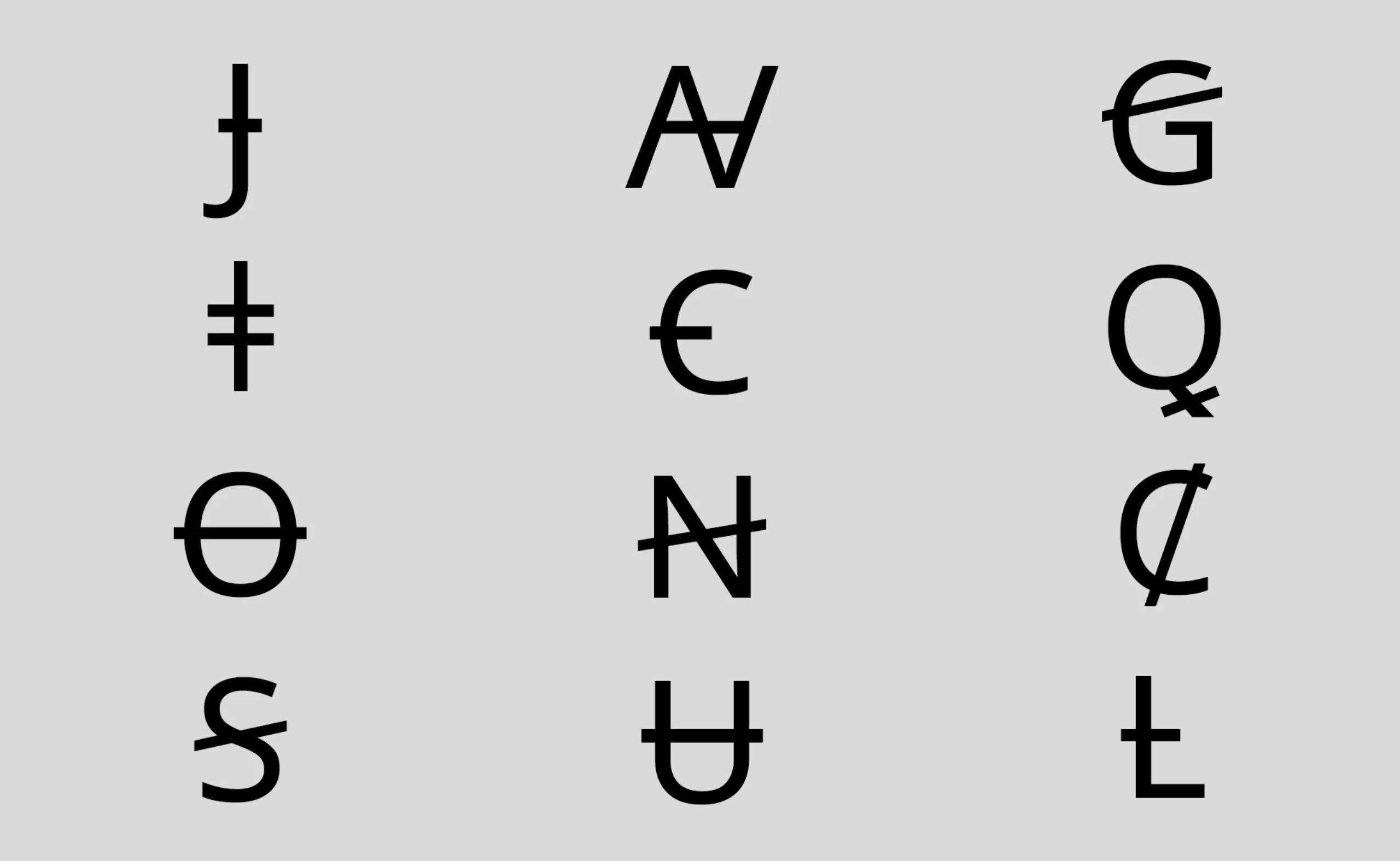
Finally, given that the barré ‘k’ is an abbreviation and a symbol that has (almost) disappeared, we could conclude by exploring the subject of shorthand, a writing technique consisting of abbreviated symbols that enables speech to be transcribed phonetically and quickly.
We would like to thank Julien Marchand once again for sending us his article so that we could publish it here.
On the subject
-

The cabinet of type punches, treasure of the Imprimerie Nationale
The Imprimerie Nationale holds a treasure of 500,000 typographic punches, the first links in the printing chain. Only one person on earth holds this expertise.
-
Burberry regains prestige with a new antique logo
Burberry’s new logo revives the brand’s coat of arms by adopting an antique typography and recovering its knight.