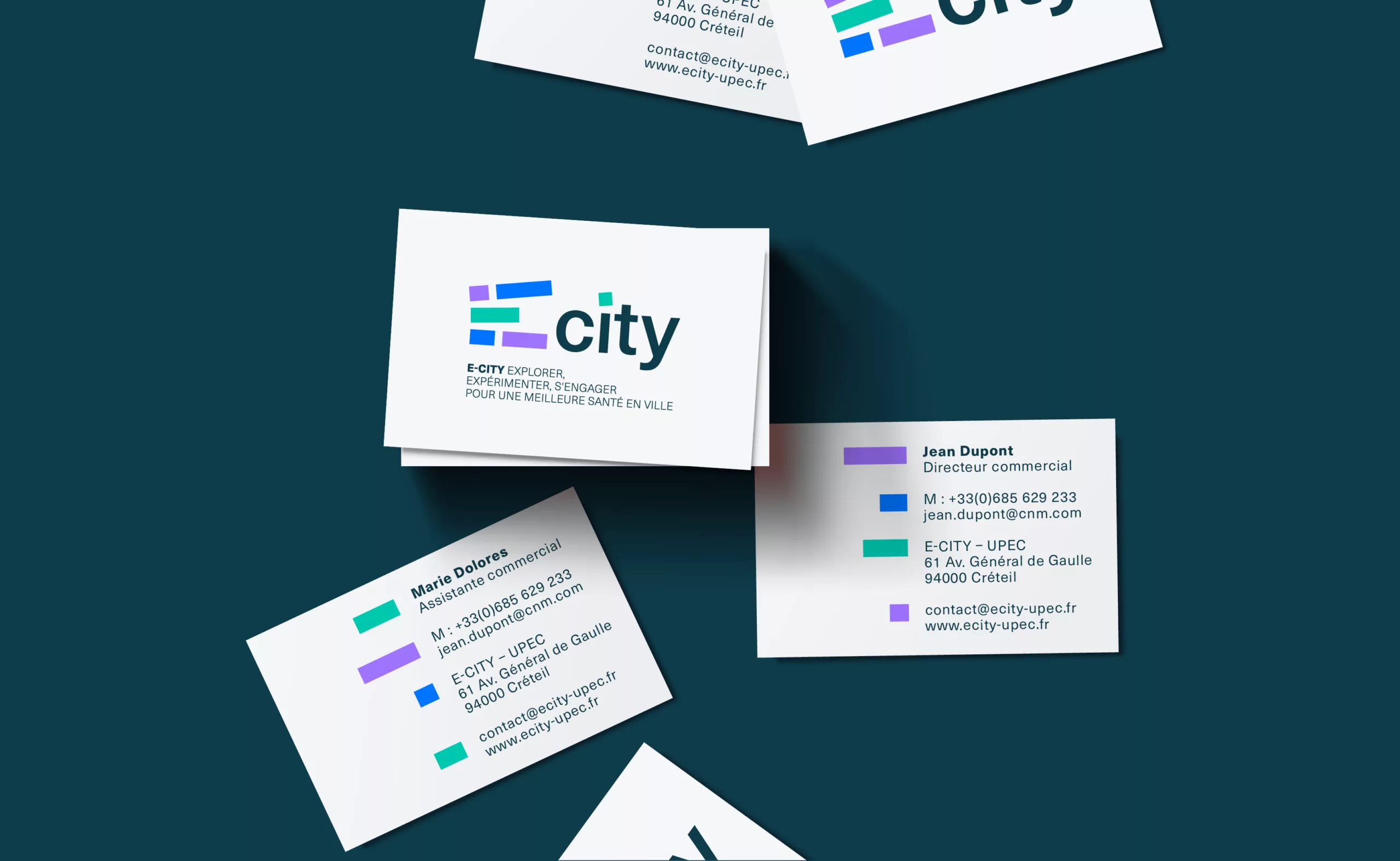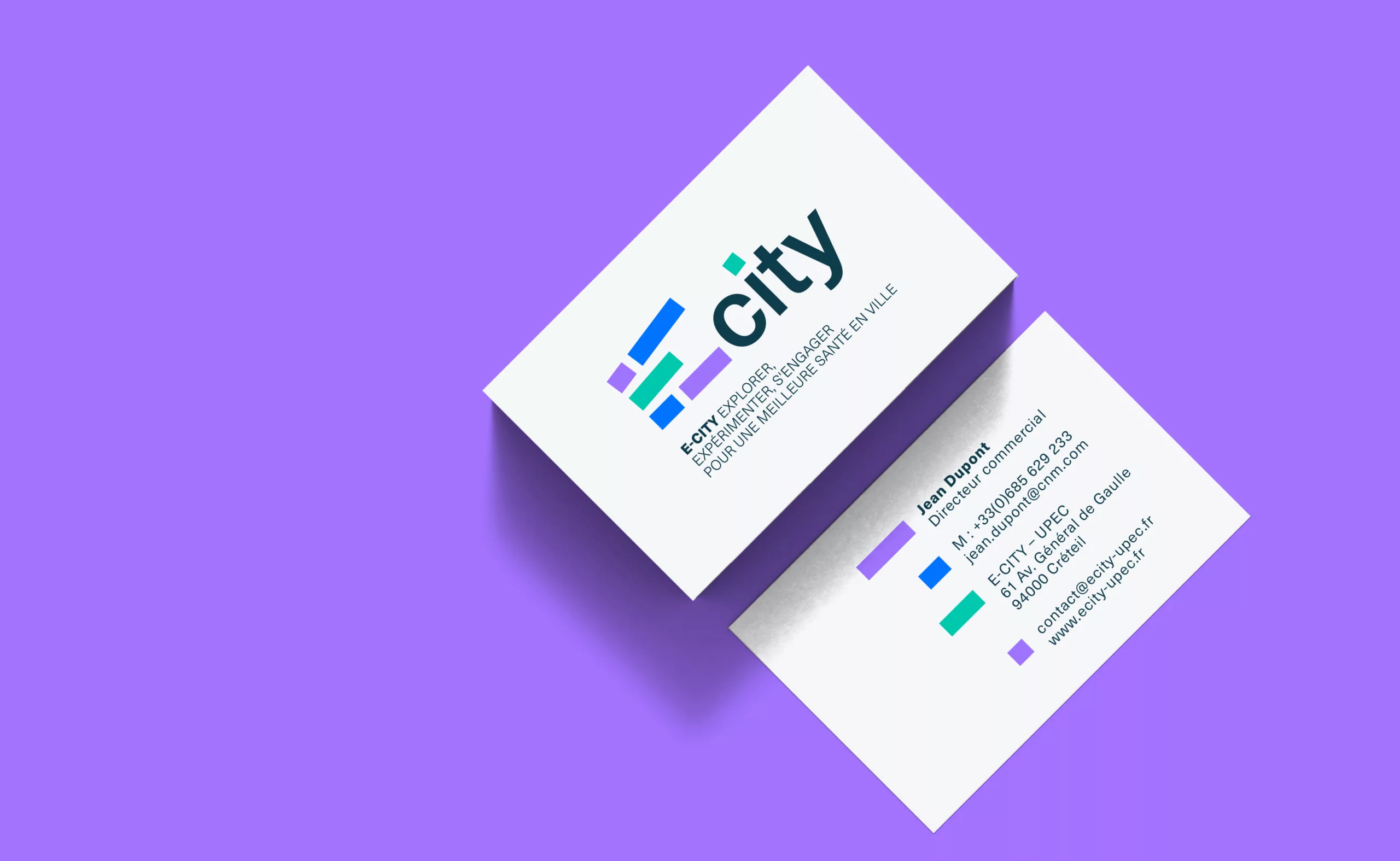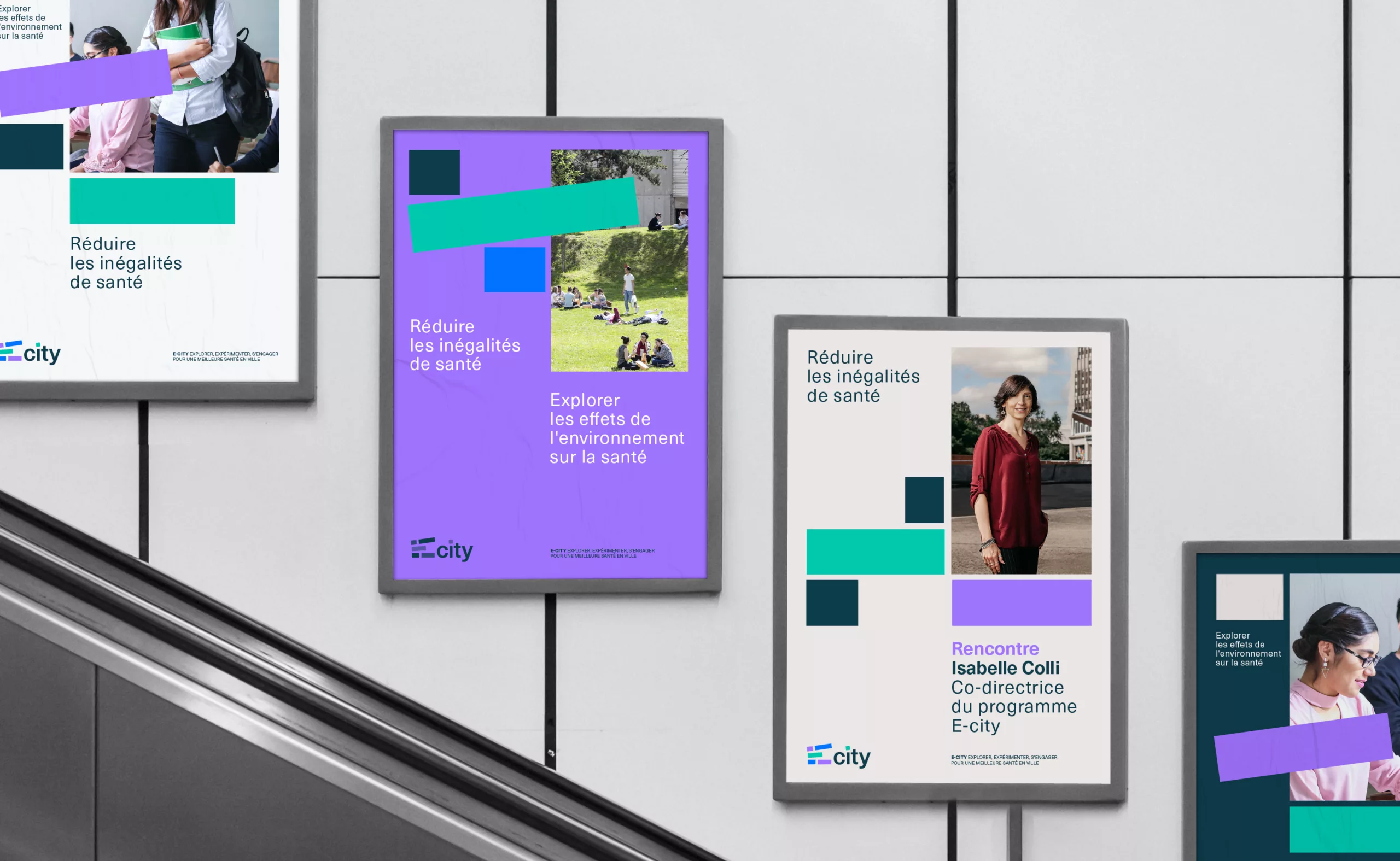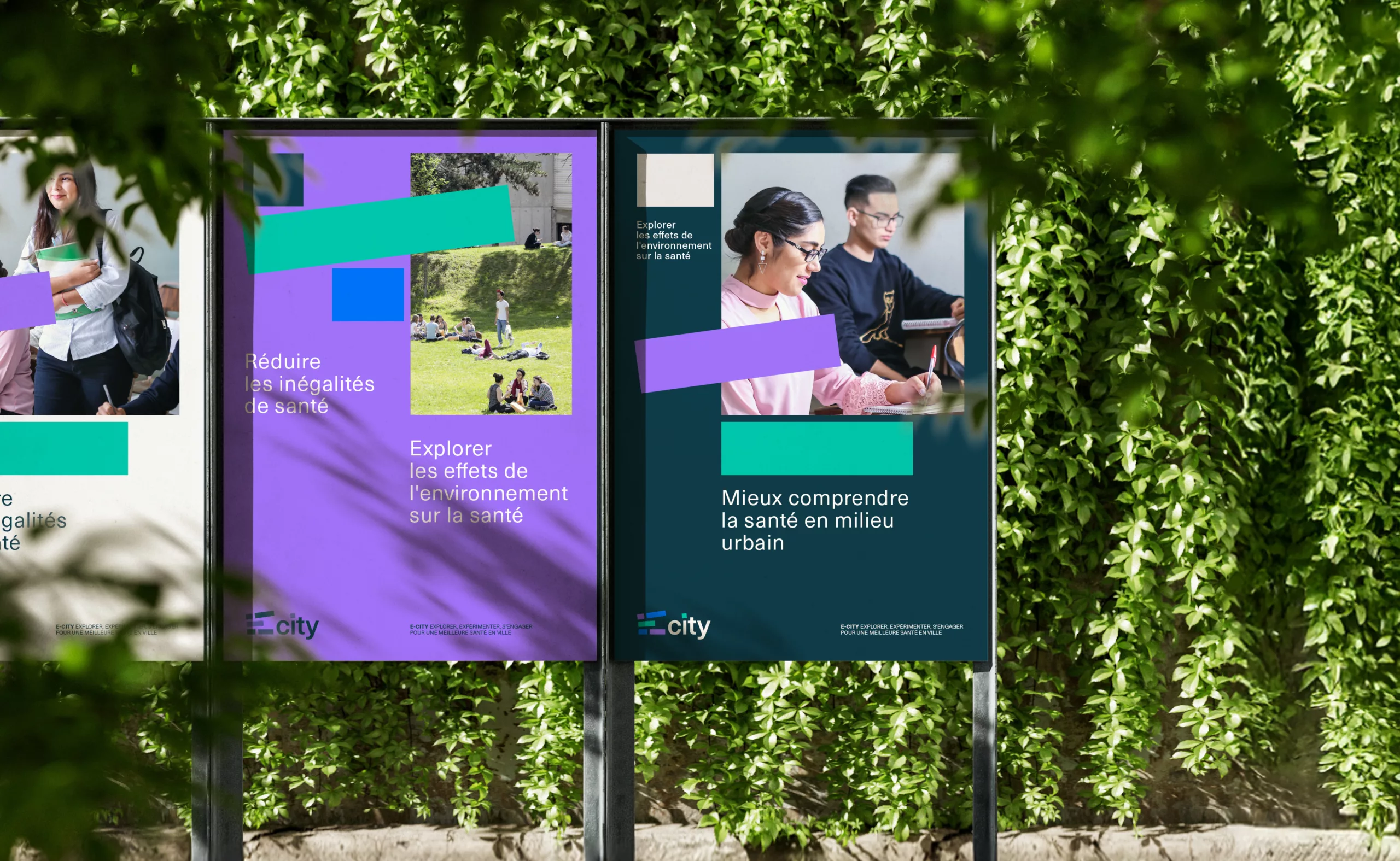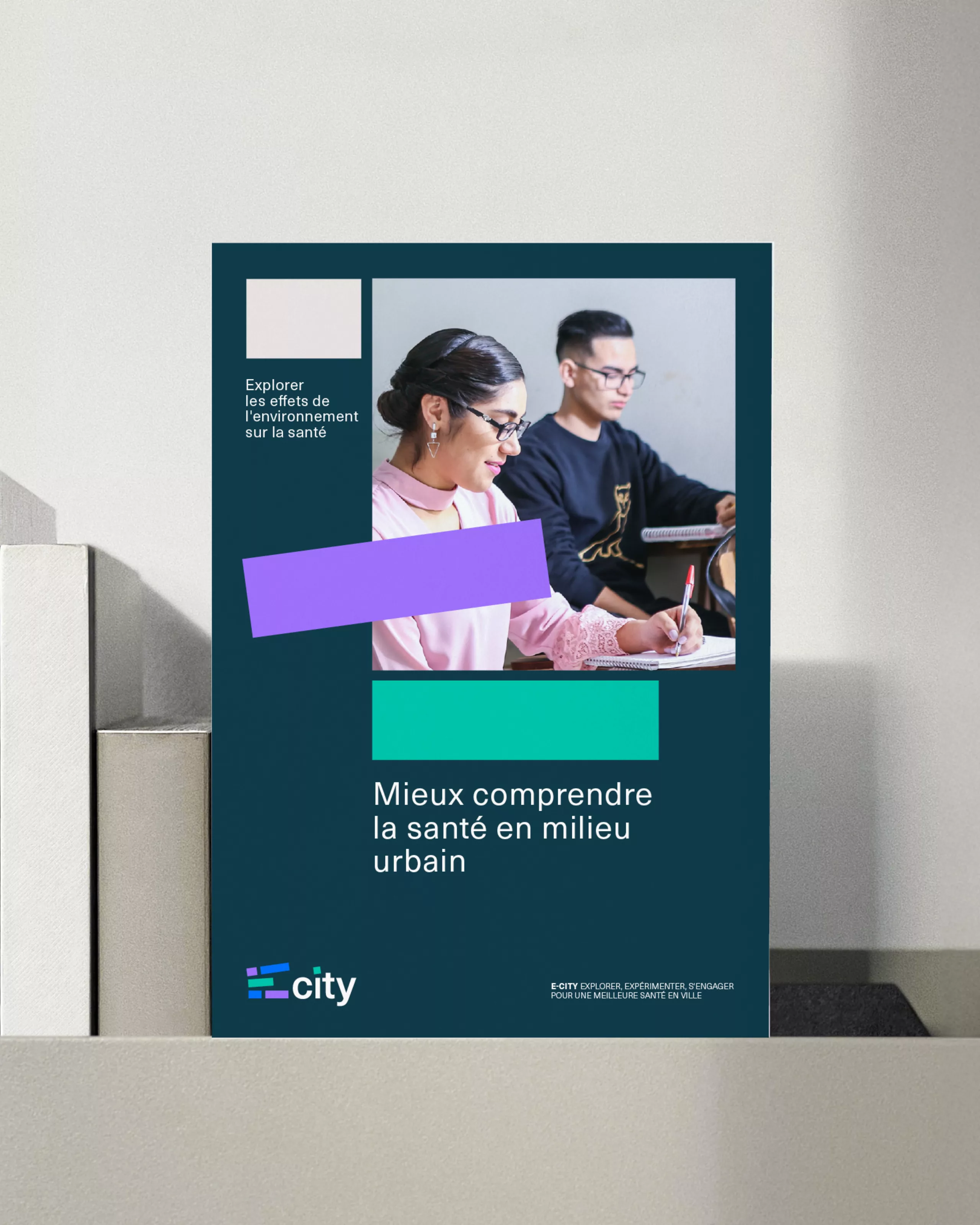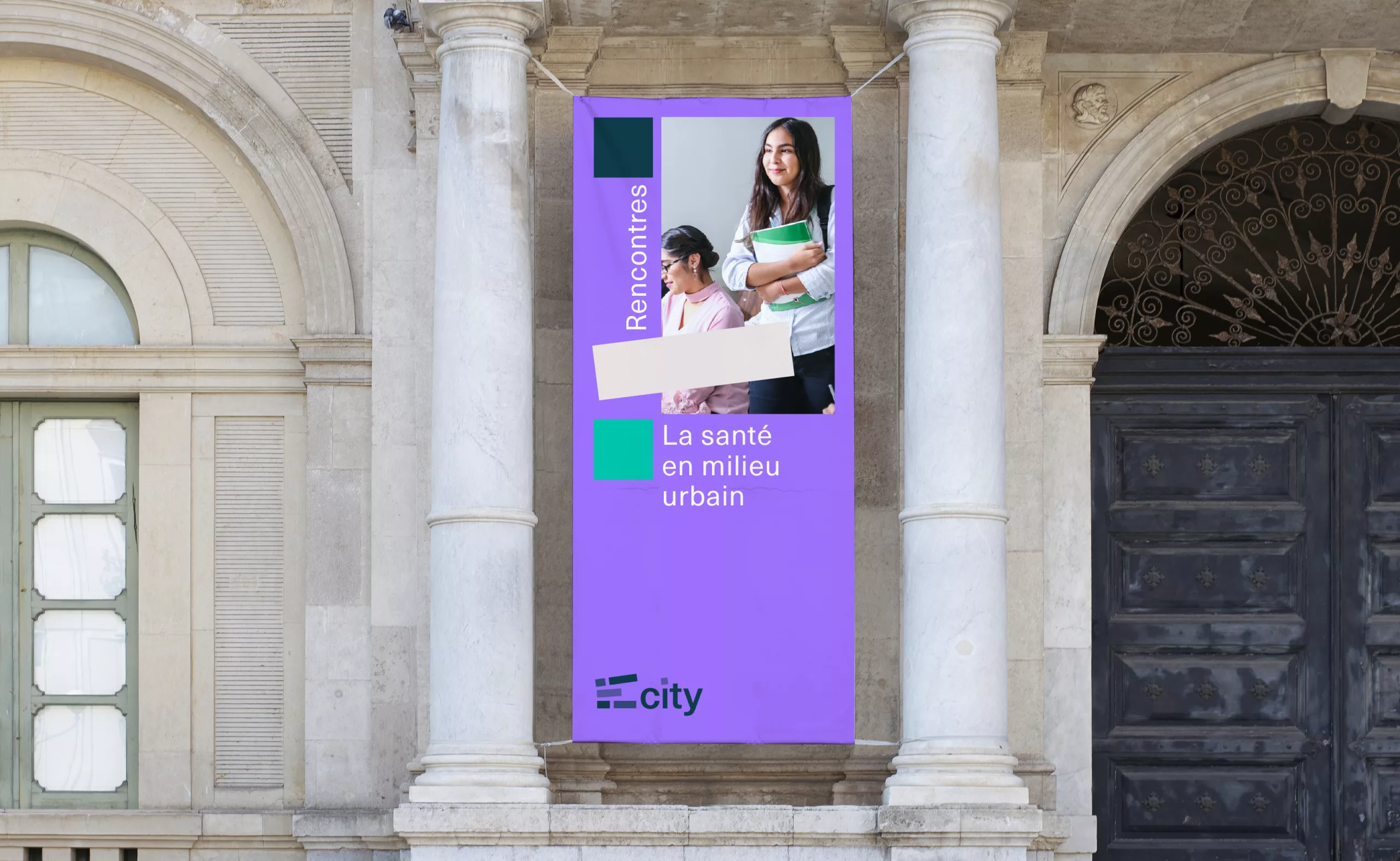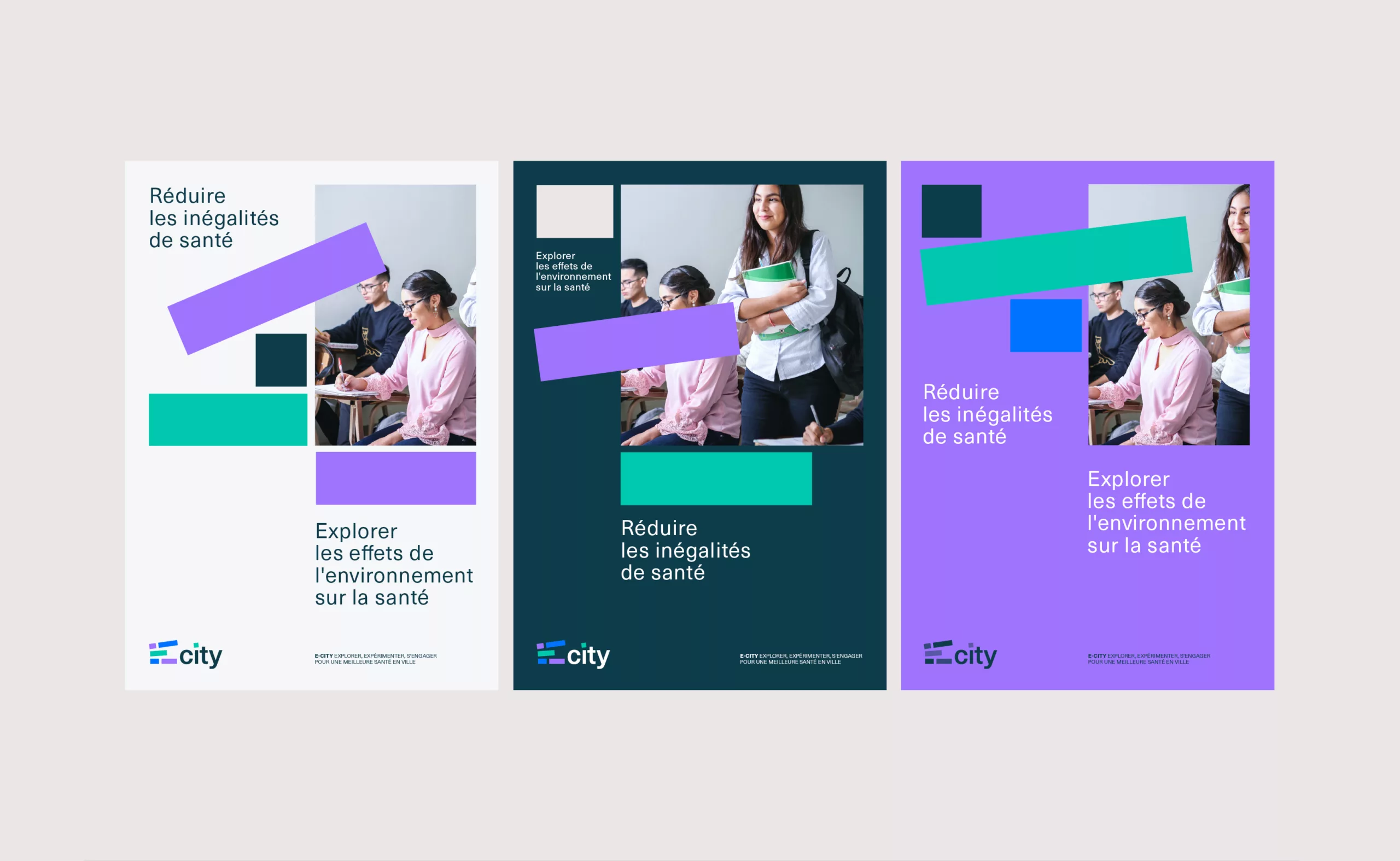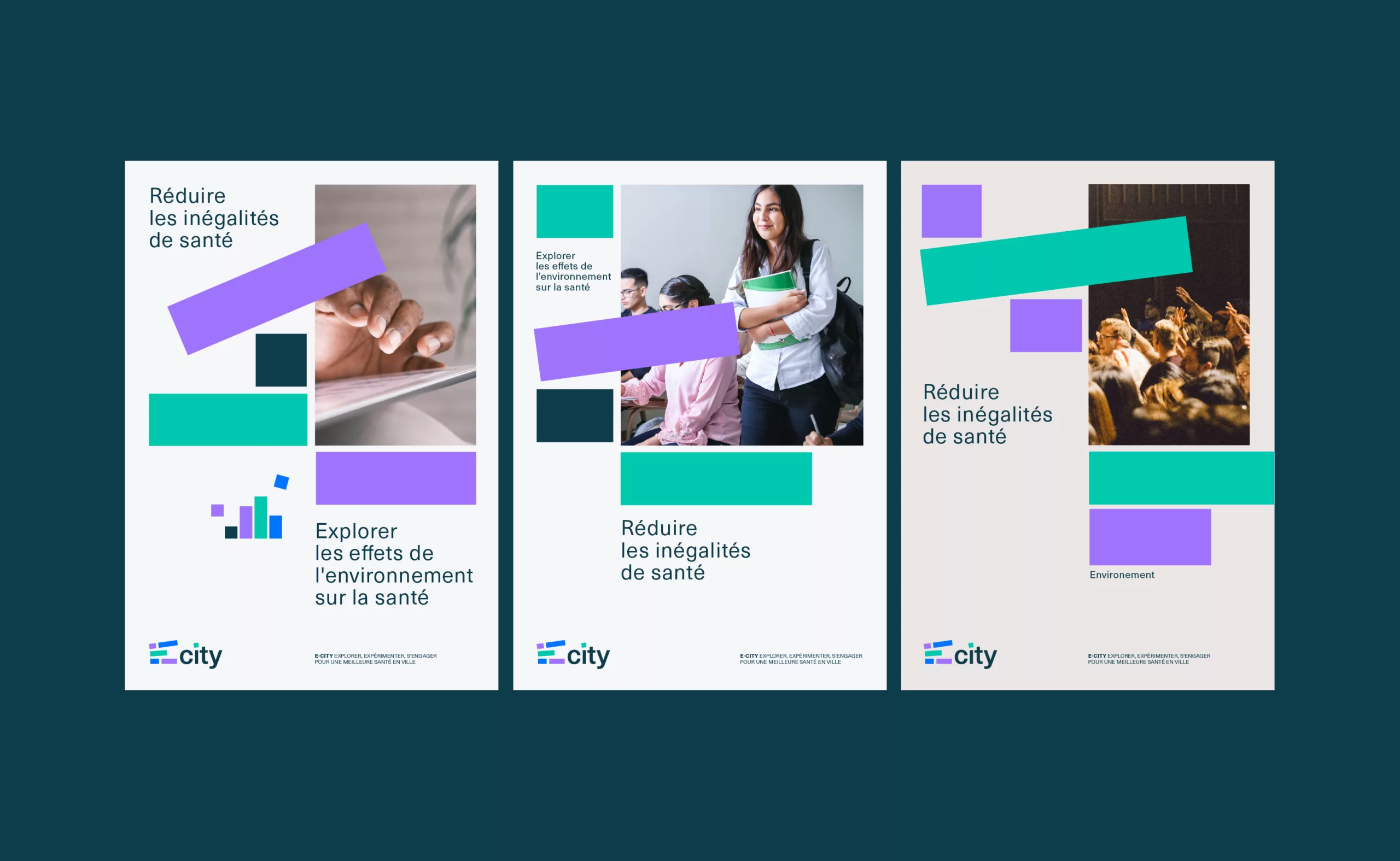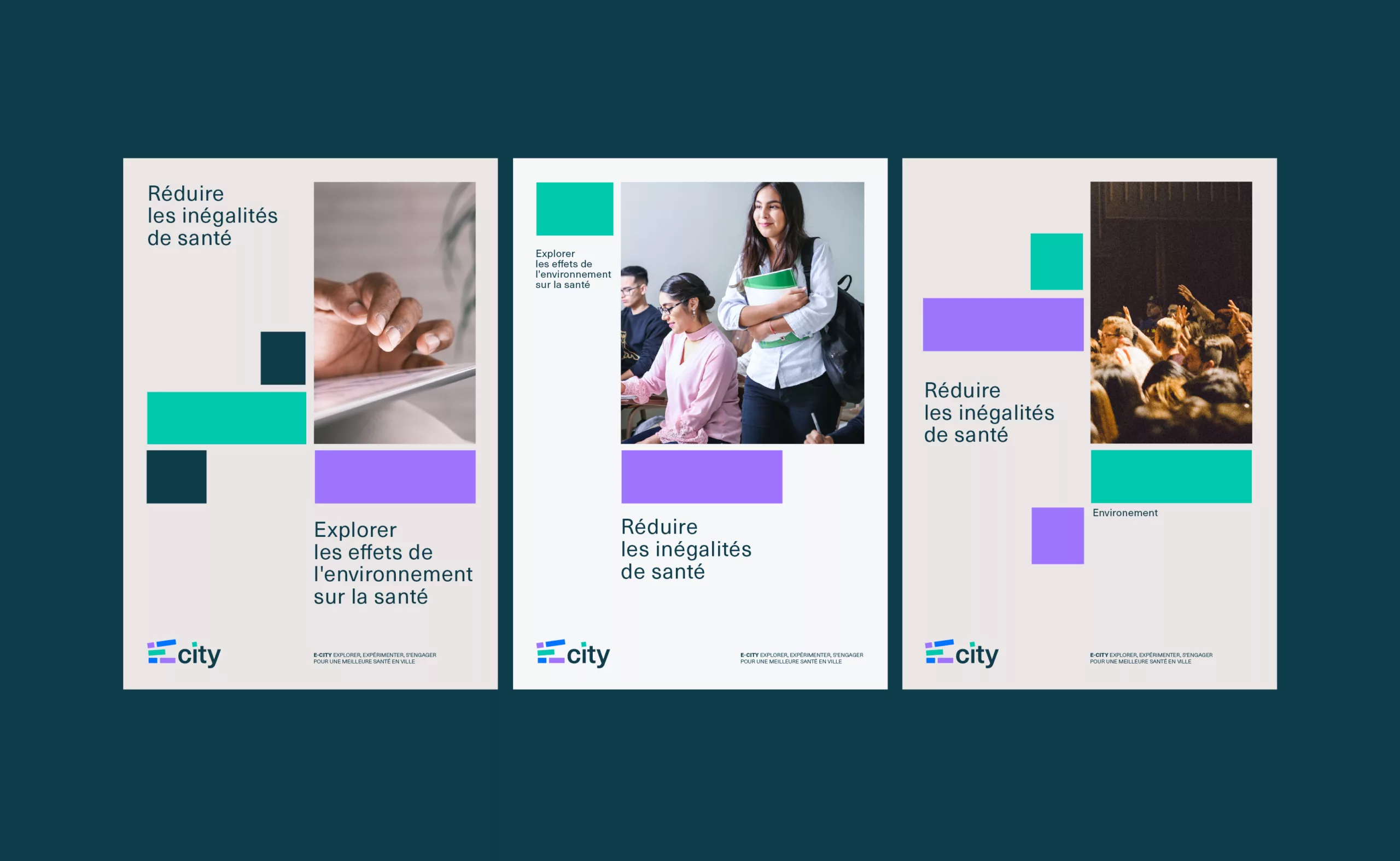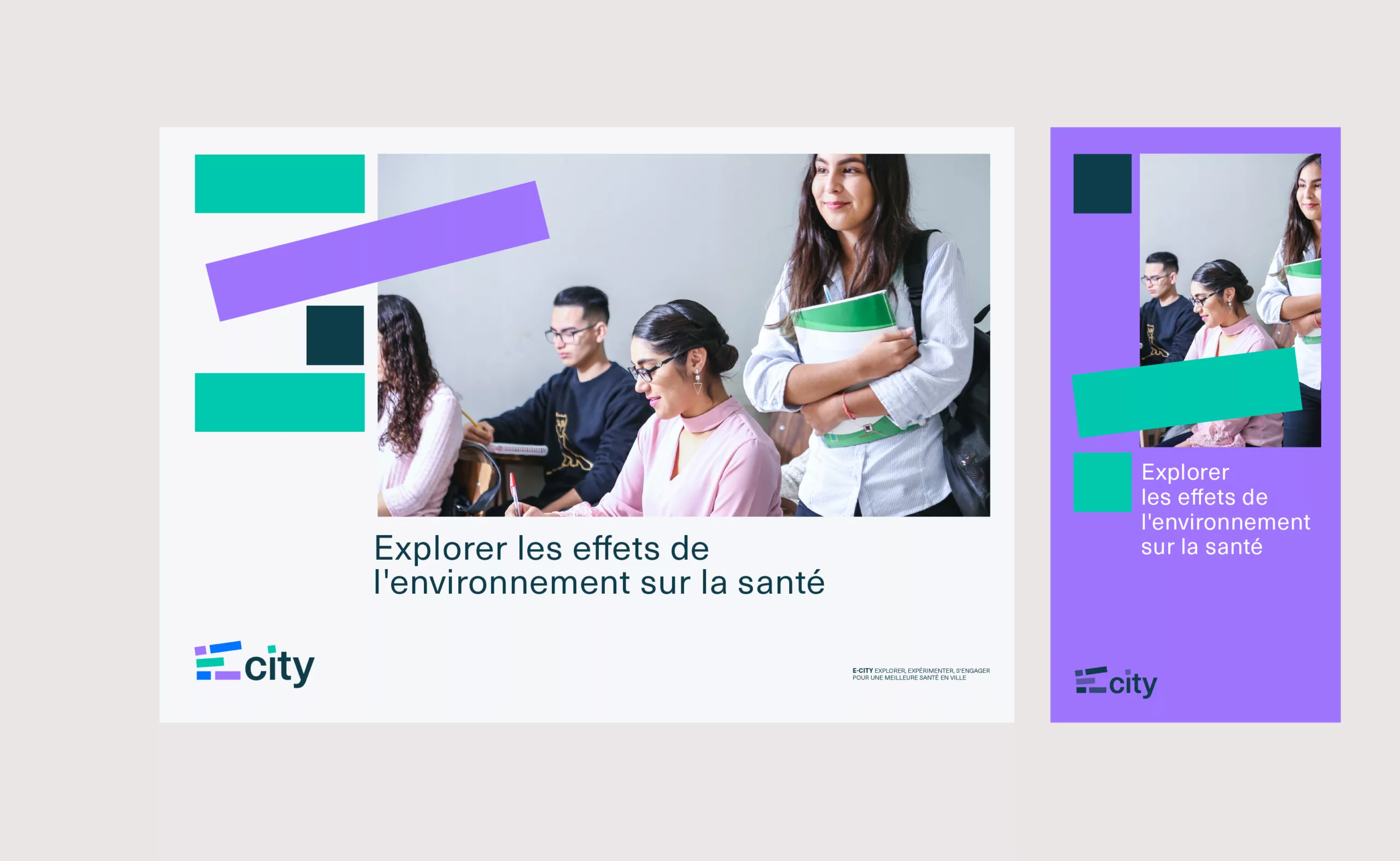
E-city is a research programme led by Paris-Est Créteil University (UPEC). At the crossroads of health, environmental sciences, urban planning and social sciences, it explores the factors that shape our health trajectories in urban environments. Its ambition is to break down disciplinary boundaries, bring different fields of knowledge together and put research at the service of local communities. Graphéine designed a simple, modular visual identity to reflect a programme that examines the city at different scales, cross-references data and creates dialogue between multiple disciplines.
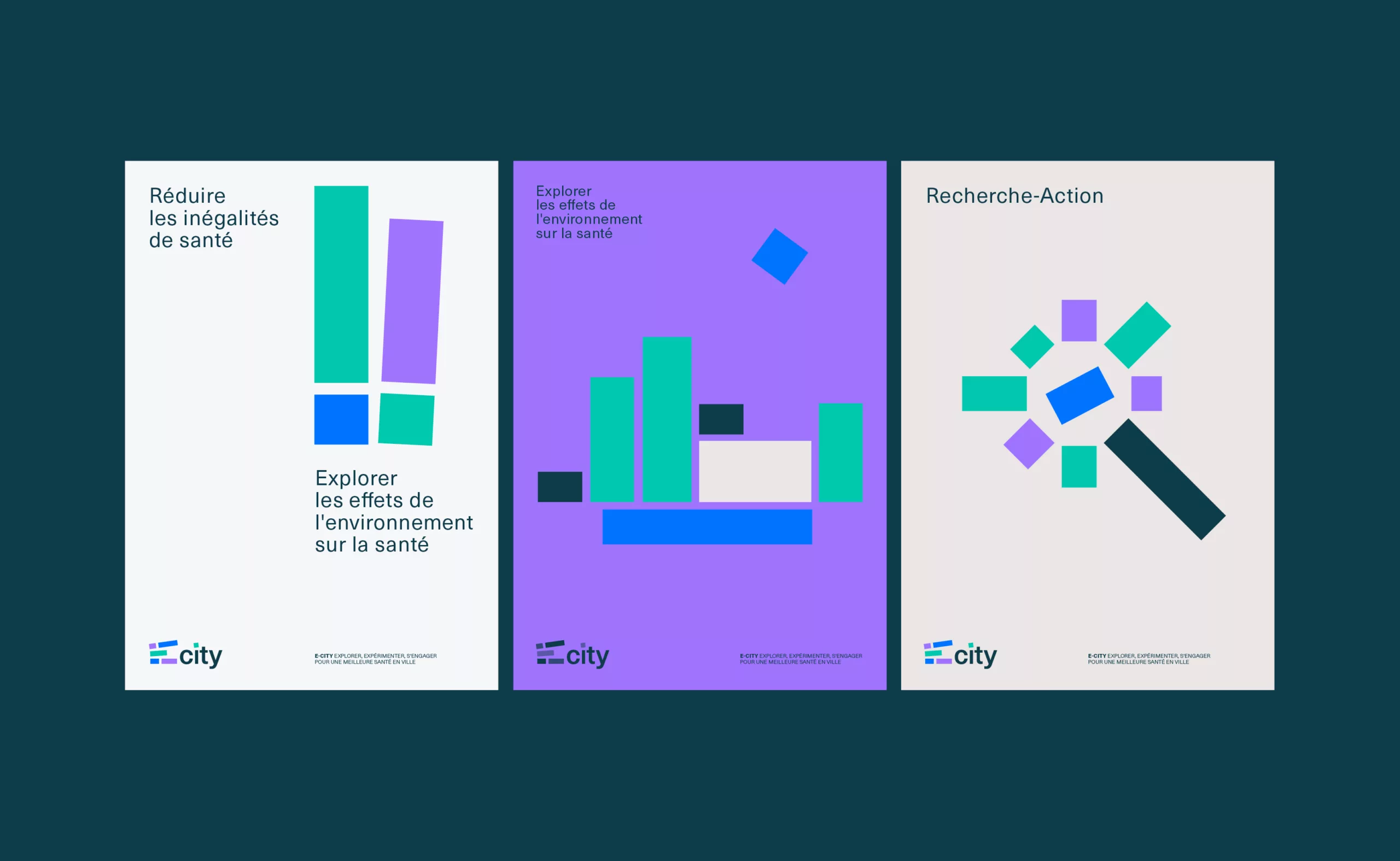
The graphic concept is based on a set of simple geometric shapes: lines, blocks and coloured fragments come together, overlap and shift. At times evoking maps, data visualisation or abstract urban landscapes, this vocabulary forms a deliberately open-ended graphic system. Like the E-city programme itself, each element takes on meaning through its relationship with the others. Rather than offering a fixed representation of the city, the identity reveals its interactions, flows and complexity.
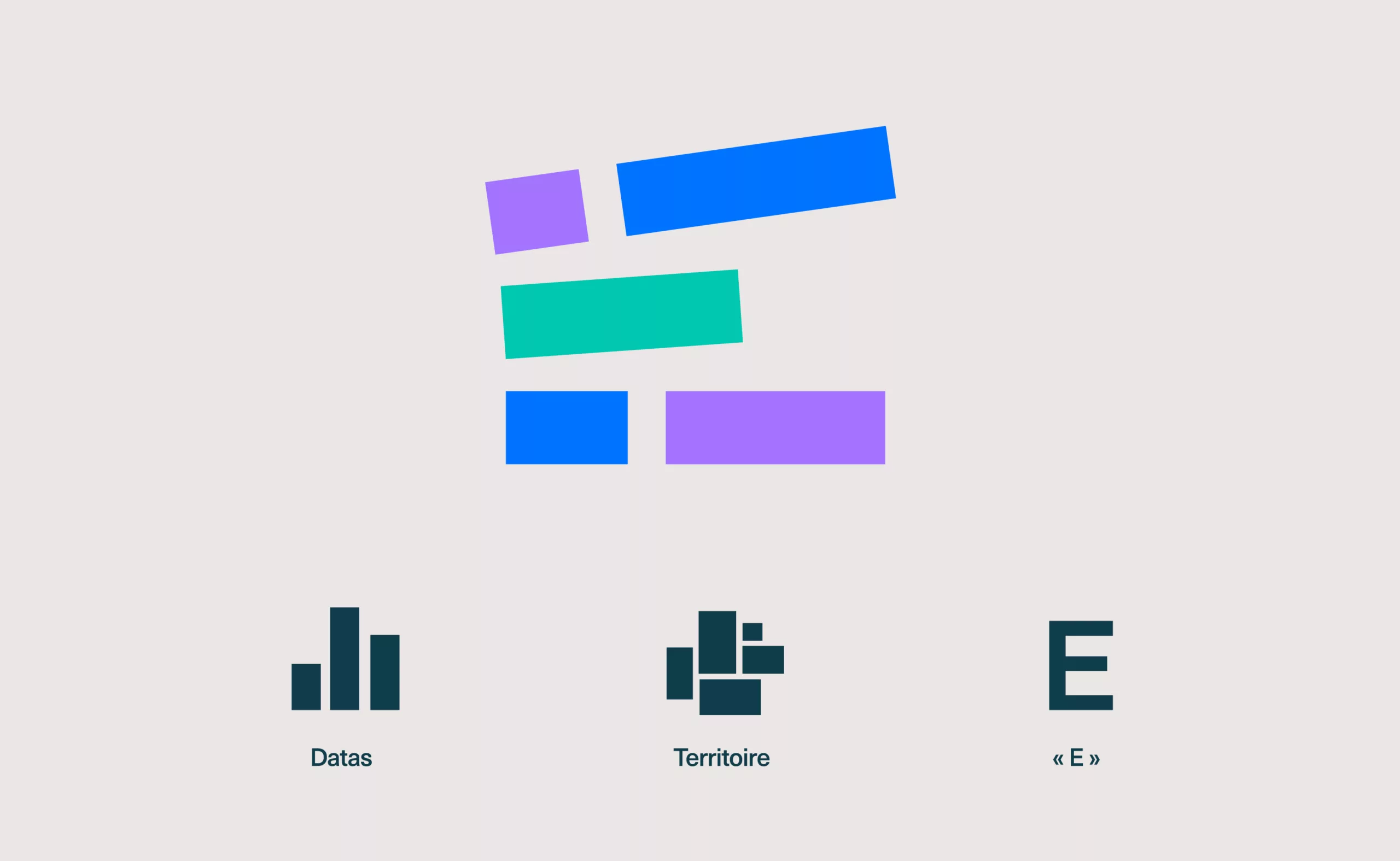
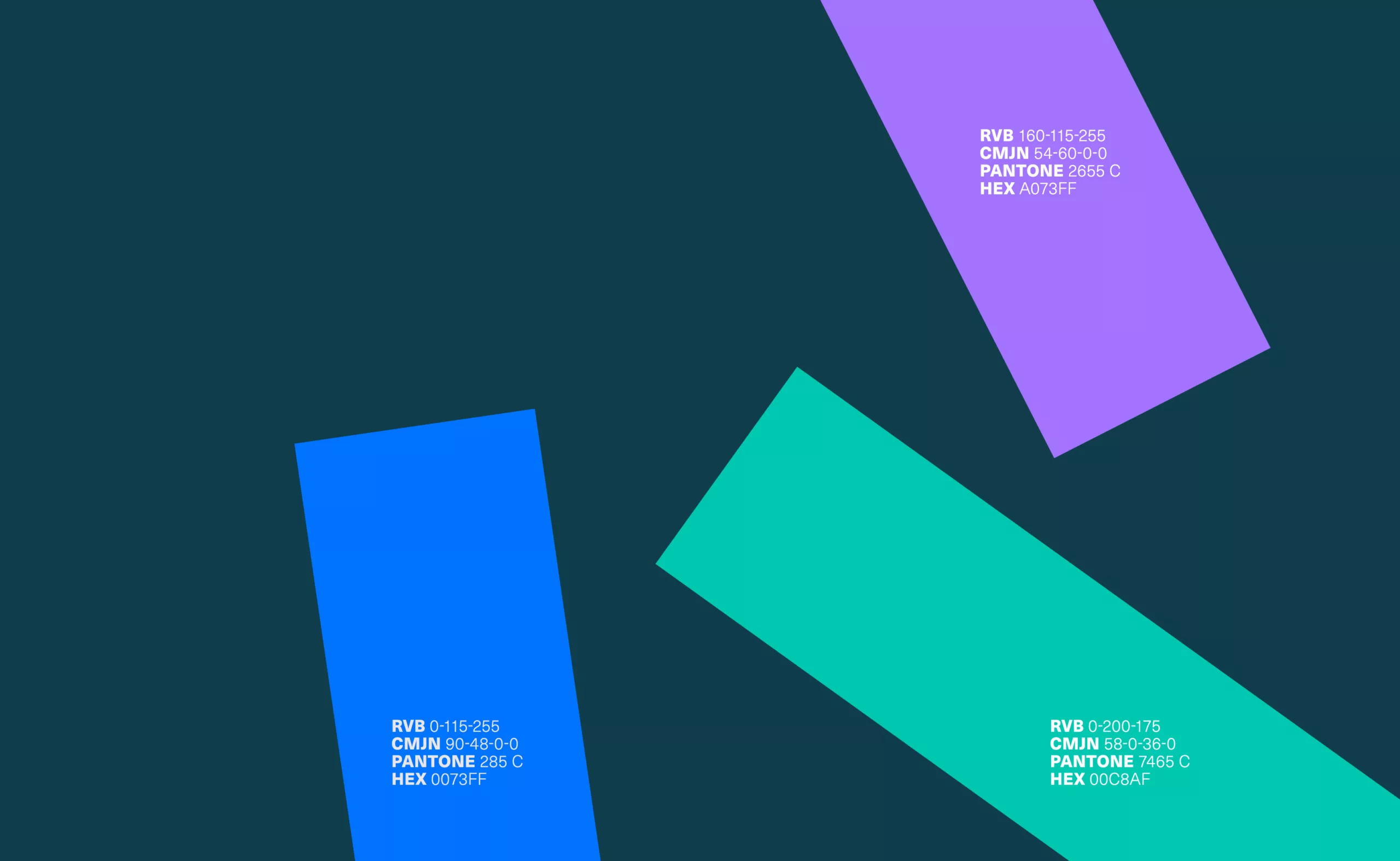
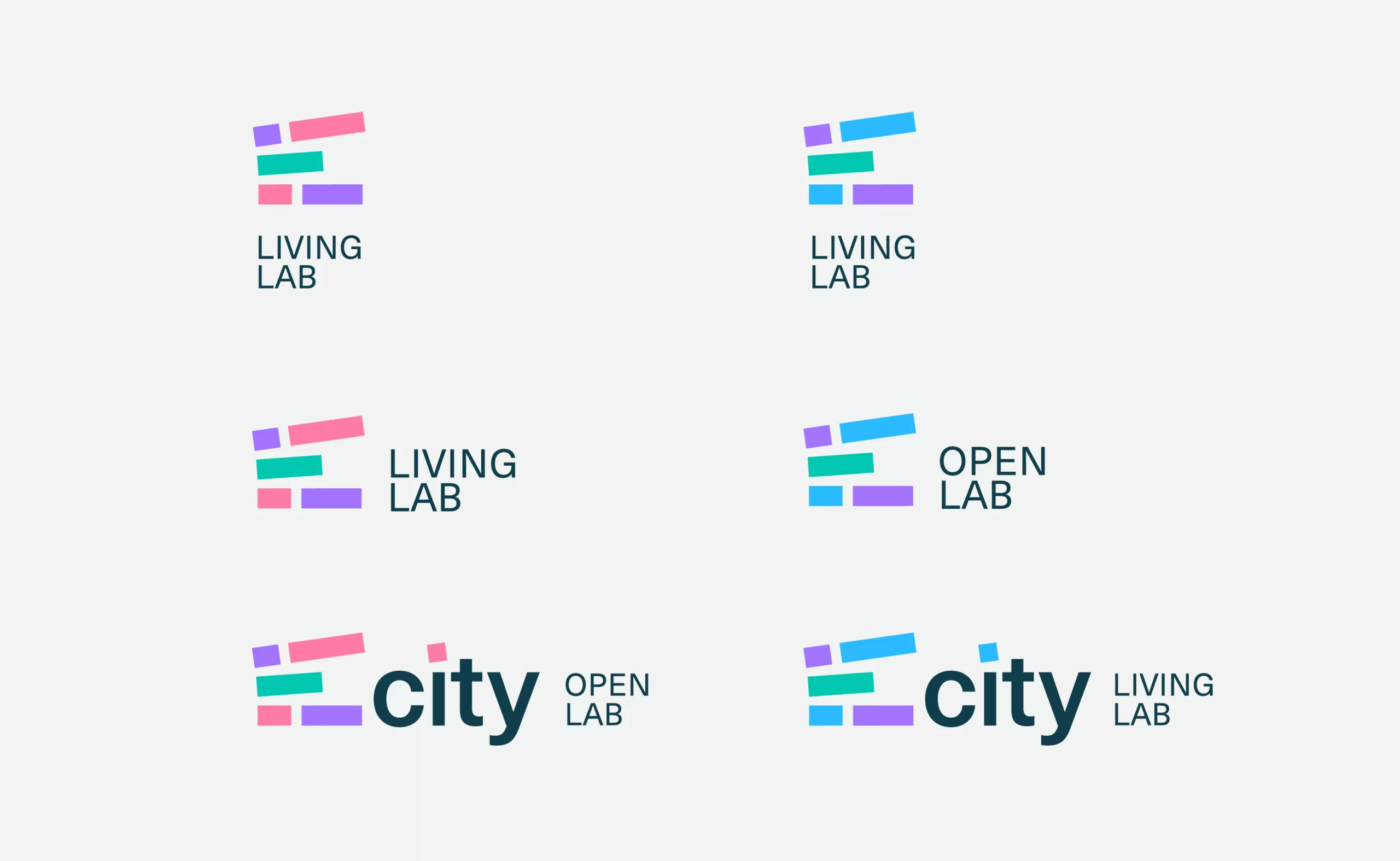
The logotype extends this approach. Built from horizontal layers, its symbol simultaneously evokes data, territory and the different strata that make up the urban environment. This modular language allows the identity to be continuously recomposed. A palette of bold colours — blue, green and purple — contrasts with light backgrounds or deep blue. It creates a contemporary visual world at the intersection of scientific research and urban culture, moving away from the institutional codes traditionally associated with academia.
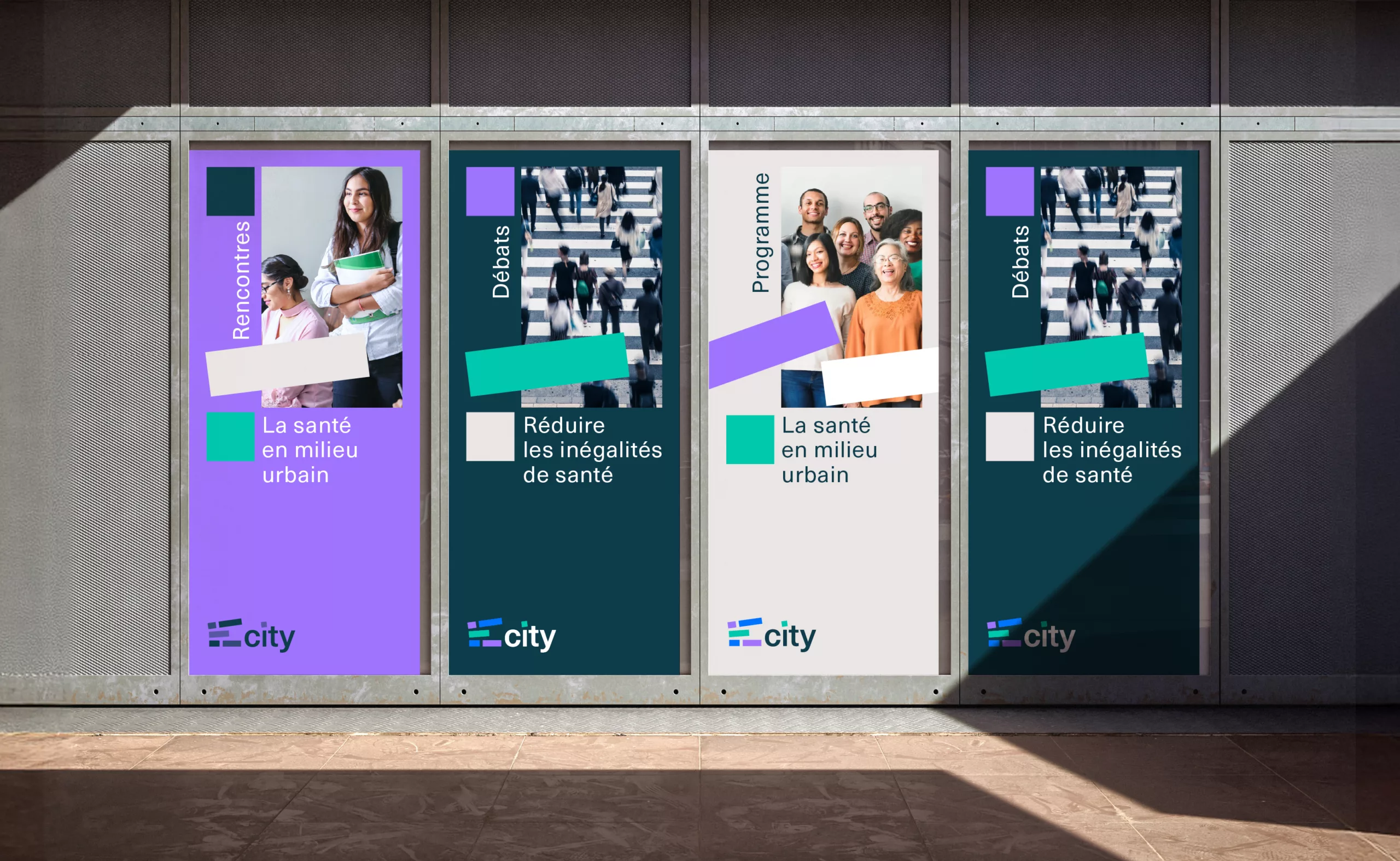
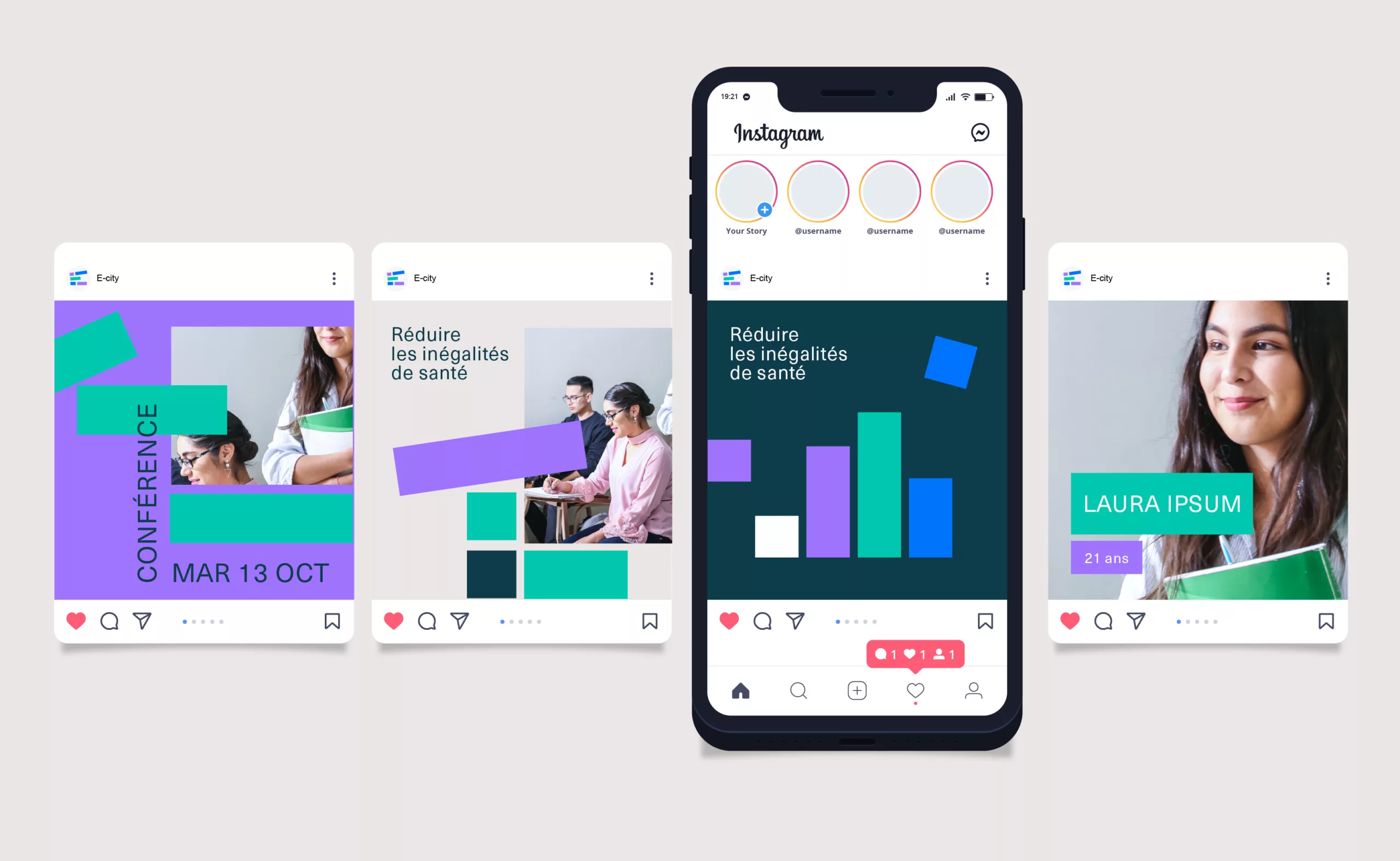
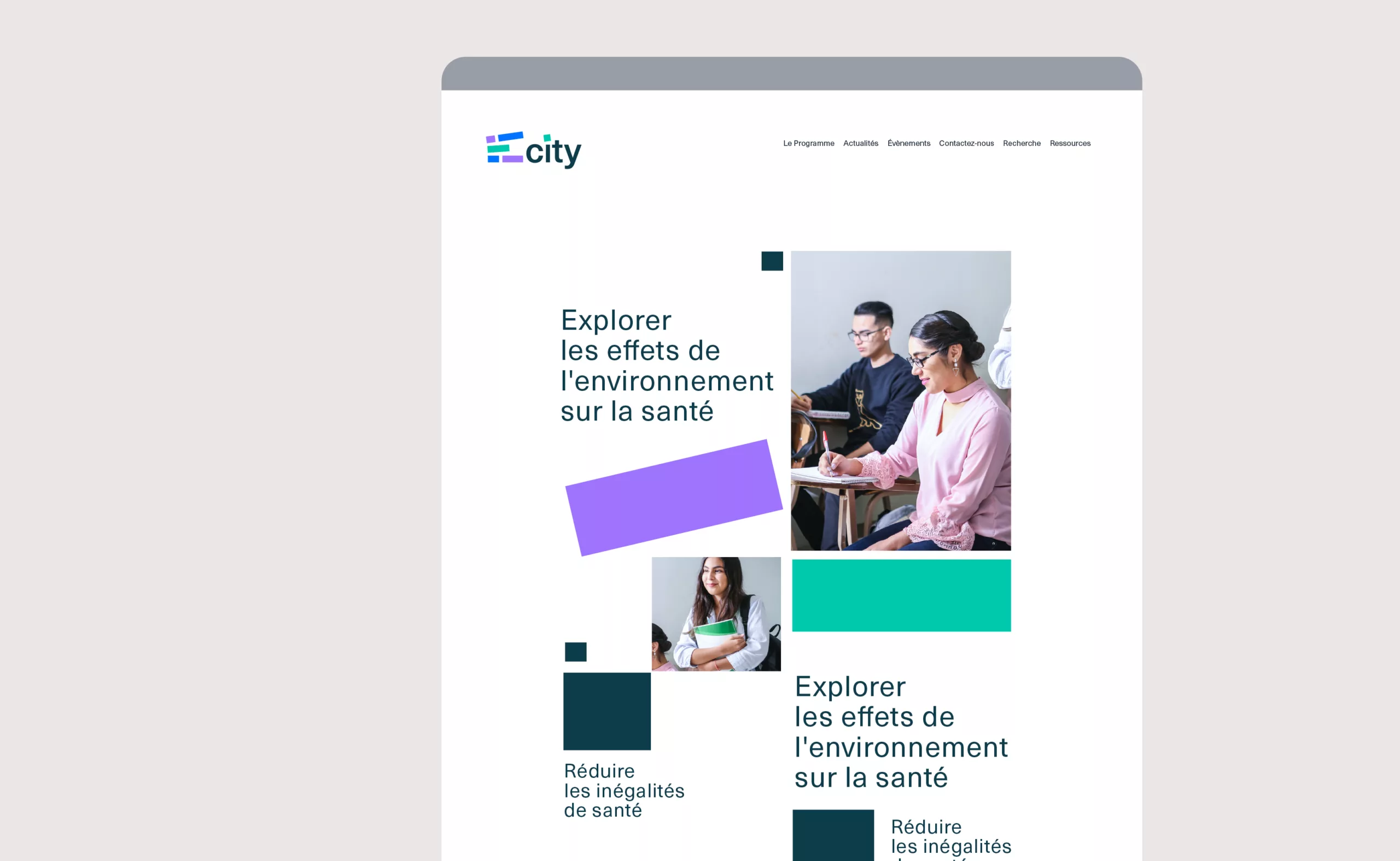
Applied across editorial materials, signage, posters and digital interfaces, the system makes it possible to structure a wide variety of content while maintaining a strong and consistent visual identity.