fr
fr

Catholic Institute of Paris

Visual Identity of the Catholic Institute of Paris

ICP, 150 Years of History: An Identity Looked Toward the Future

To mark its 150th anniversary, the Institut Catholique de Paris is updating its visual identity. This redesign is intended to unite its campuses, affirm its uniqueness, and adapt a historic brand to contemporary uses.

Founded in 1875, the Institut Catholique de Paris was built on a particularly rich academic, cultural, and spiritual heritage. Now with campuses in Paris, Reims, and Rouen, the ICP needed a unified identity capable of reflecting its new scope while preserving its heritage. Through a series of educational and strategic meetings, Graphéine supported the Institute’s teams in modernizing this brand with a history spanning more than a century.
Moving the institution forward while honoring its history

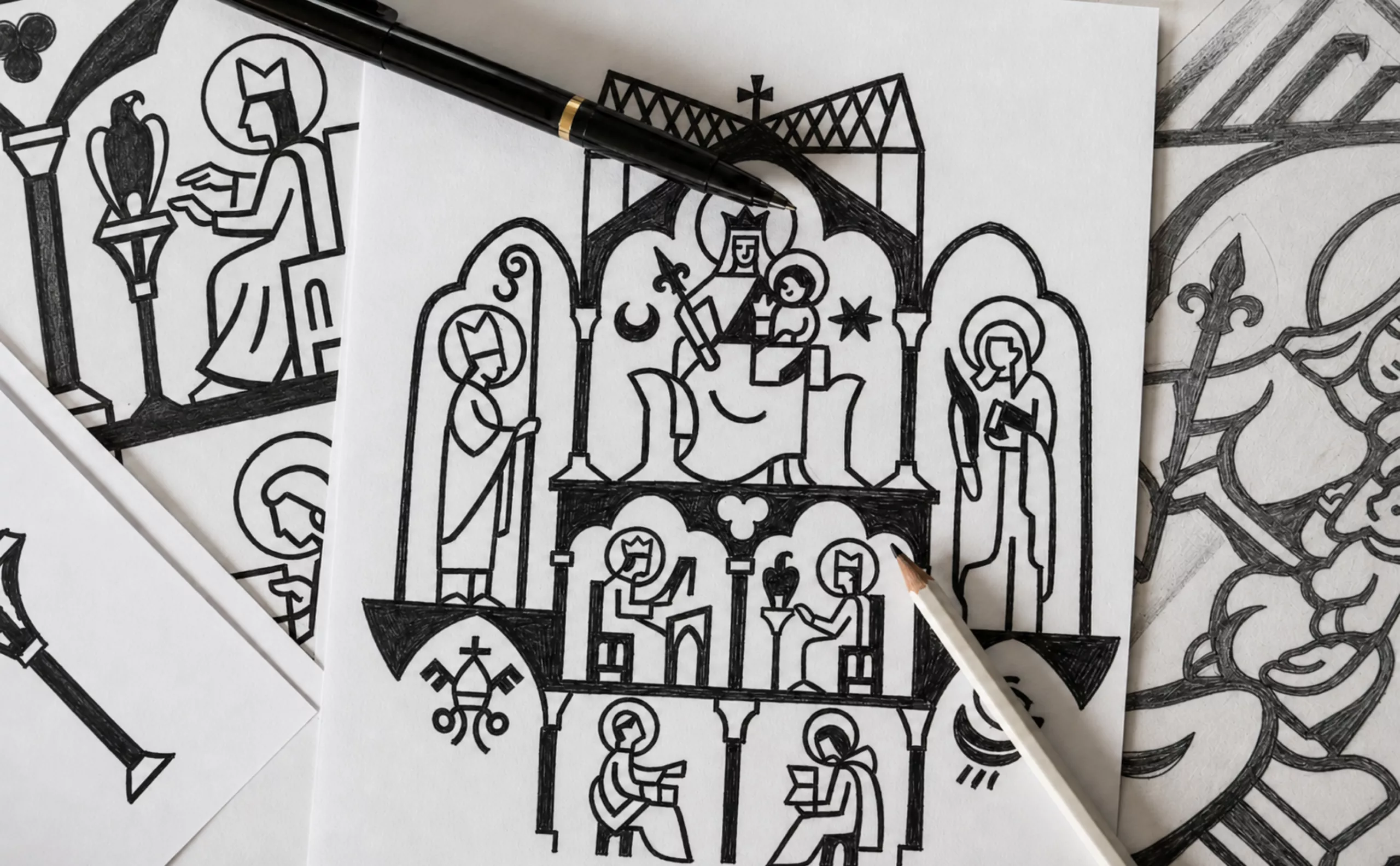
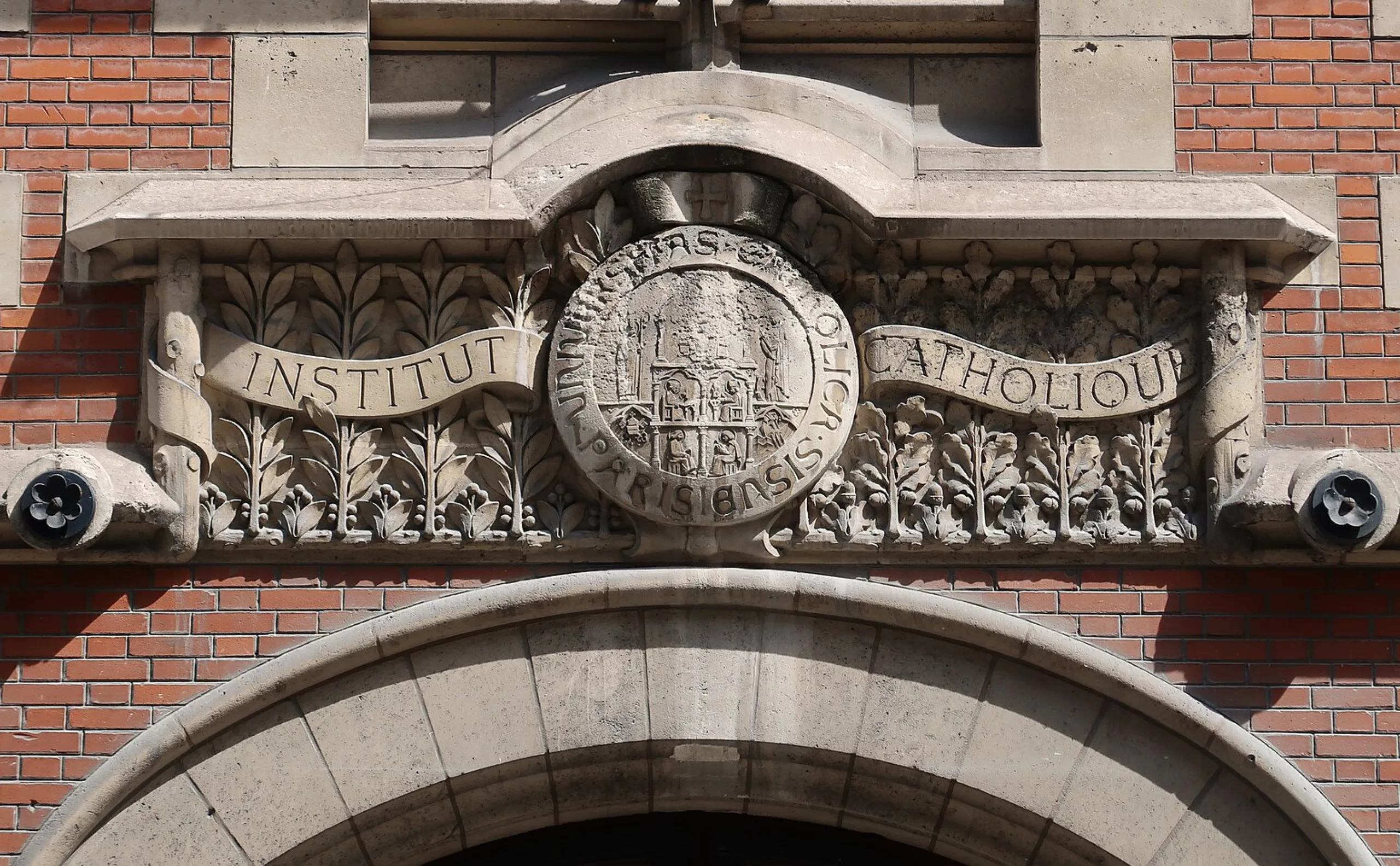
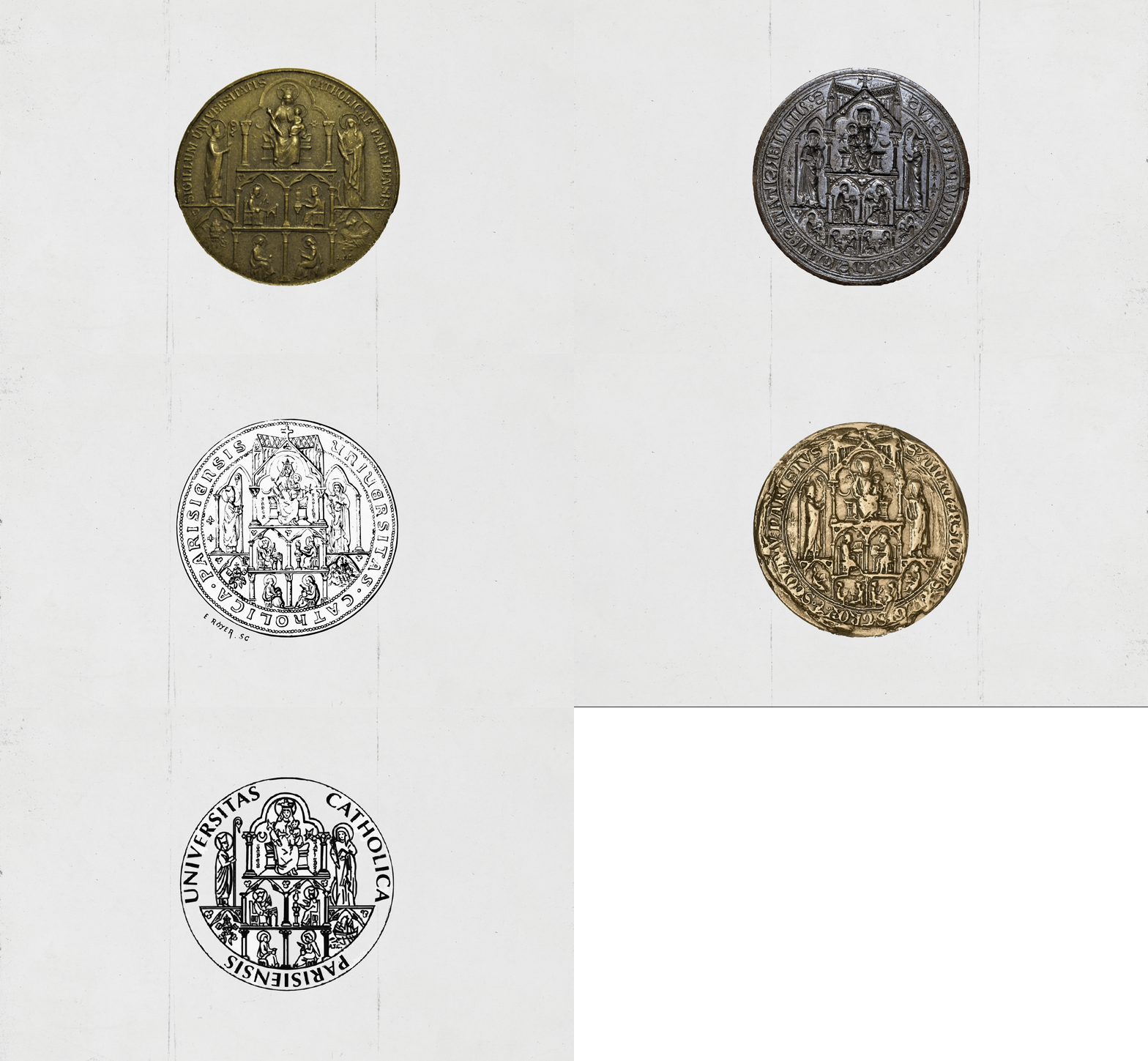
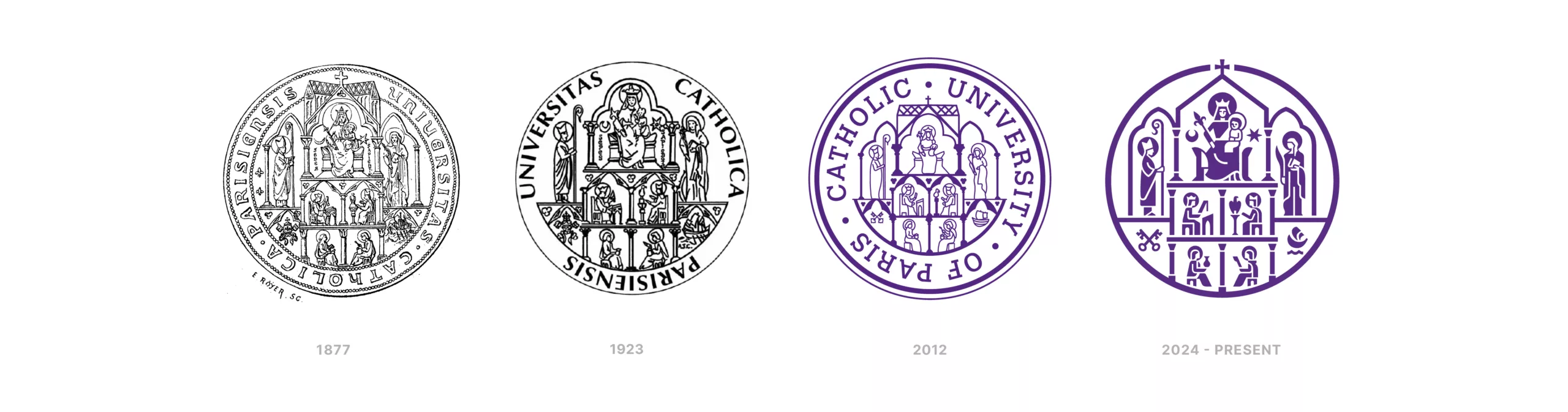
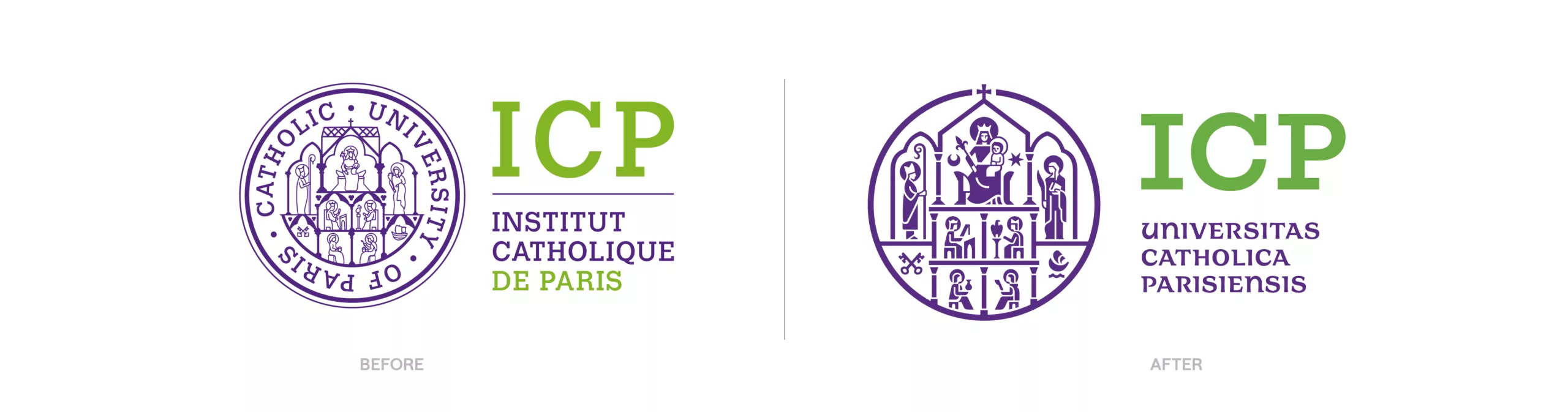
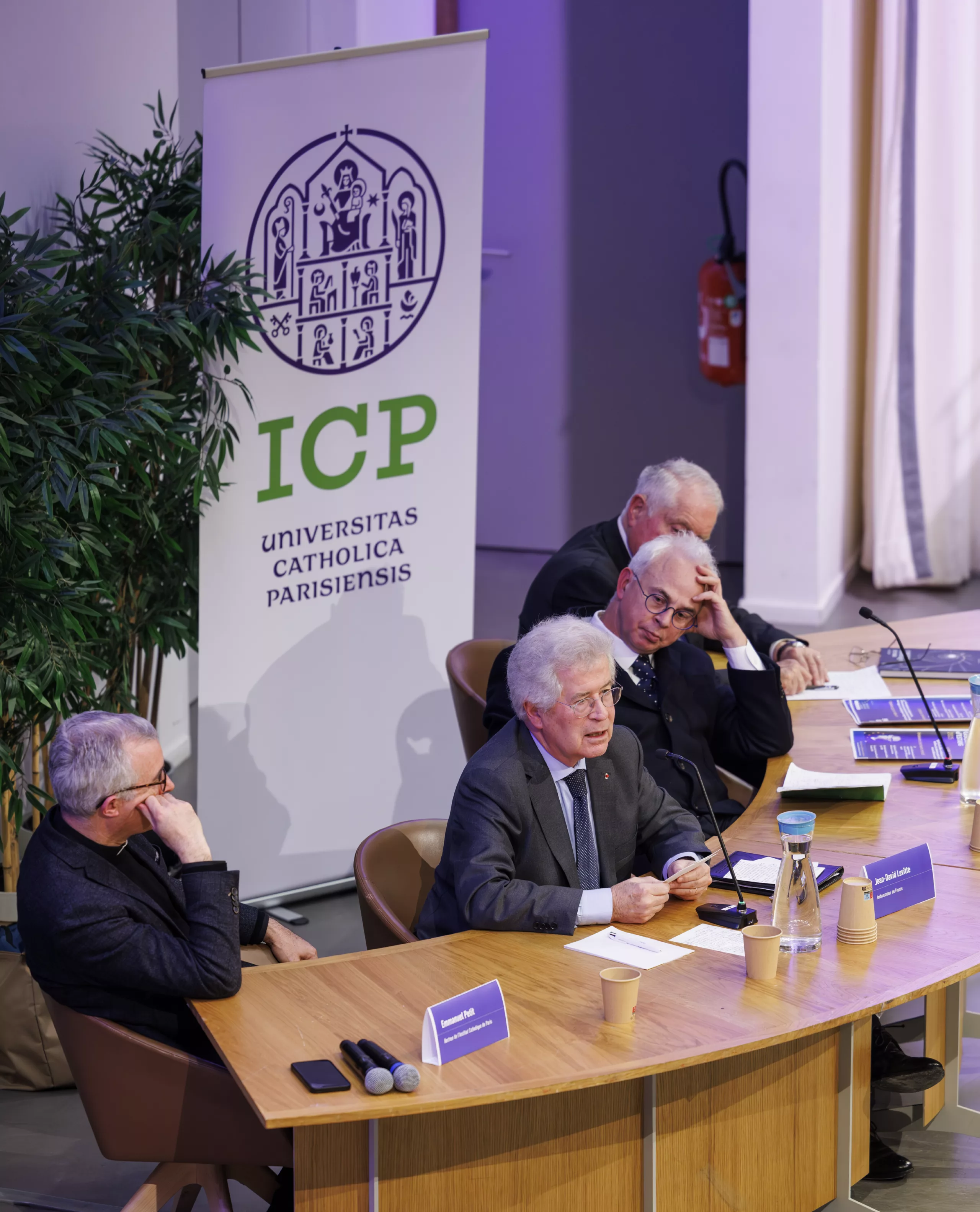
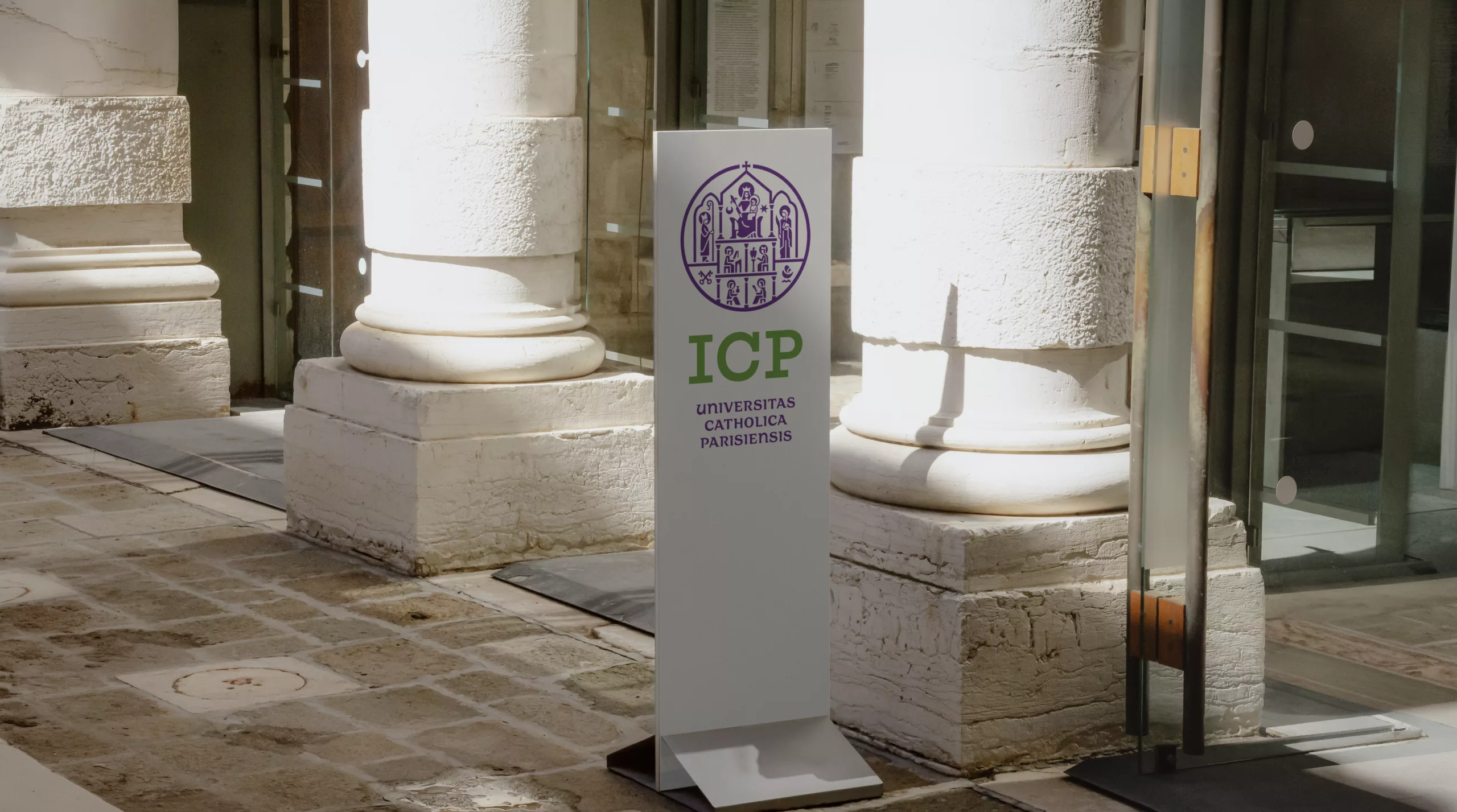
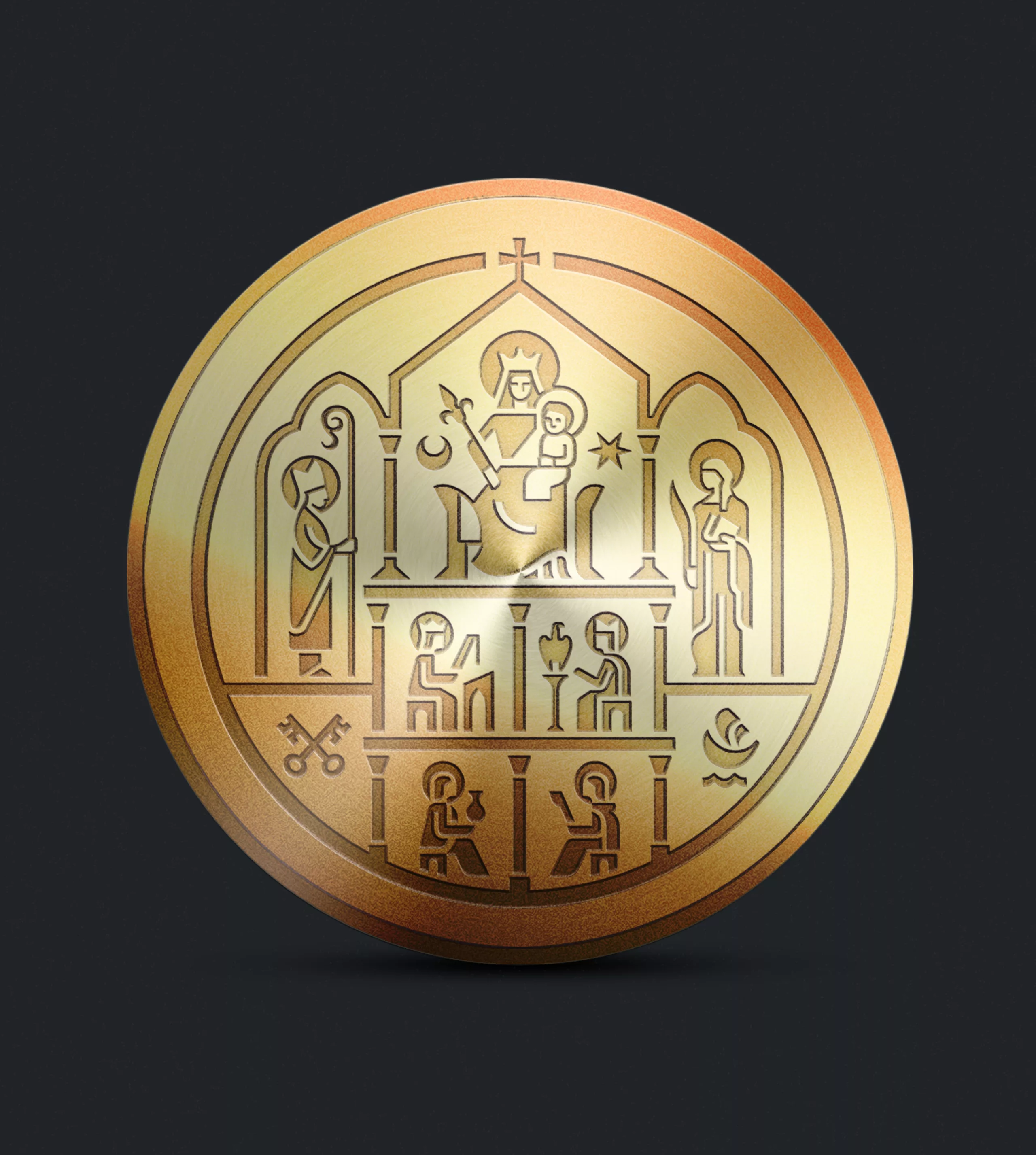
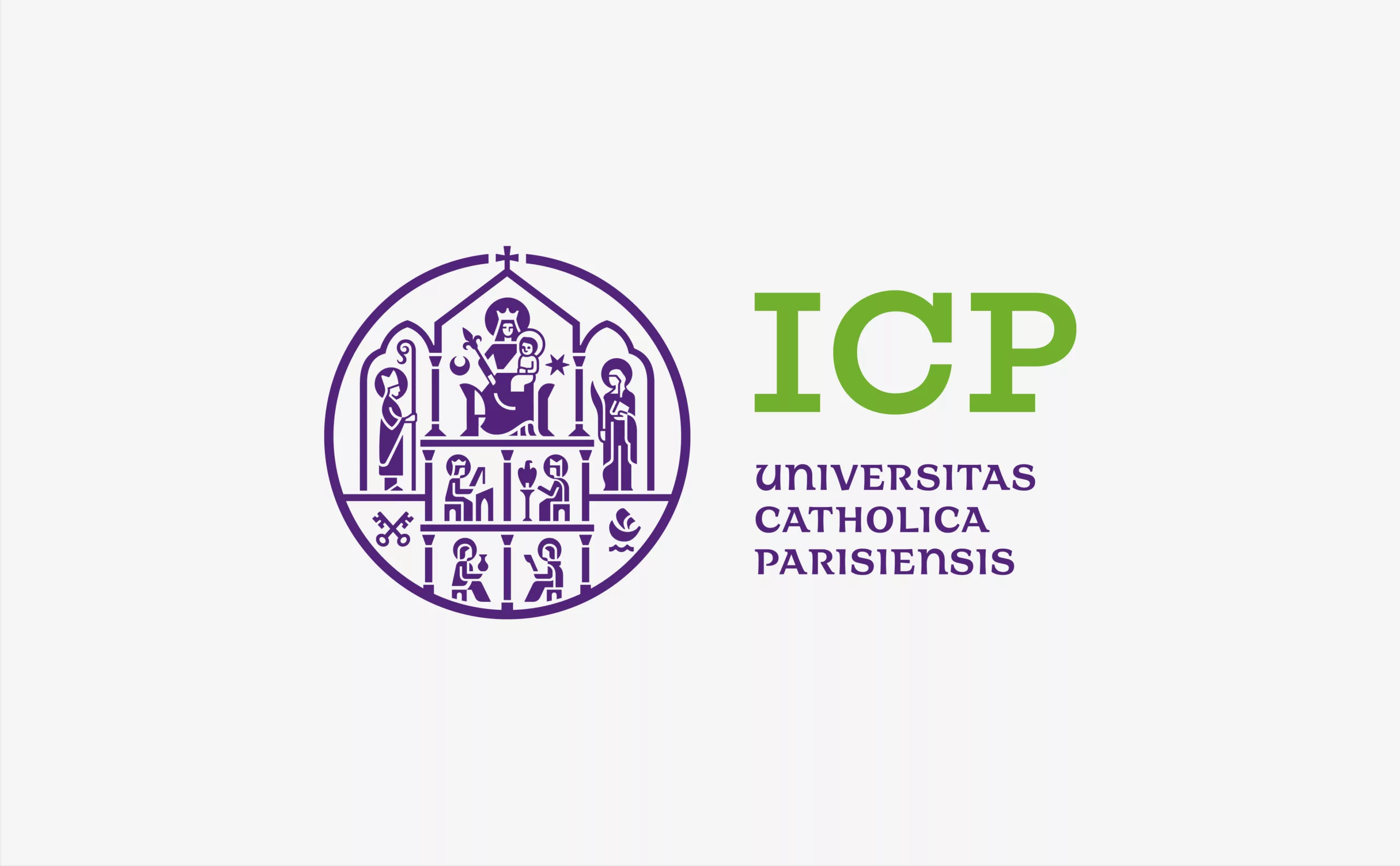
Rather than breaking with the past, we chose to return to its roots: the ICP’s historic seal, created in 1877 and inspired by that of the 13th-century University of Paris. An analysis of the archives and the existing identity revealed that the emblem in use was a clumsy digital adaptation of the ICP’s historic seal. We therefore completely redesigned it to better balance the shapes, clarify the figures, and harmonize the details. Simplified without being trivialized, the new emblem retains all its symbolic richness while becoming more legible, particularly in small formats and digital environments.

An Emblem Rich in Meaning

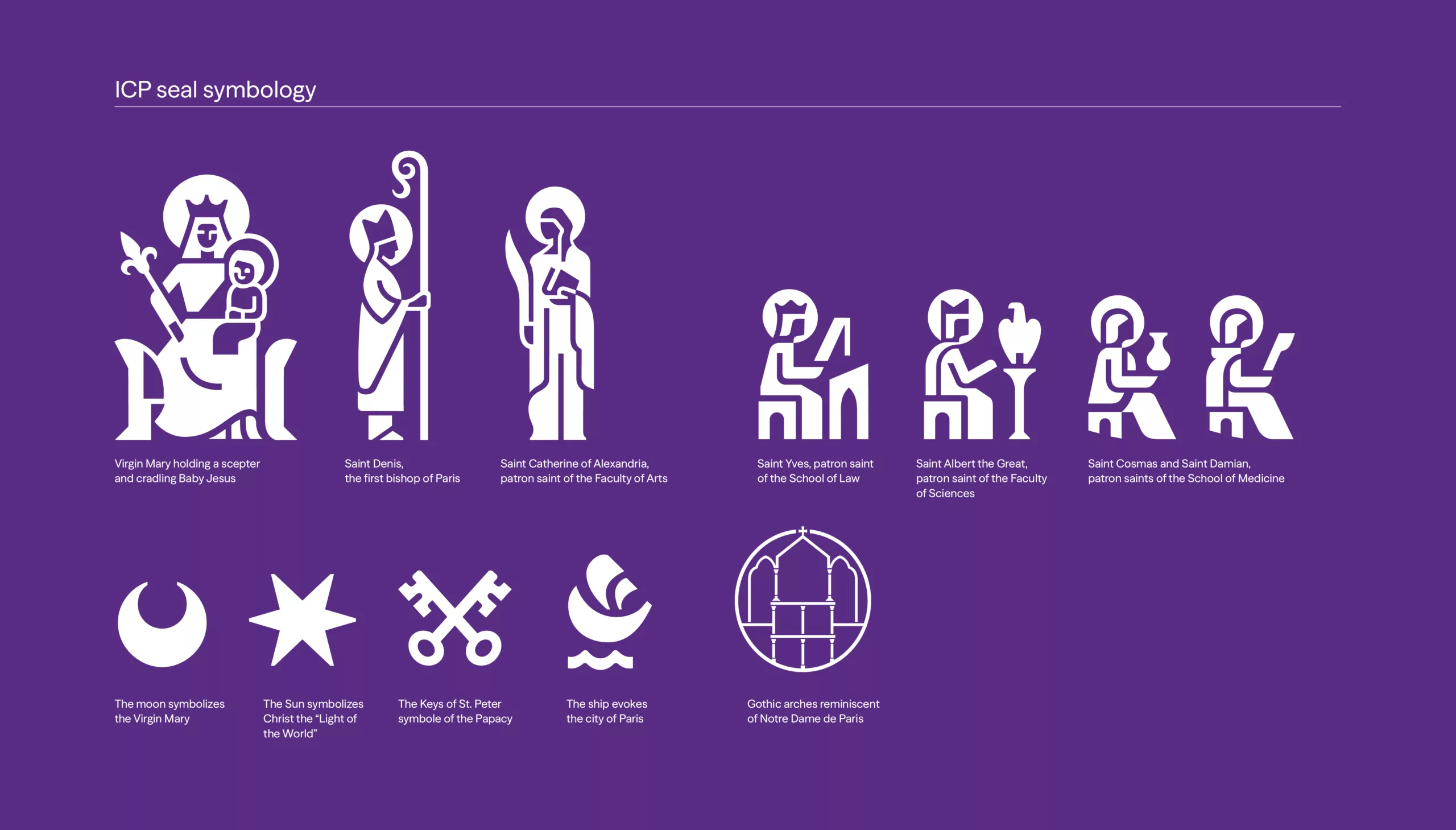
At the center of the seal, the Virgin Mary holds a scepter and cradles the Infant Jesus. She is flanked by Saint Denis, the first bishop of Paris, and Saint Catherine of Alexandria, patron saint of the Faculty of Arts. Below their figures are Saint Yves, patron saint of the Faculty of Law, and Saint Albert the Great, patron saint of the Faculty of Sciences. The lower register features Saints Cosmas and Damian, patrons of the Faculty of Medicine. The Keys of Saint Peter symbolize the link to the papacy, while the ship represents the city of Paris. The emblem thus encapsulates the history, academic disciplines, and universal mission of the Institute. Each symbol has been redesigned in a style inspired by the universalist aesthetic of pictograms to ensure maximum clarity.

ICP, a statutory and international acronym

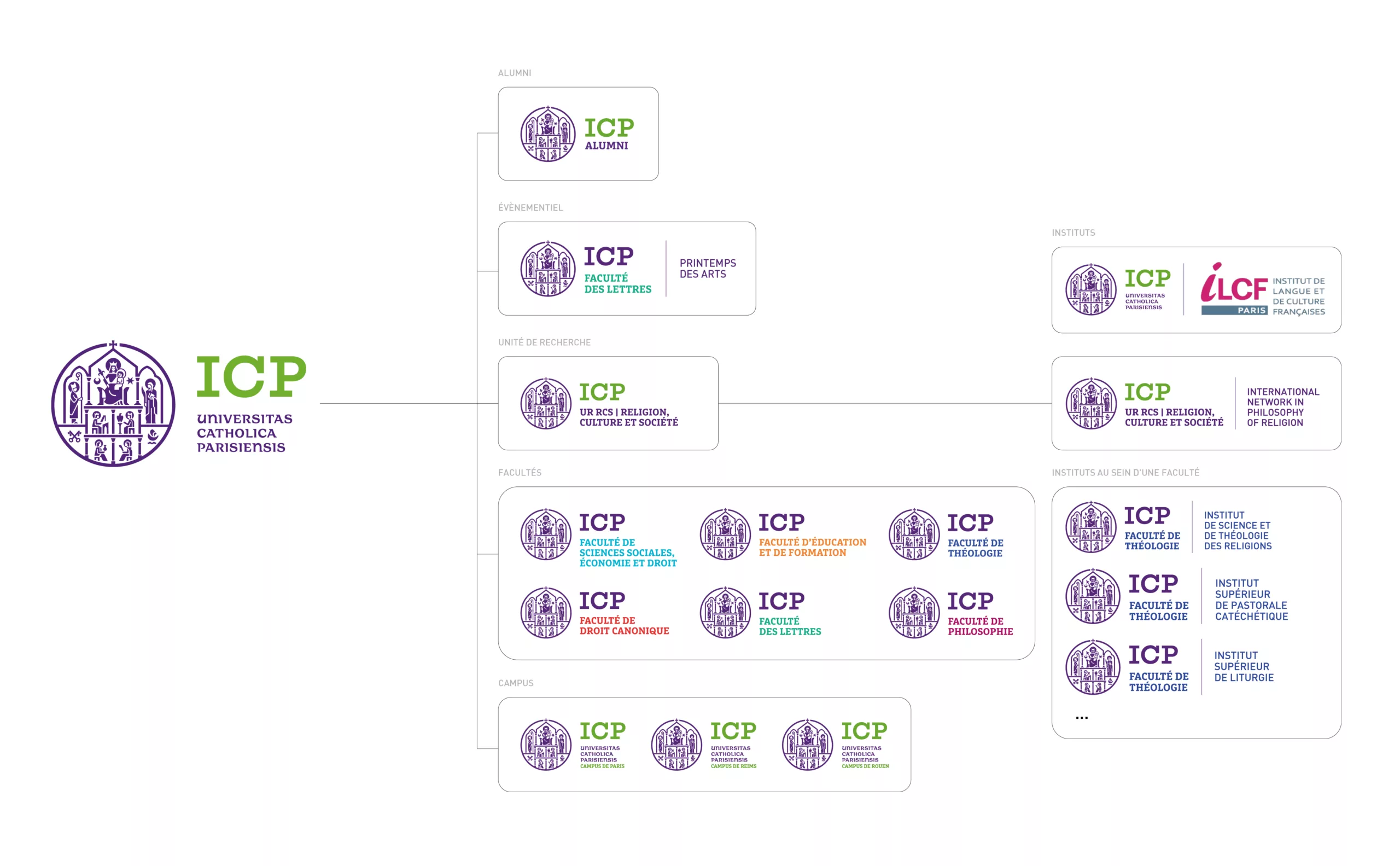
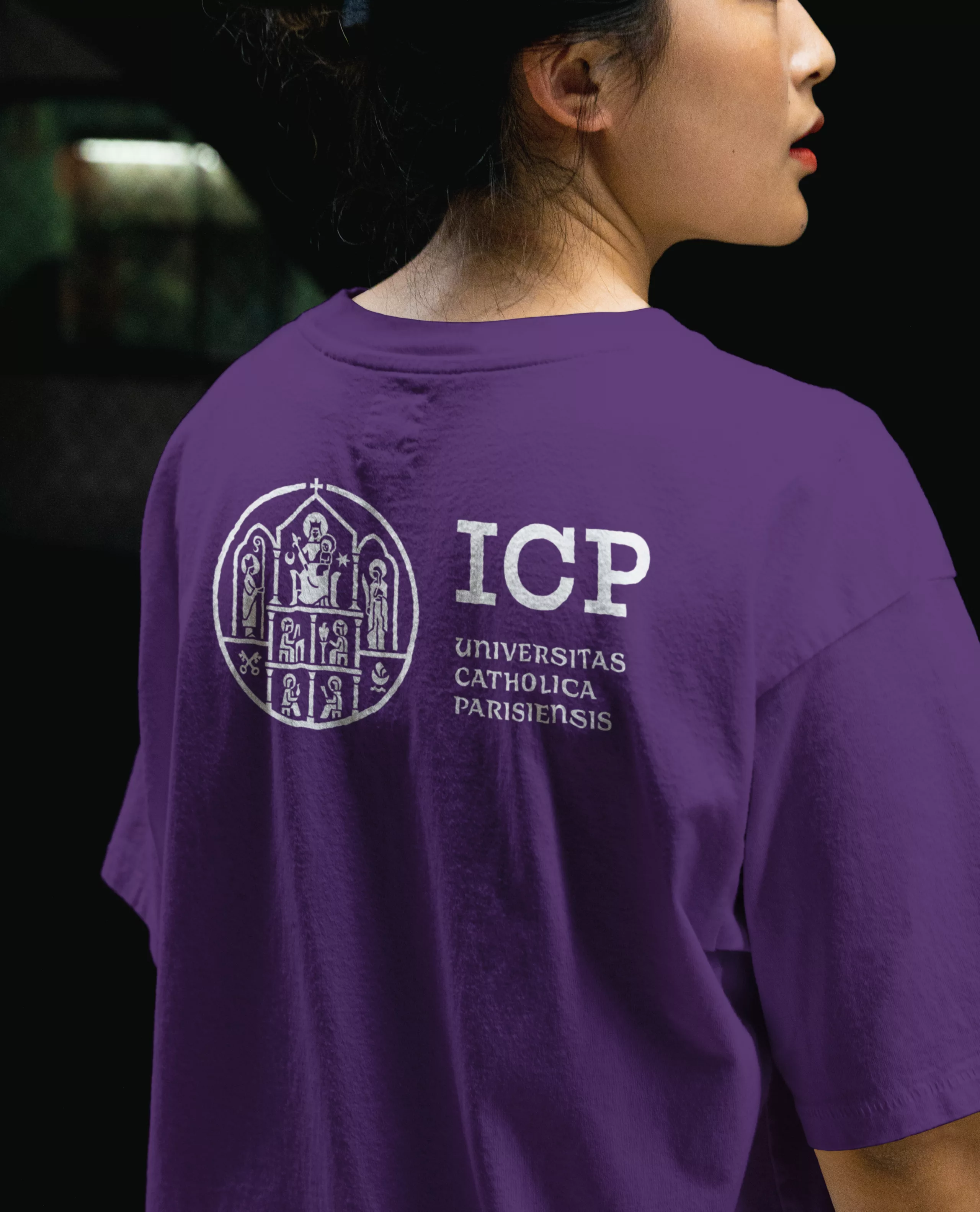
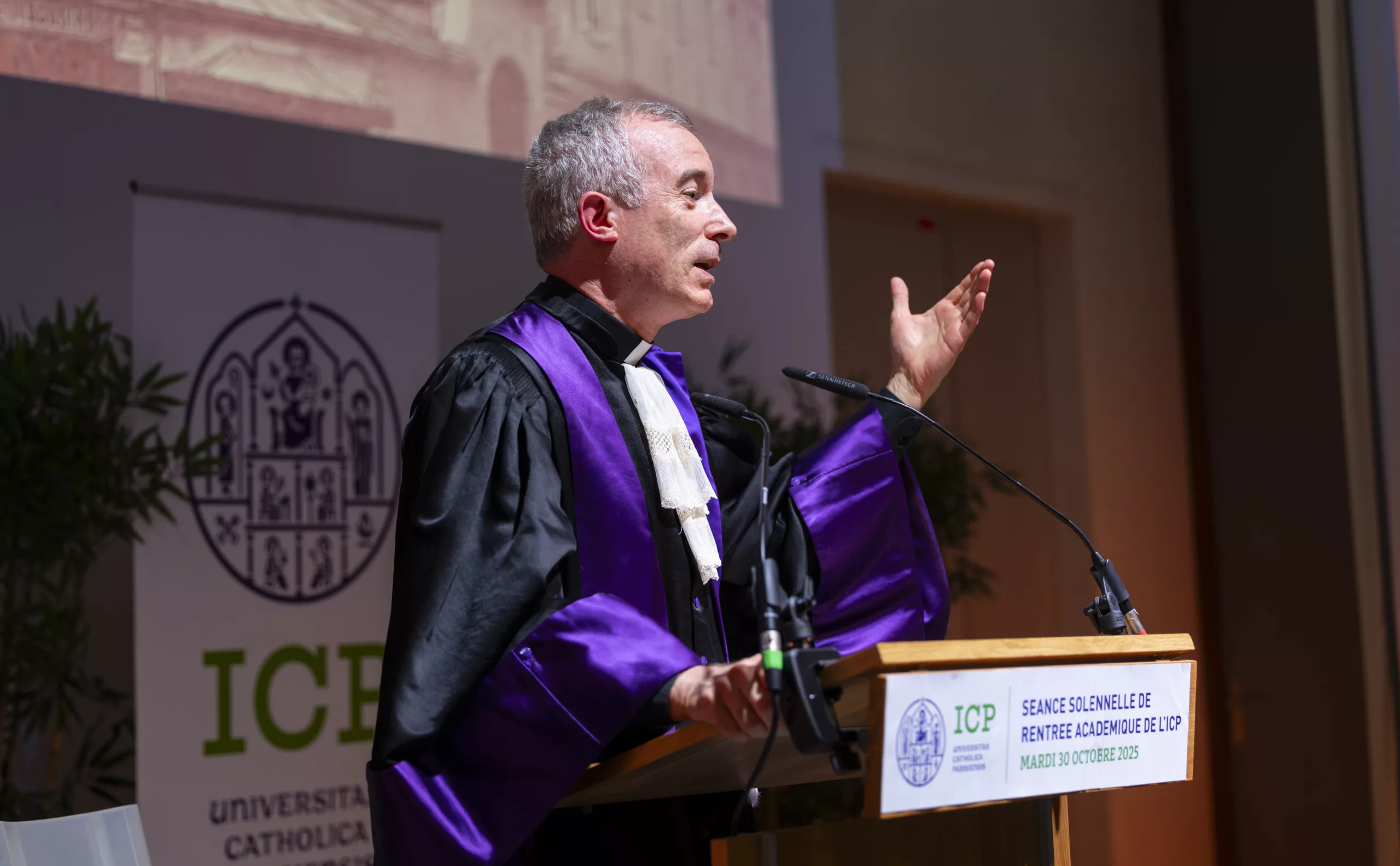
The seal’s traditional character is balanced by a contemporary treatment of the ICP acronym. Its broad, rectangular serifs draw inspiration from the “Varsity Letters” graphic style found on international university campuses. Legible in all languages and easily adaptable, this acronym establishes ICP as the parent brand and more clearly structures the identities of its faculties, schools, and institutes. The Latin name “Universitas Catholica Parisiensis” now frames the acronym. This custom-designed typeface is inspired by the uncial and Lombardic traditions. It subtly extends the dialogue between heritage and modernity.

A vibrant brand identity, a new momentum

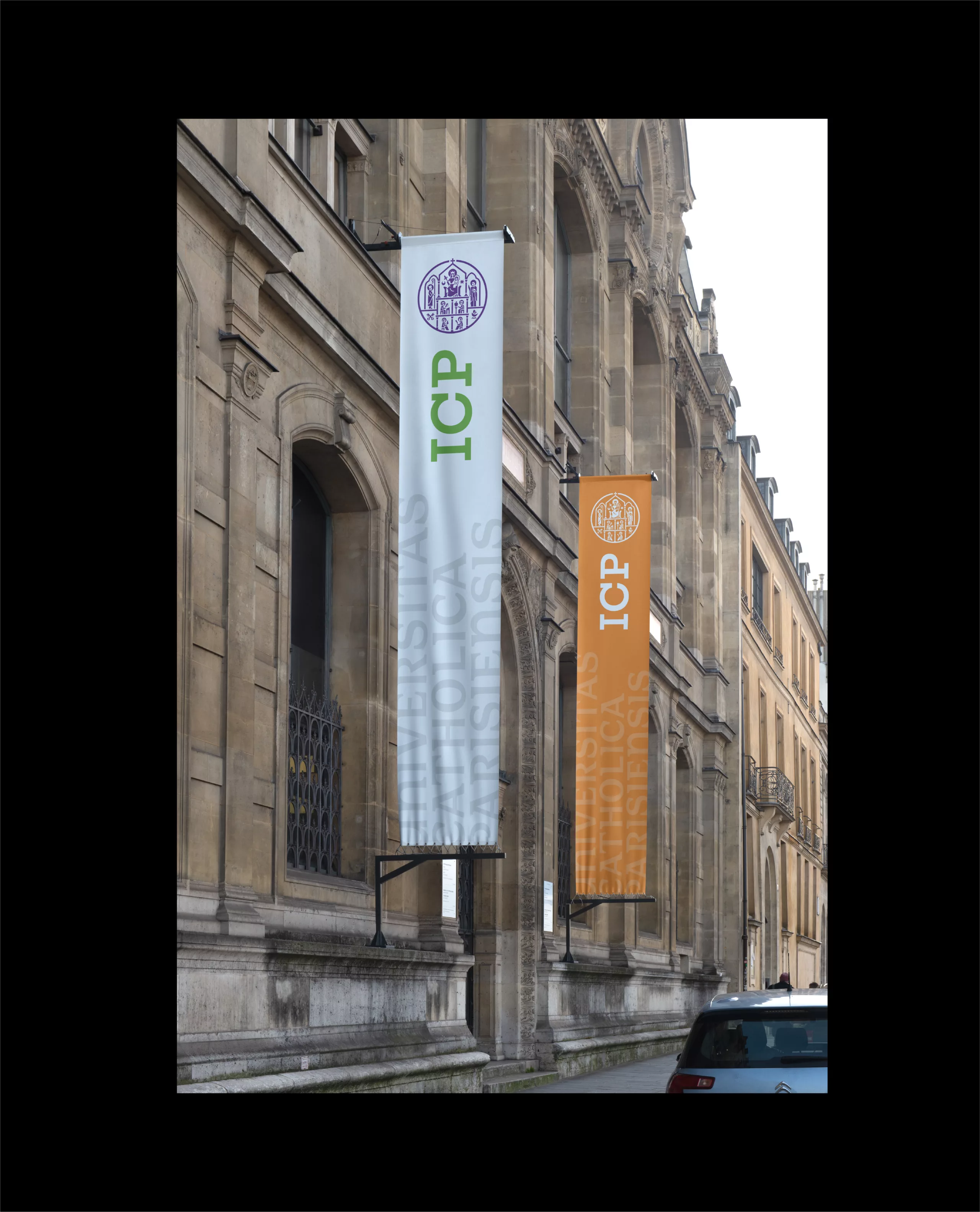
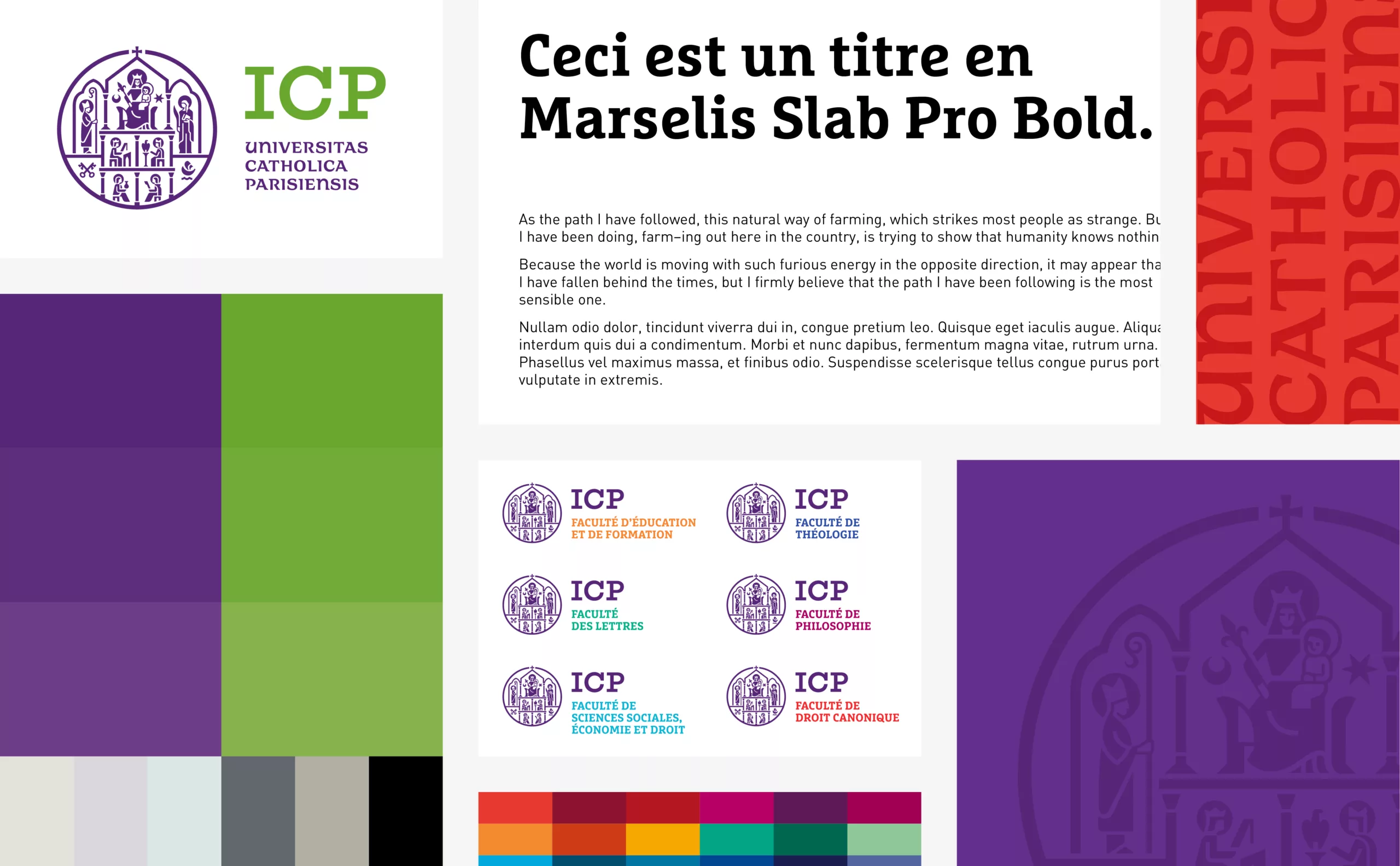
Purple continues to anchor the ICP in its ecclesiastical heritage. Associated with wisdom and scholarship, it lends the brand a distinctive and prestigious character within the higher education landscape. Green is retained and gains depth. A symbol of hope and renewal, it enhances the contrast of the logo and distinguishes the ICP from other French Catholic universities. The combination of these two colors creates a powerful, instantly recognizable identity marker.

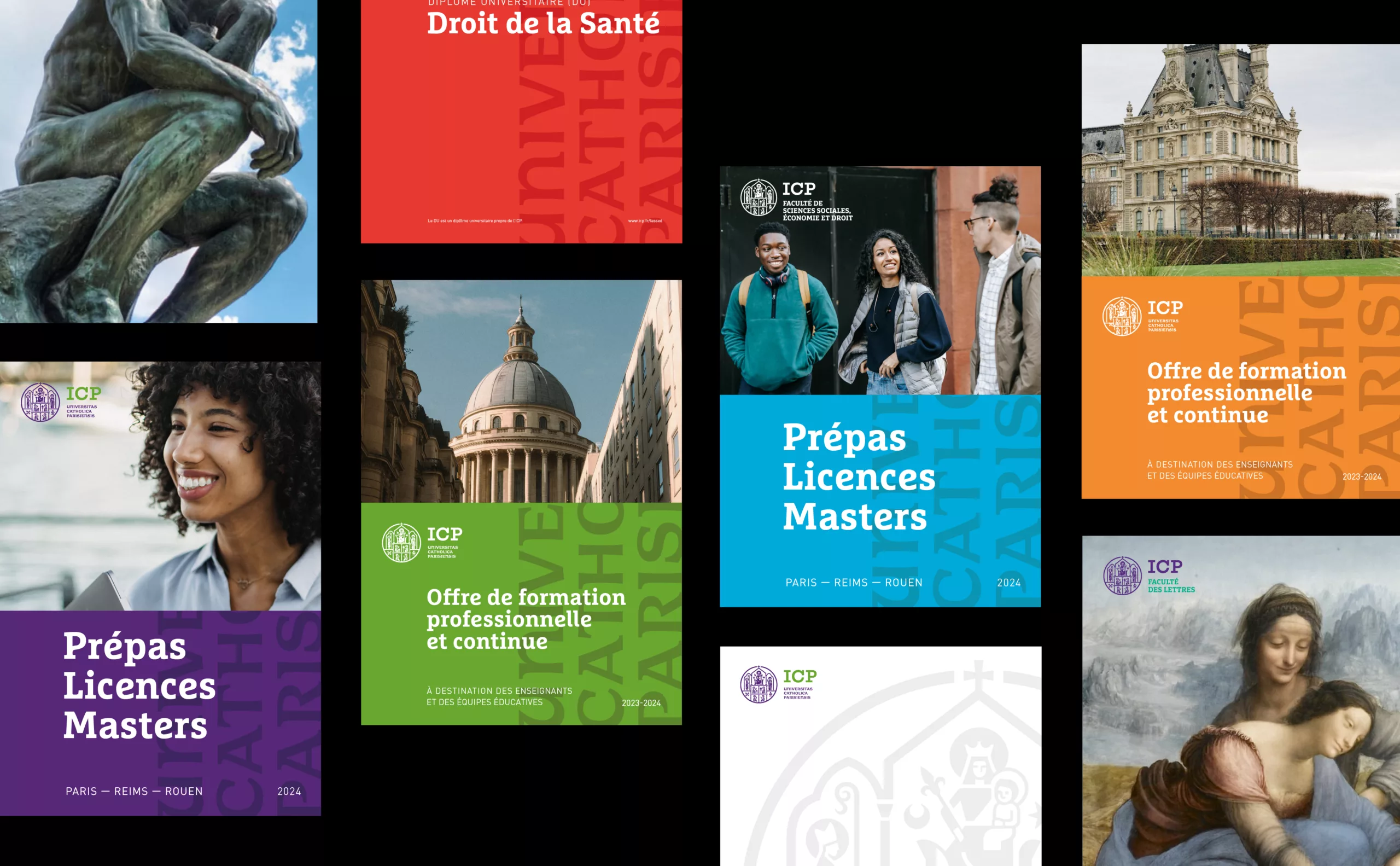
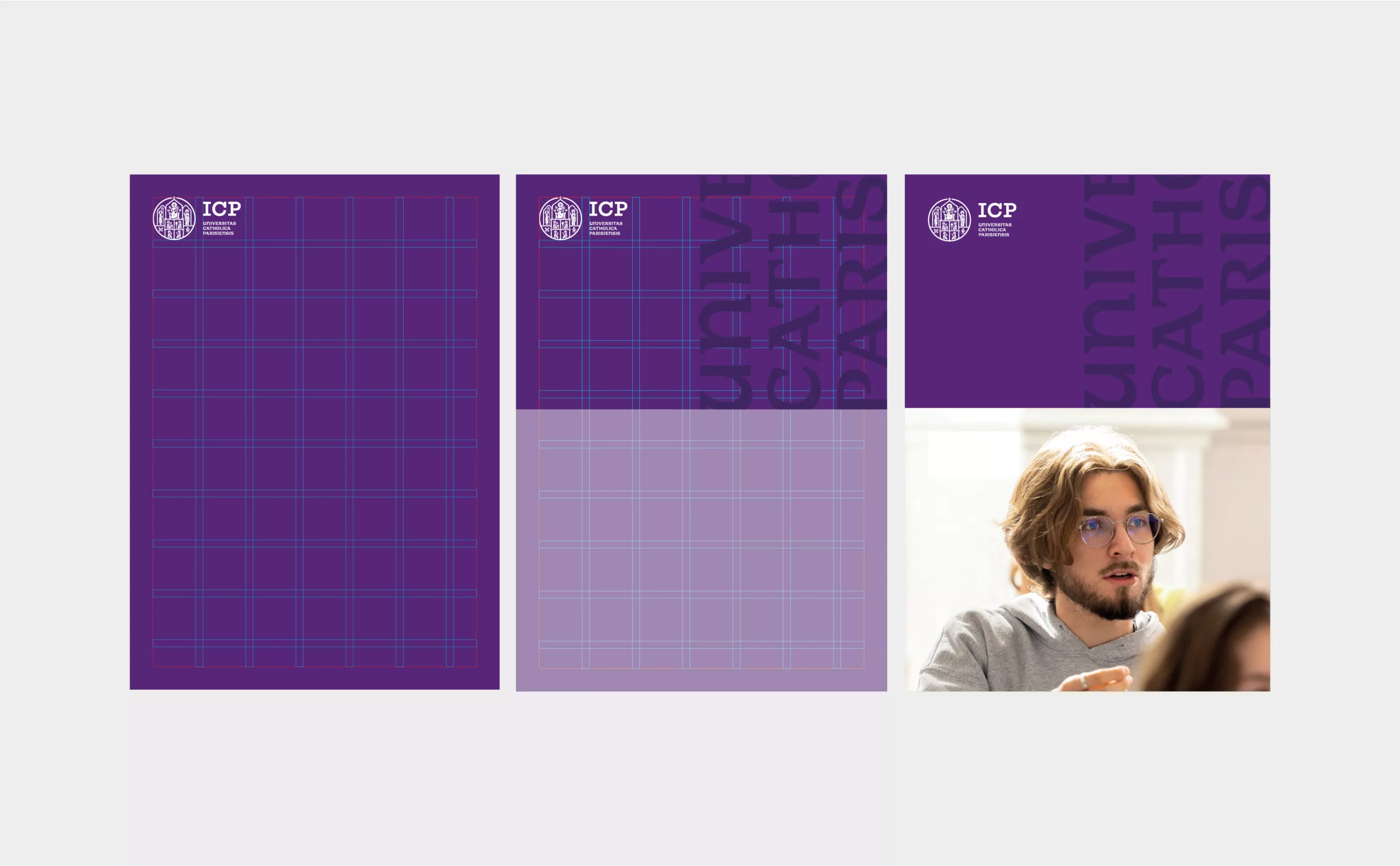
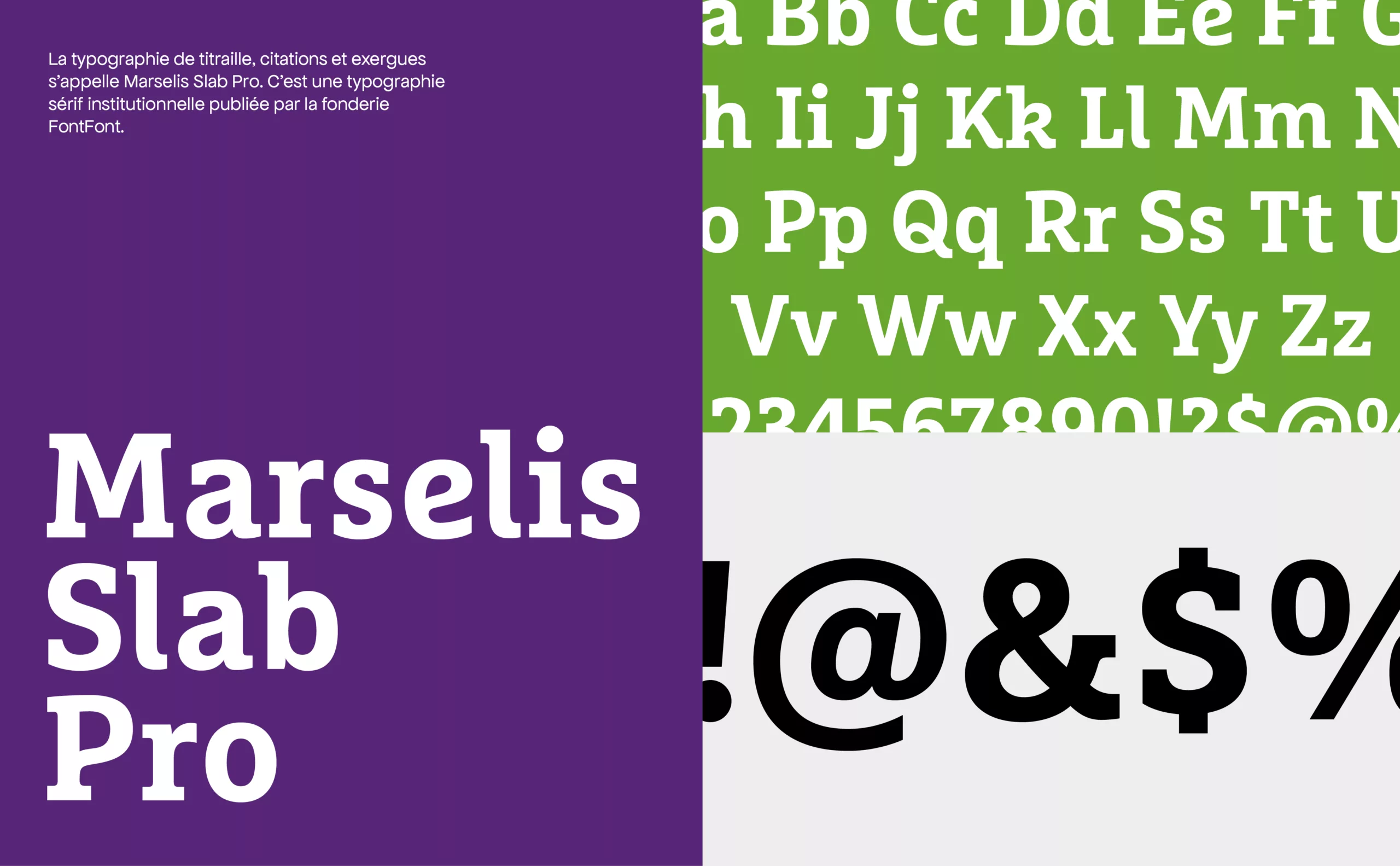
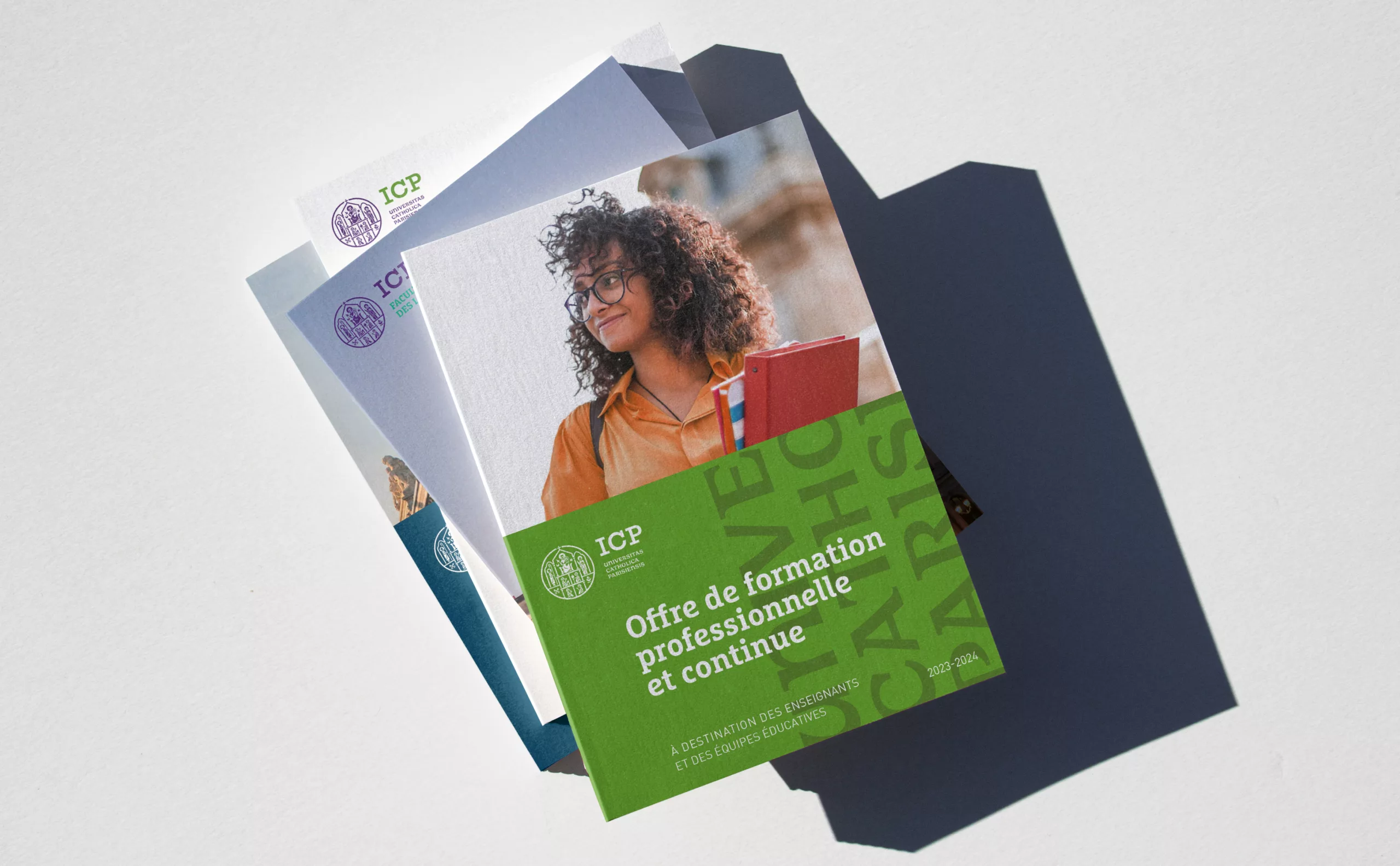
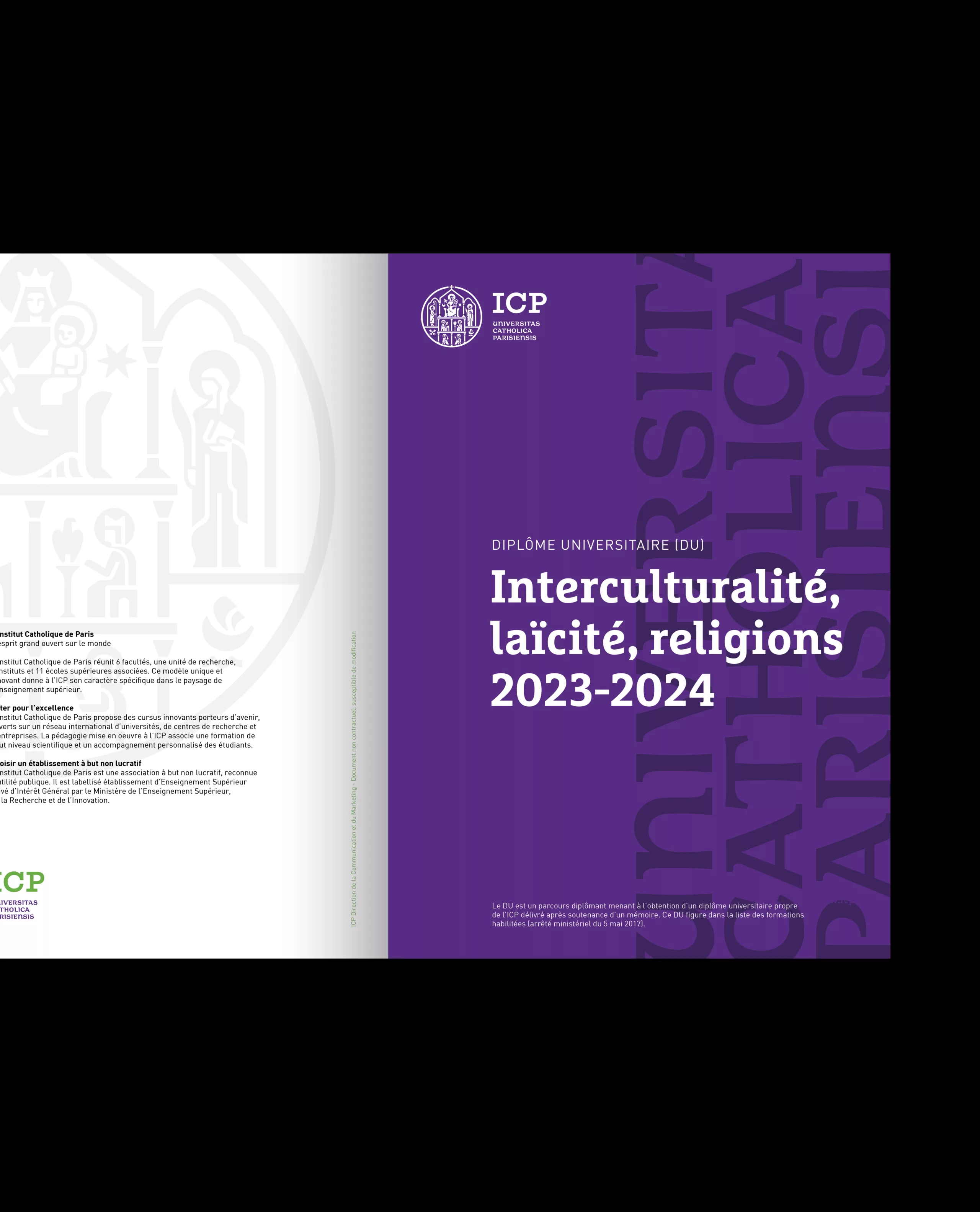
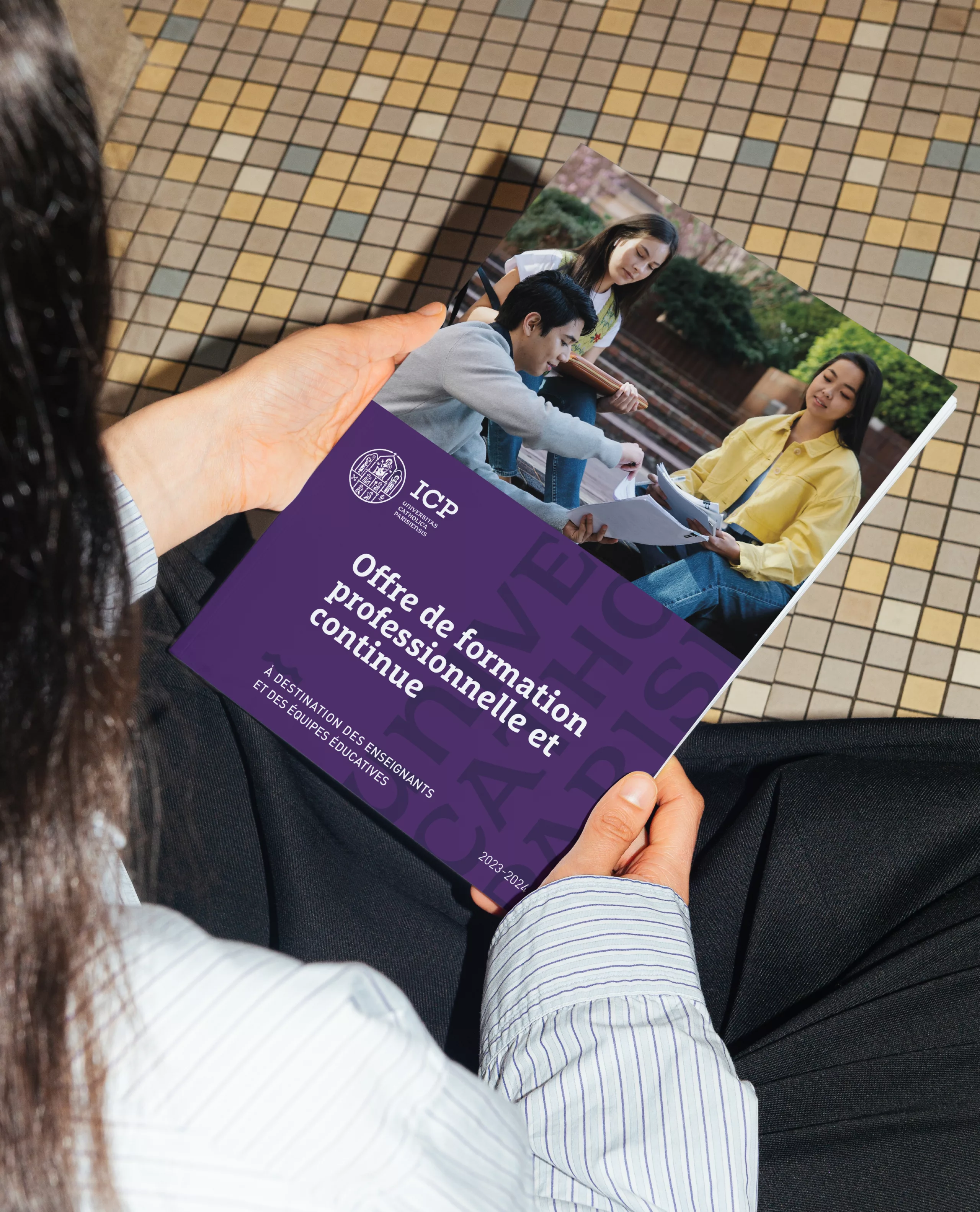
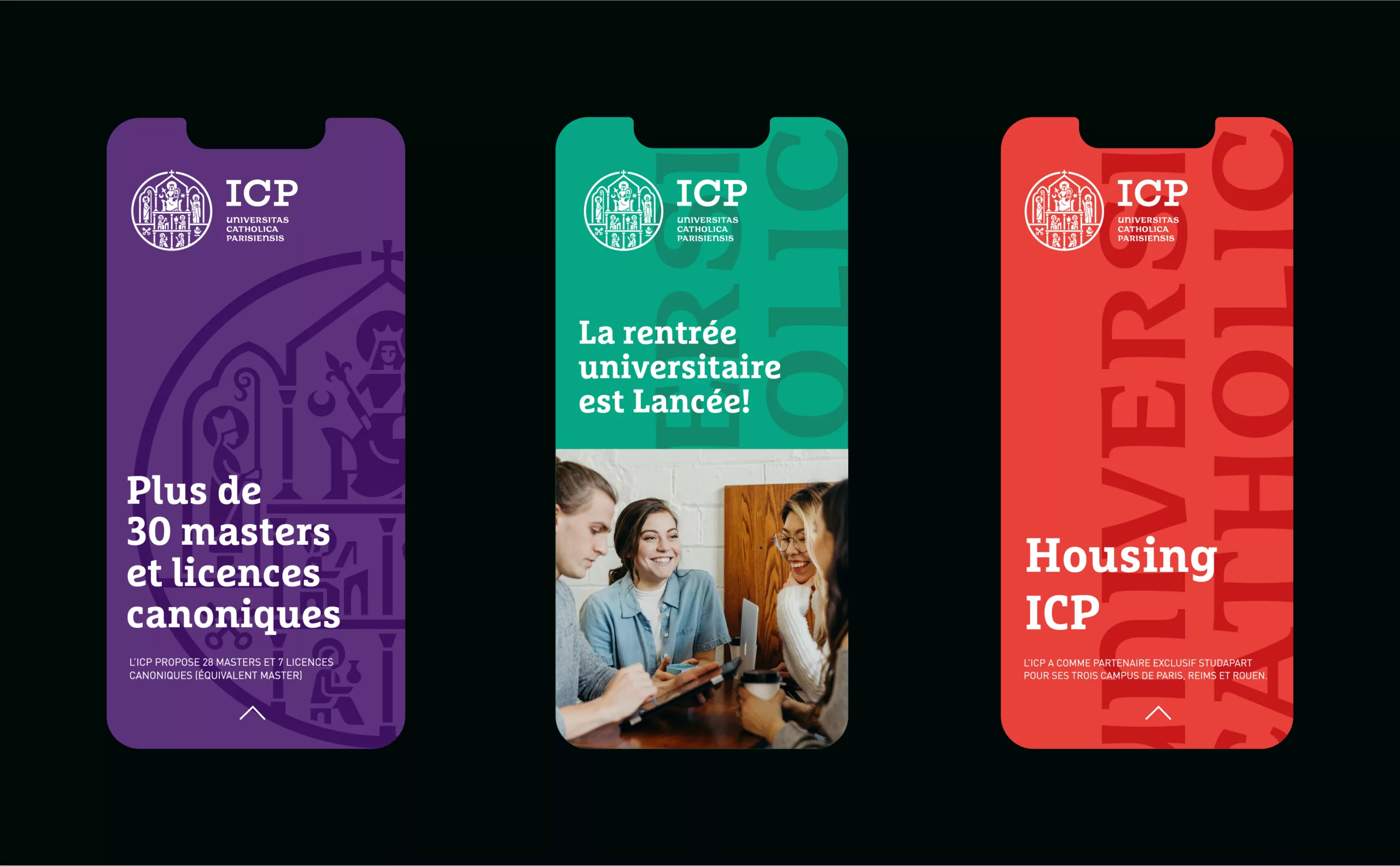
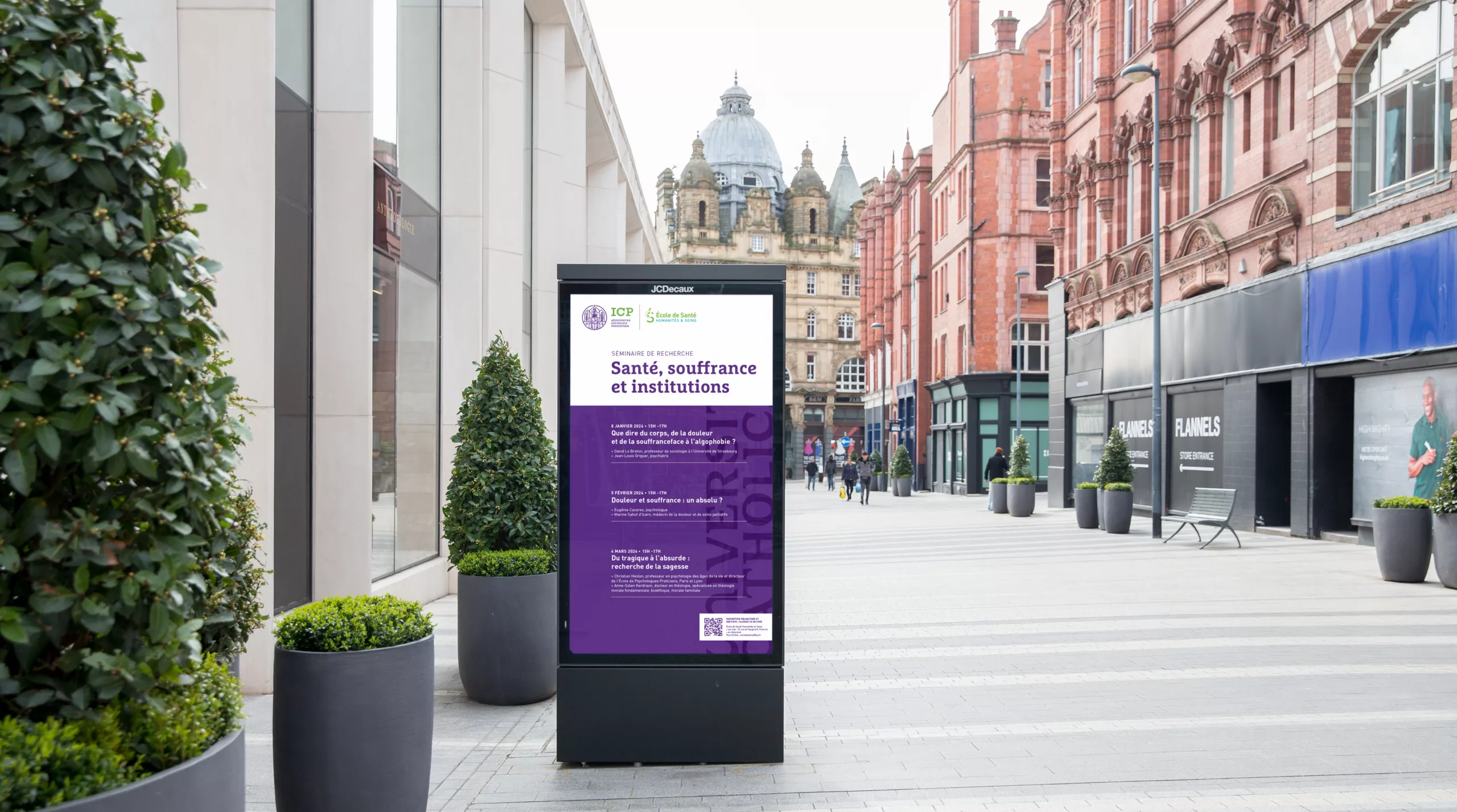
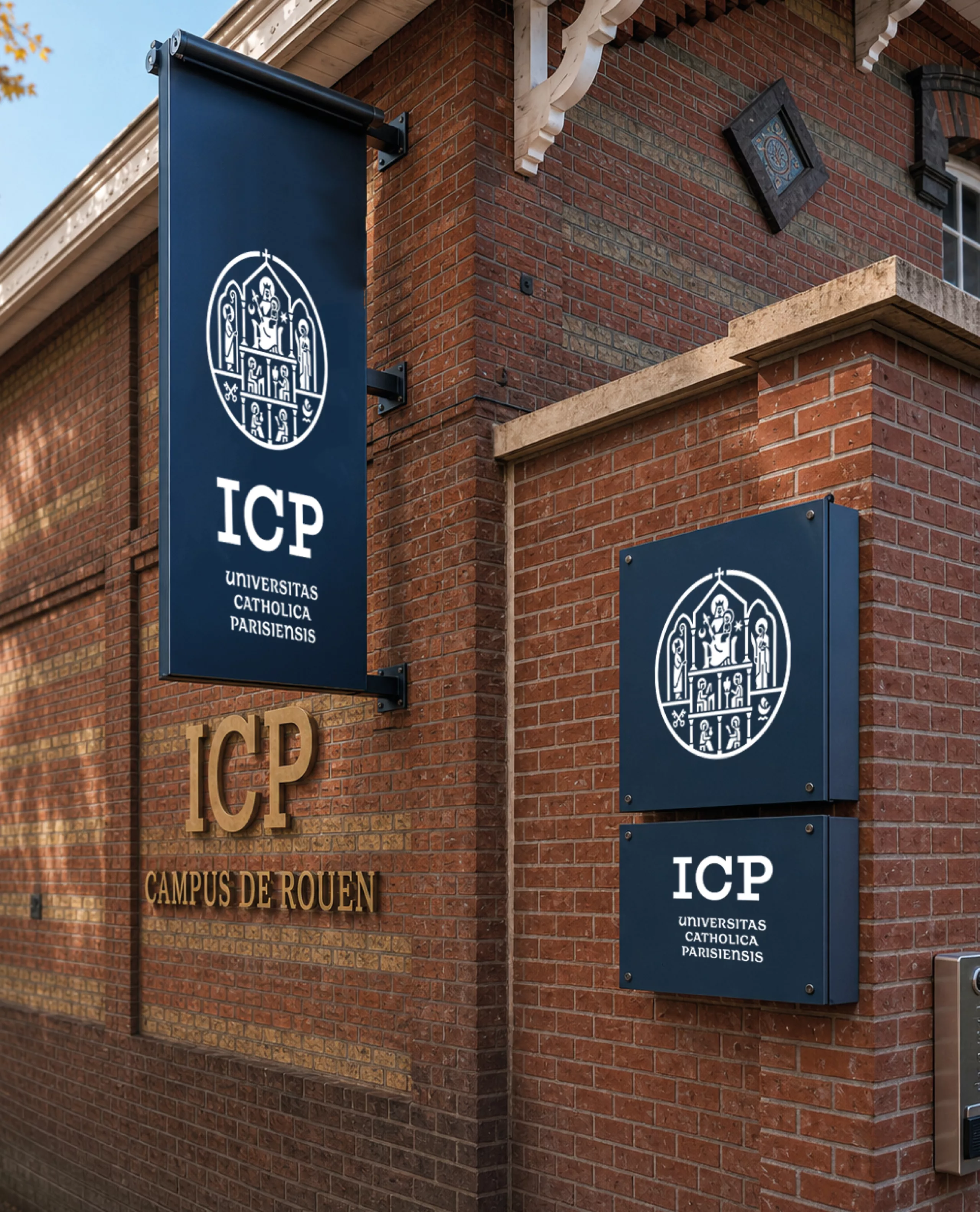
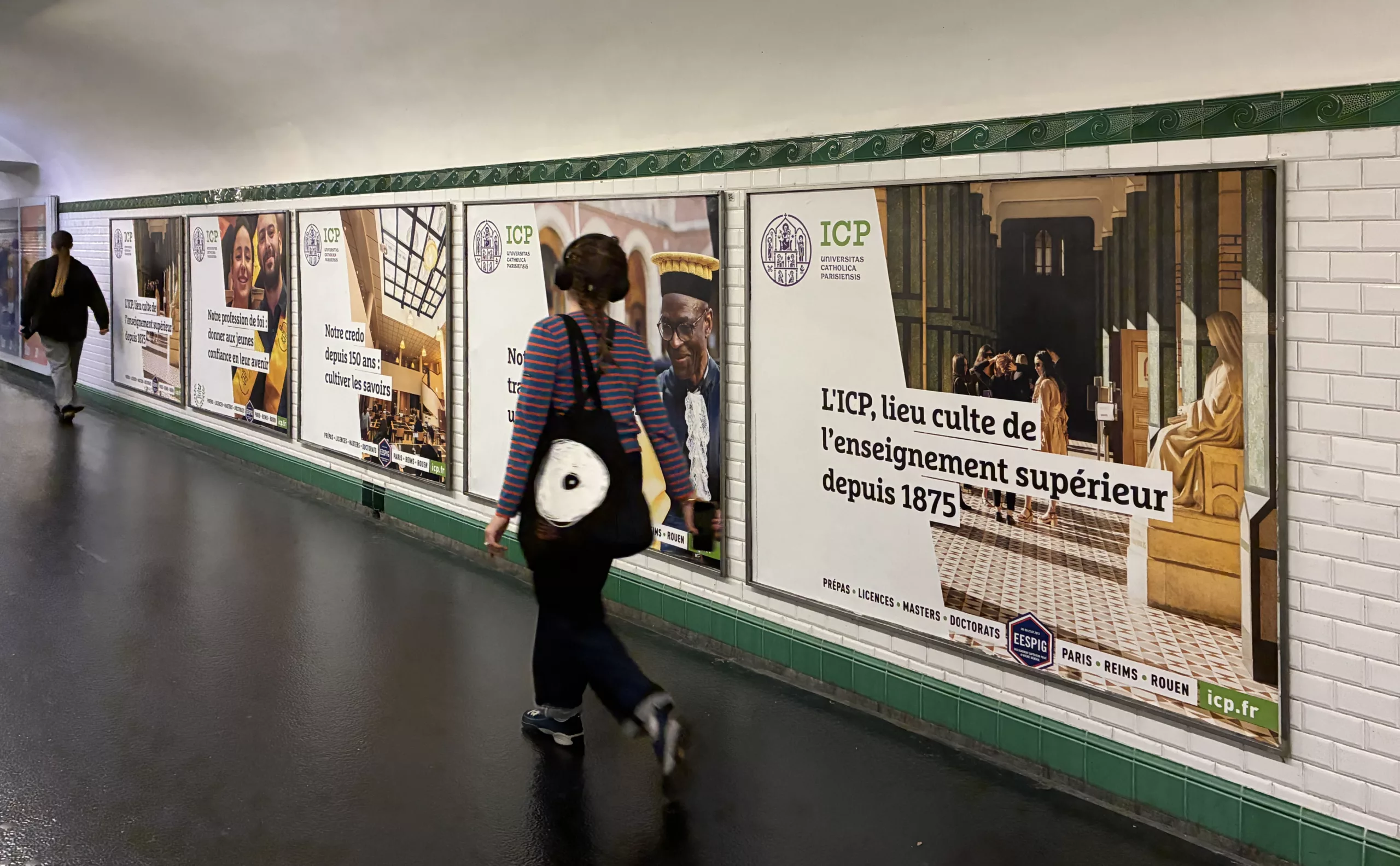
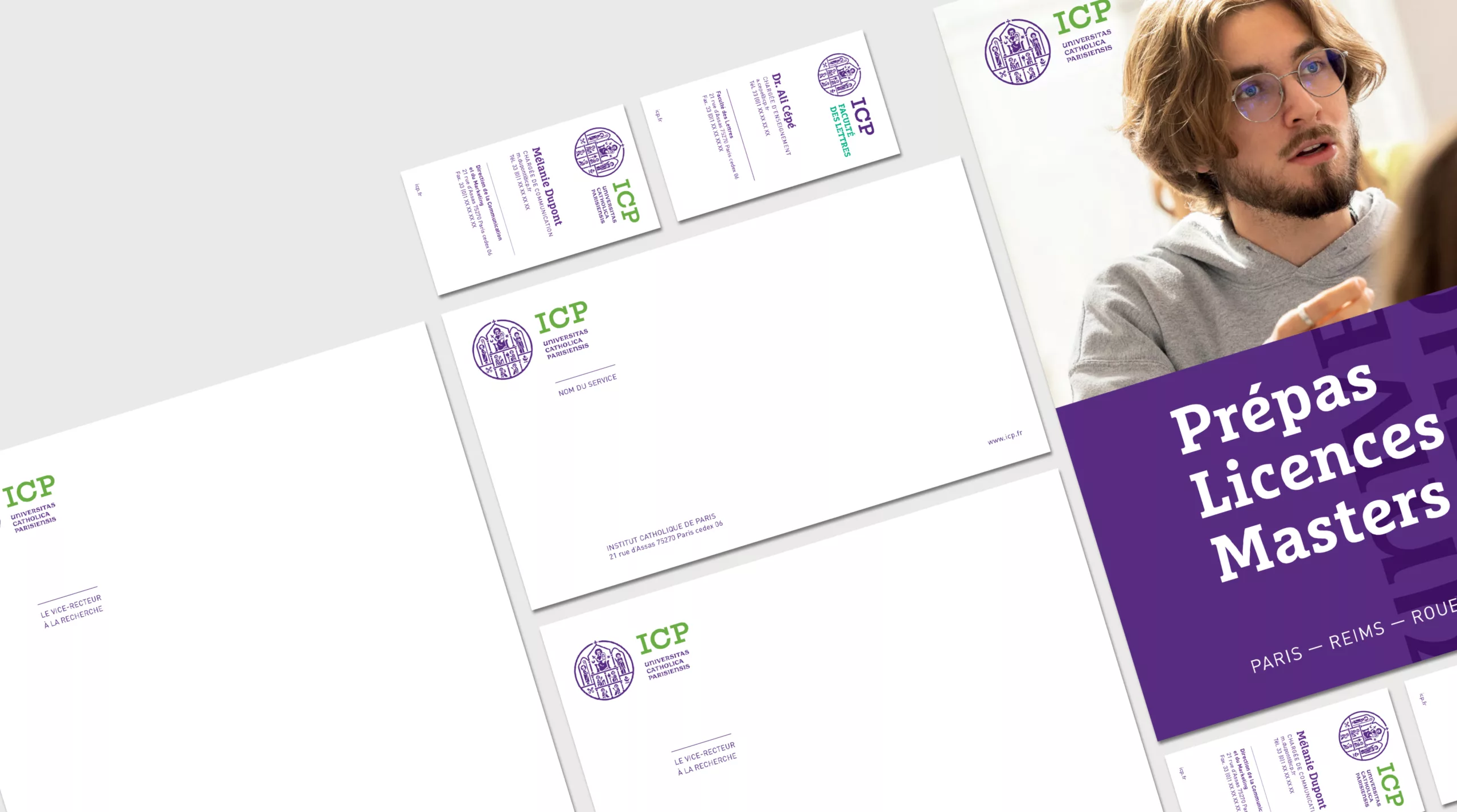
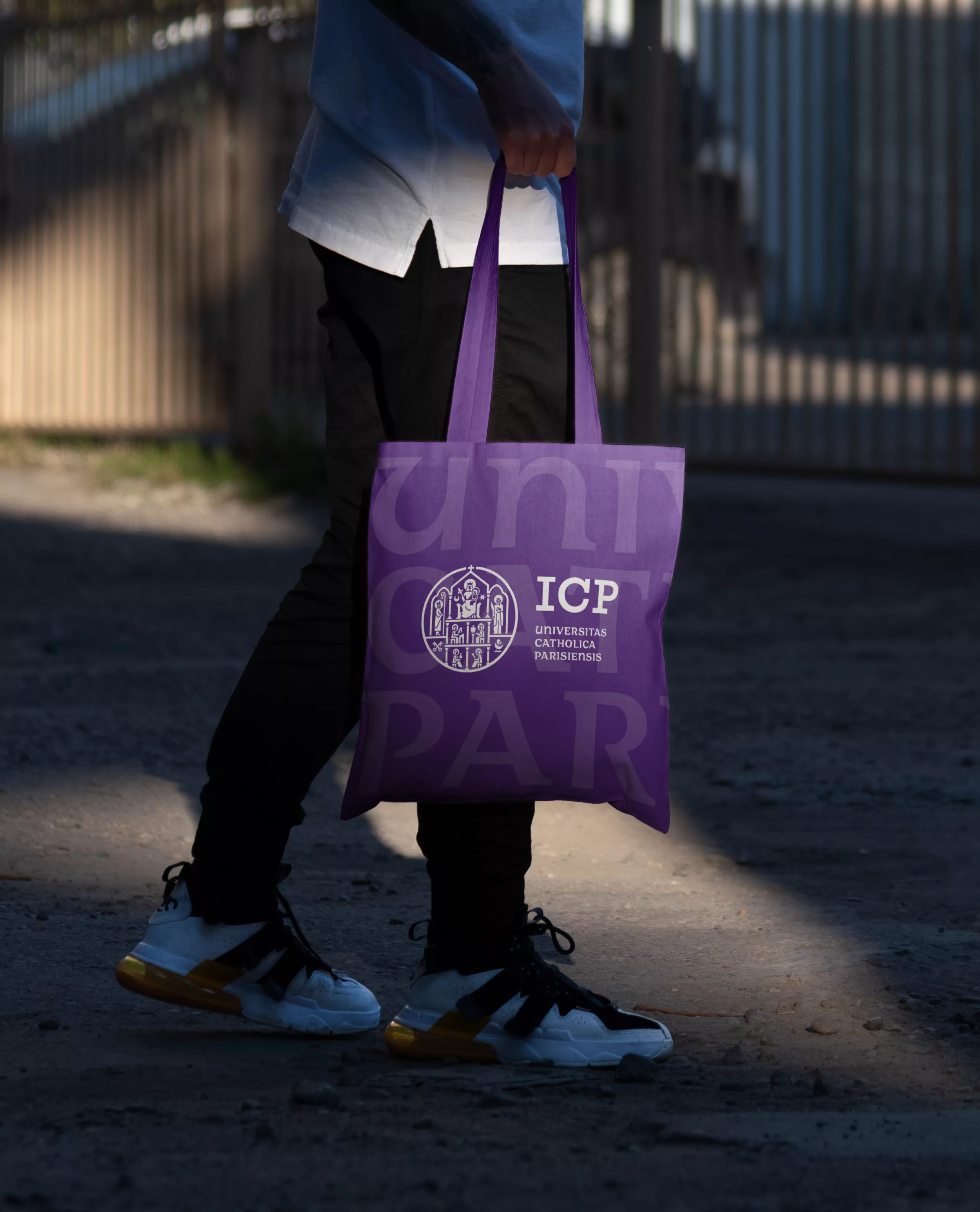
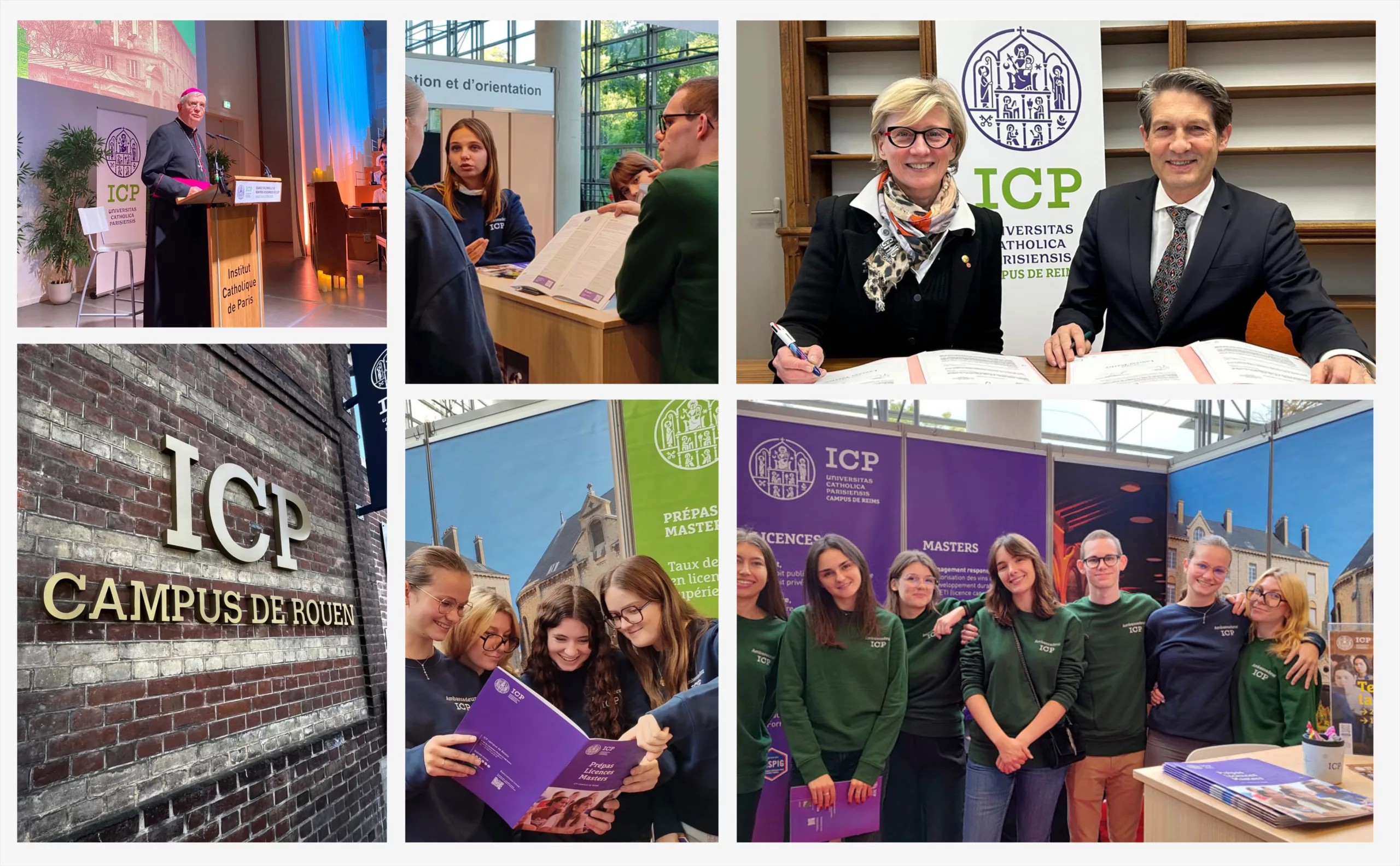
Beyond the logo, the redesign gives rise to a comprehensive visual system. A secondary color palette, the FF Marselis Pro and DIN typefaces, and a strict, modular layout grid ensure consistency across all brand communications. The visual style guide places the vibrancy of student life, knowledge sharing, and openness at the heart of the brand narrative. The entire system is designed to be applied with equal impact across social media, the website, brochures, campaigns, and signage on the various campuses.

More recognizable, more cohesive, and fully adapted to contemporary needs, the new identity bridges tradition and modernity. By reconnecting with the richness of its historic seal, it empowers the ICP to unite its campuses and advance its ambitions for the years ahead.