At Graphéine, we know that a logo is far more than a beautiful drawing; it is a powerful lever of brand identity. When thoughtfully designed, it embodies a company’s DNA, expresses its values, and creates an immediate connection with its audience. As the true foundation of any branding strategy, it structures the visual universe of a brand and instantly distinguishes it from its competitors. As Paul Rand wrote, “A logo is the ambassador of your brand.”
Logo design
Logo design:
From the symbol
to the brand




Discover our logo designs
Creating a logo for a startup, a company, a city, or a non-profit organization…
1. The logo: the foundation of your identity
A logo is the graphic representation of a brand. It may rely on typography, a symbol, or a combination of both. Its mission is to be recognizable at first glance, evoke values, and convey a clear message, even without words. It works in synergy with the other elements of the visual identity system; colors, icons, illustrations, typography; and this overall coherence creates a universe that is instantly recognizable, conveying professionalism and reliability.
A good logo must meet several essential criteria:
- Simple and impactful, so that it remains memorable.
- Legible across all media, from paper to pixel.
- Versatile, capable of adapting from a favicon to a billboard.
- Relevant, meaning faithful to your positioning and values.
In short, a logo is a powerful visual signature; capable, on its own, of sparking emotion, inspiring trust, and even triggering a purchasing decision.
2. Logo, symbol, or emblem?
Often used as synonyms, the terms logo, symbol, and emblem actually refer to distinct realities; and this distinction is far from insignificant.
A logo focuses on text; it is the brand name drawn in a distinctive typeface. Coca-Cola’s famous cursive lettering is the archetype of this approach.
A symbol frees itself from text; it represents the brand through a pure form. Apple’s bitten apple and Nike’s swoosh perfectly illustrate this logic of simplicity.
An emblem, finally, combines text and image within a composition that is often more complex. Starbucks’ siren, enclosing the brand name within a circle, is an emblematic example in the truest sense of the word.
Choosing between these three approaches is never a minor detail; it is a strategic decision that durably shapes the way a brand will be perceived.
<h2>A few references</h2>
Brand design
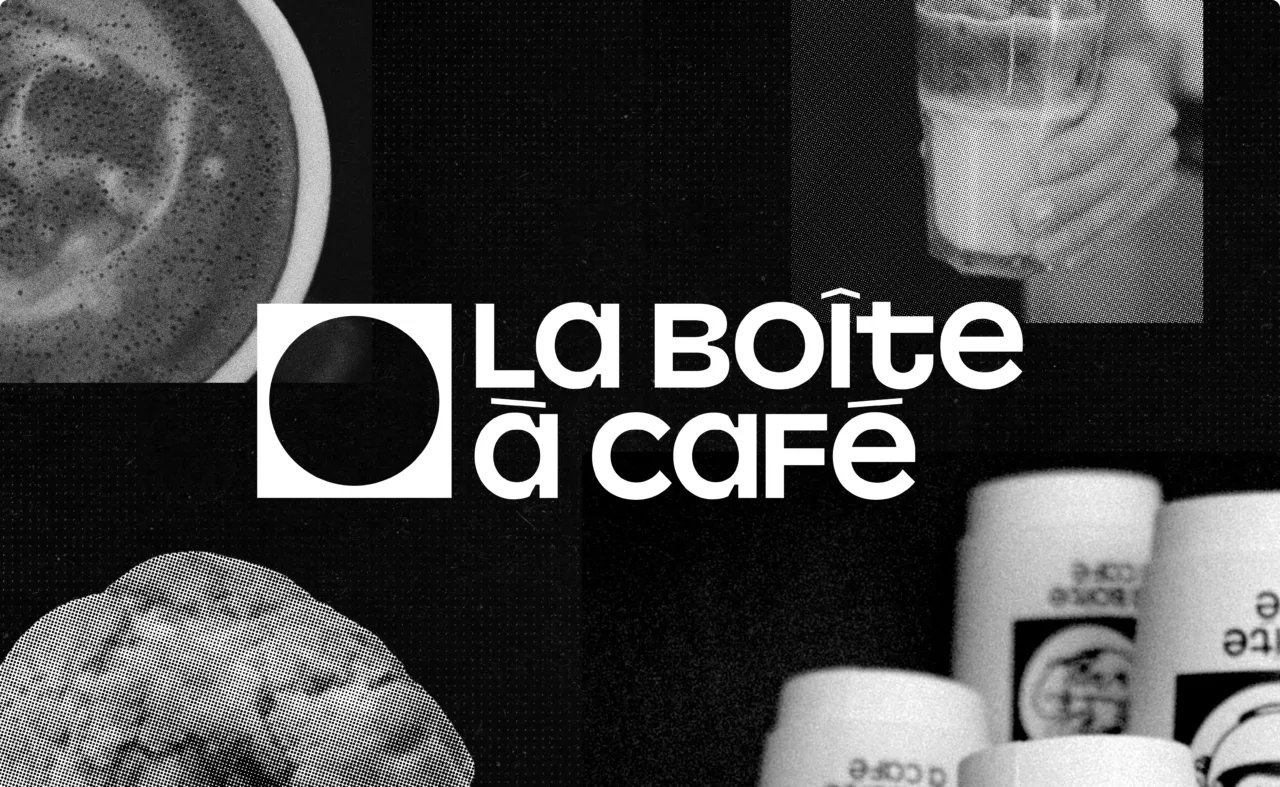





3. How to design an effective logo?
Creating a strong logo relies on a rigorous strategic approach that involves several key steps.
Market analysis: Before even beginning to design, it is essential to immerse yourself in the competitive landscape. What are the dominant codes? Which shapes, colors, and typefaces appear repeatedly? This mapping process is what later makes it possible to differentiate intelligently rather than simply reinventing what already exists.
Defining the brand personality: Bold, minimalist, joyful, premium, popular, scholarly? These adjectives guide aesthetic choices; shapes, color palette, typography; and give the logo its emotional direction.
Choosing colors: Every color carries meaning. Blue reassures, red energizes, green soothes, black conveys seriousness or luxury. As historian Michel Pastoureau demonstrated, no color is neutral; each one dialogues with centuries of usage and symbolism.
Refining typography: Typography expresses a tone, an attitude, a relationship to the world. Classic or experimental, serif or sans-serif, rounded or angular; every choice establishes a different atmosphere. Above all, it must remain legible at every size.
Prioritizing simplicity: The more refined a logo is, the more durably it embeds itself in memory. The most iconic logos; Nike, Apple, Chanel; are built from only a few lines.
Testing adaptability: A logo must remain legible and coherent on a business card, a website, a mobile application, packaging, or signage. This versatility is designed from the very beginning of the process.
Our latest logos
Catholic Institute of Paris
To mark its 150th anniversary, the Institut Catholique de Paris is updating its visual identity. This redesign is intended to bring its campuses together, affirm its uniqueness, and adapt a historic brand to contemporary uses.
University of Toulouse
A dynamic UT monogram and a colour palette inspired by Toulouse, the “Pink City”, embody a university rooted in its territory and looking to the future.
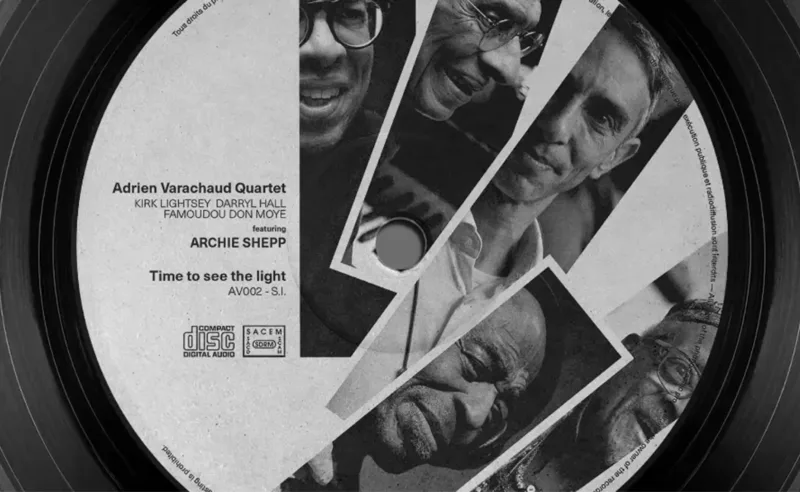
Adrien Varachaud Quartet featuring Archie Shepp
Album cover for “Time To See The Light” by the Adrien Varachaud Quartet, featuring Archie Shepp. A design inspired by the great graphic tradition of jazz and Blue Note covers, carried by the photographs of Philippe Lévy-Stab.
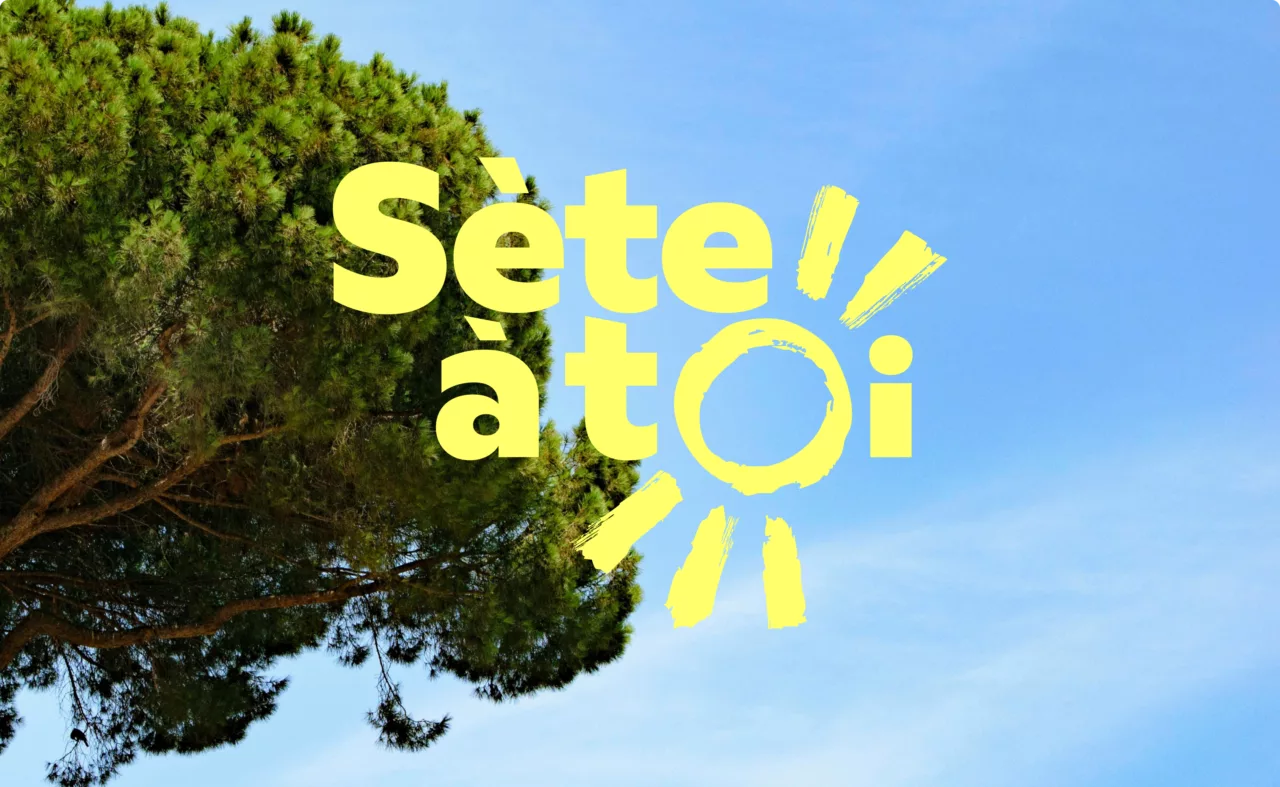
Sète à toi
Every year, the Fondation pour le Logement organises ‘Sète à Toi’, a charity holiday programme for people living in extremely precarious circumstances or who are homeless. More than 350 participants come to enjoy a week of socialising and sport by the sea. Our task was to design the visual identity for the programme.
4. Creating your logo, step by step
Research and brainstorming. The project begins with the collection of key information; mission, values, audiences, positioning. Then comes the moment to generate a wide range of visual ideas, without self-censorship.
Sketches and mockups. Several graphic directions are explored, first on paper and then in digital versions. These mockups make it possible to compare different approaches and identify the ones that resonate most accurately.
Testing and feedback. Confronting the first proposals with perspectives representative of the target audience helps avoid many blind spots. Which logos attract attention? Which ones convey the right values? What misunderstandings emerge?
Adjustments and finalization. Based on this feedback, the logo becomes more refined, more coherent, and more precise; until it reaches a final design that is memorable and perfectly aligned with what the brand seeks to express.
5. Measuring the real impact of your logo
A logo only fulfills its mission if it works effectively with your audience in real-world conditions. Several criteria make it possible to measure its effectiveness:
- Memorability; is the logo recognized and remembered after brief exposure?
- Cross-platform legibility; does it remain effective at all sizes and across every medium; screens, print, signage, objects?
- Emotional impact; what feelings does it evoke; trust, innovation, proximity, prestige?
- Alignment with the brand’s DNA; does the perceived message correspond to what you intend to express?
- Differentiation; does it clearly stand apart from competing logos?
Perception studies, user testing, and analysis of performance across communication channels; clicks, reading time, engagement; are all tools that help objectify what initially appears to be pure intuition.
Graphéine’s expertise
Brand Diagnosis
Brand diagnostic
Competitive analysis
Benchmark
Reputation
Opportunities
Brand Strategy
Brand strategy
Communication strategy
Marketing strategy
Positioning
Brand platform
Naming
Brand Design
Logotype
Visual identity
Rebranding
Brand book
Style guide
Editorial guidelines
Typography
Brand activation
Print & Digital
Social media
Motion design
Signage
Events
In conclusion
A good logo is not just a visual element; it is a signature, an emotion, a point of reference. It tells the story of a brand in a fraction of a second. At Graphéine, we create bespoke logos that captivate, differentiate, and embody the soul of every brand.
Tell us about your project in a few lines and we will get back to you within 48 hours for an initial conversation. In Paris, Lyon, or remotely, whichever suits you best.